
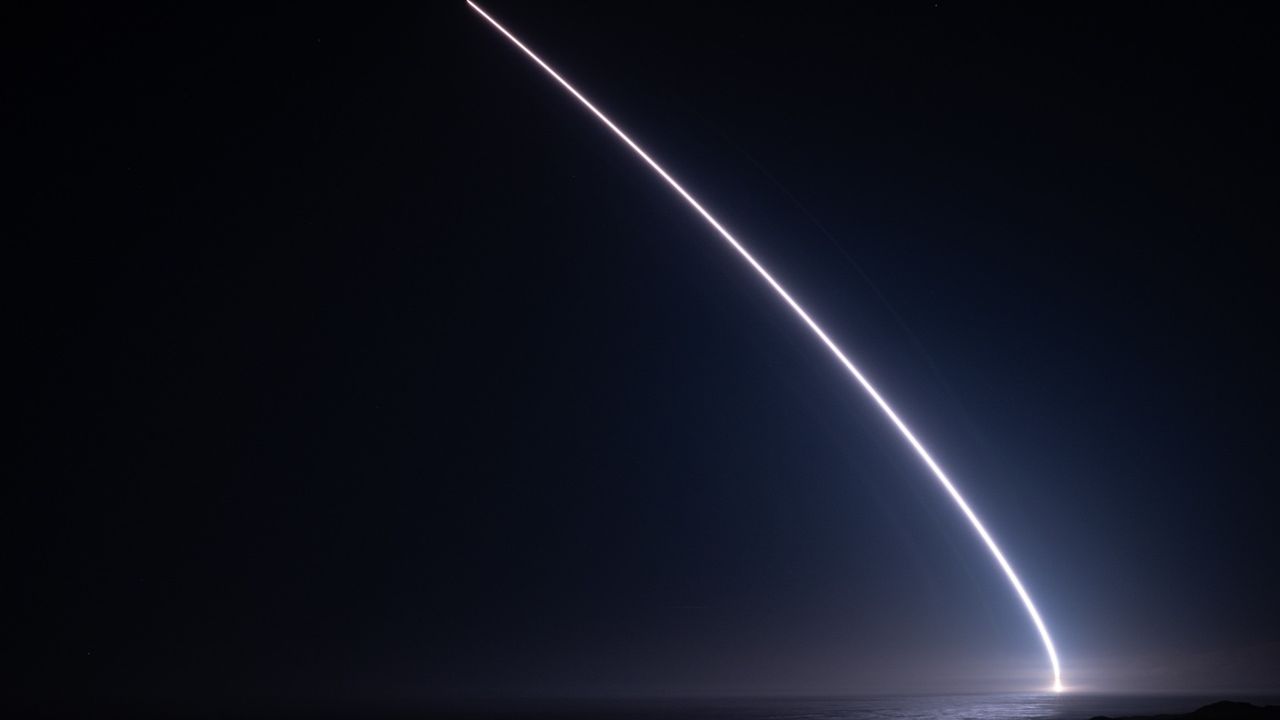
The U.S. military test-launched an unarmed nuclear-capable intercontinental ballistic missile overnight to verify the readiness of its arsenal.
The Minuteman III intercontinental ballistic missile (ICBM) took off from Vandenberg Space Force Base in California just after midnight Pacific time today (May 20).
The routine test flight took place just hours after the base hosted the launch of a SpaceX Falcon 9 rocket carrying 24 of the company's Starlink broadband satellites. As with every one of these launches, the military stressed that the test flight was planned years ago and is not in response to any current events.
These launches happen a few times a year; the U.S. military launched an unarmed Minuteman III missile nearly a year ago to this day in May 2025, then did so again in November.
According to a U.S. Space Force statement, the launch was designed to test not only the missile system but also the personnel who maintain and operate the United States' arsenal of ICBMs.
"Our ability to conduct these rigorous, realistic tests is foundational to our national security," Gen. S.L. Davis, commander of Air Force Global Strike Command, said in the statement. "This launch verifies the health and readiness of our ICBM force, confirming the capability of every component of the ICBM enterprise, from our operators to the weapon system itself, to execute the mission."
The statement does not specify where the test missile's payload landed, but a navigational warning published prior to the launch suggests it was headed for the U.S. military's typical target range at the U.S. Army's Ronald Reagan Ballistic Missile Defense Test Site in the Kwajalein Atoll, part of the Marshall Islands.
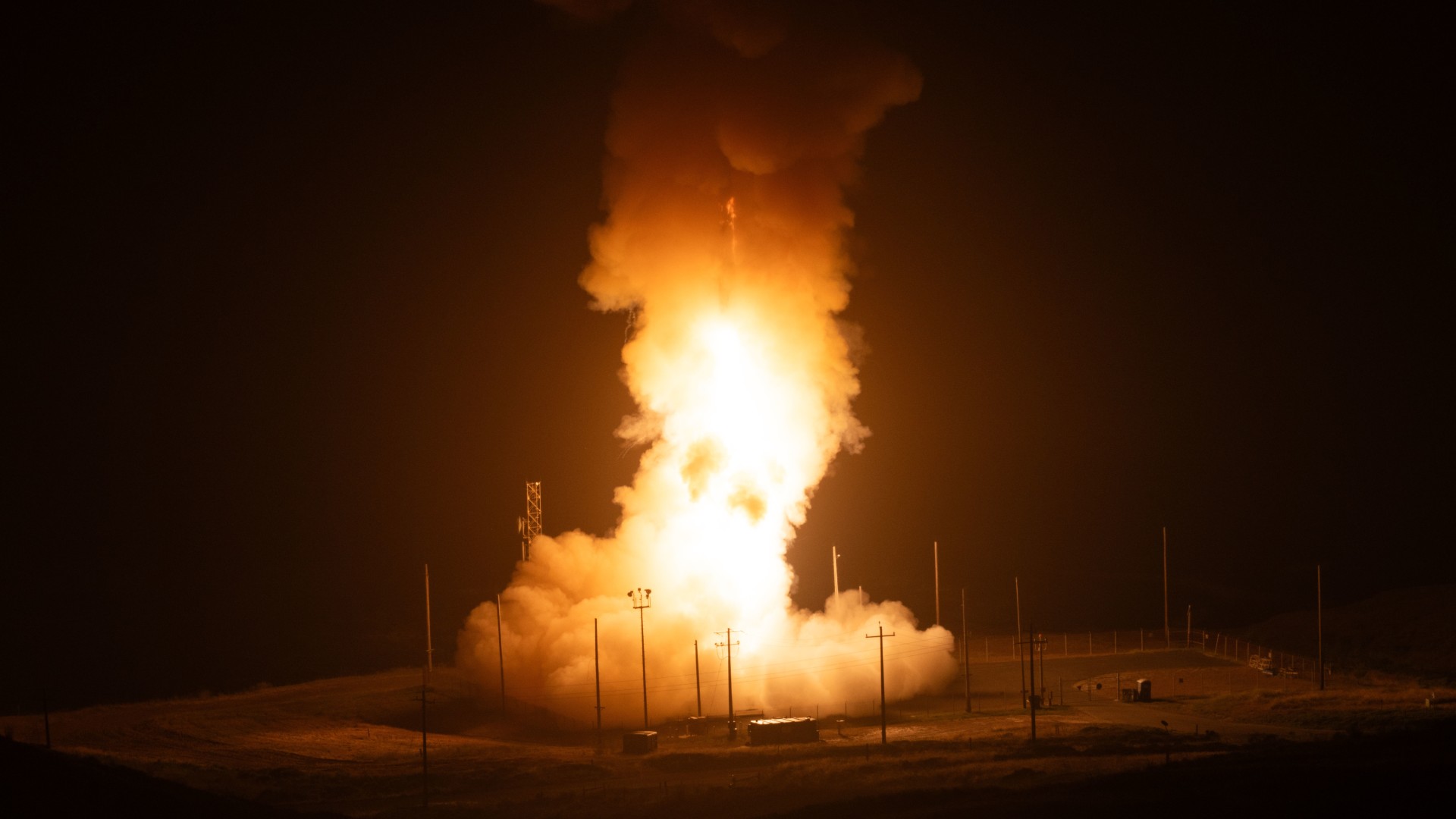
ICBMs have been in operation since the late 1950s. Iterations of these early weapons would go on to help launch the world's first satellites and space explorers; the United States launched its first astronauts into orbit with NASA's Project Mercury using the same Atlas rocket family as those in the nation's first ICBM tests.
At a technological level, intercontinental ballistic missiles are just rockets that carry warheads instead of satellites or crewed spacecraft. While they fly above Earth's atmosphere during the highest phases of their flights, ICBMS are launched on suborbital trajectories that follow arcing paths that take them back to Earth.
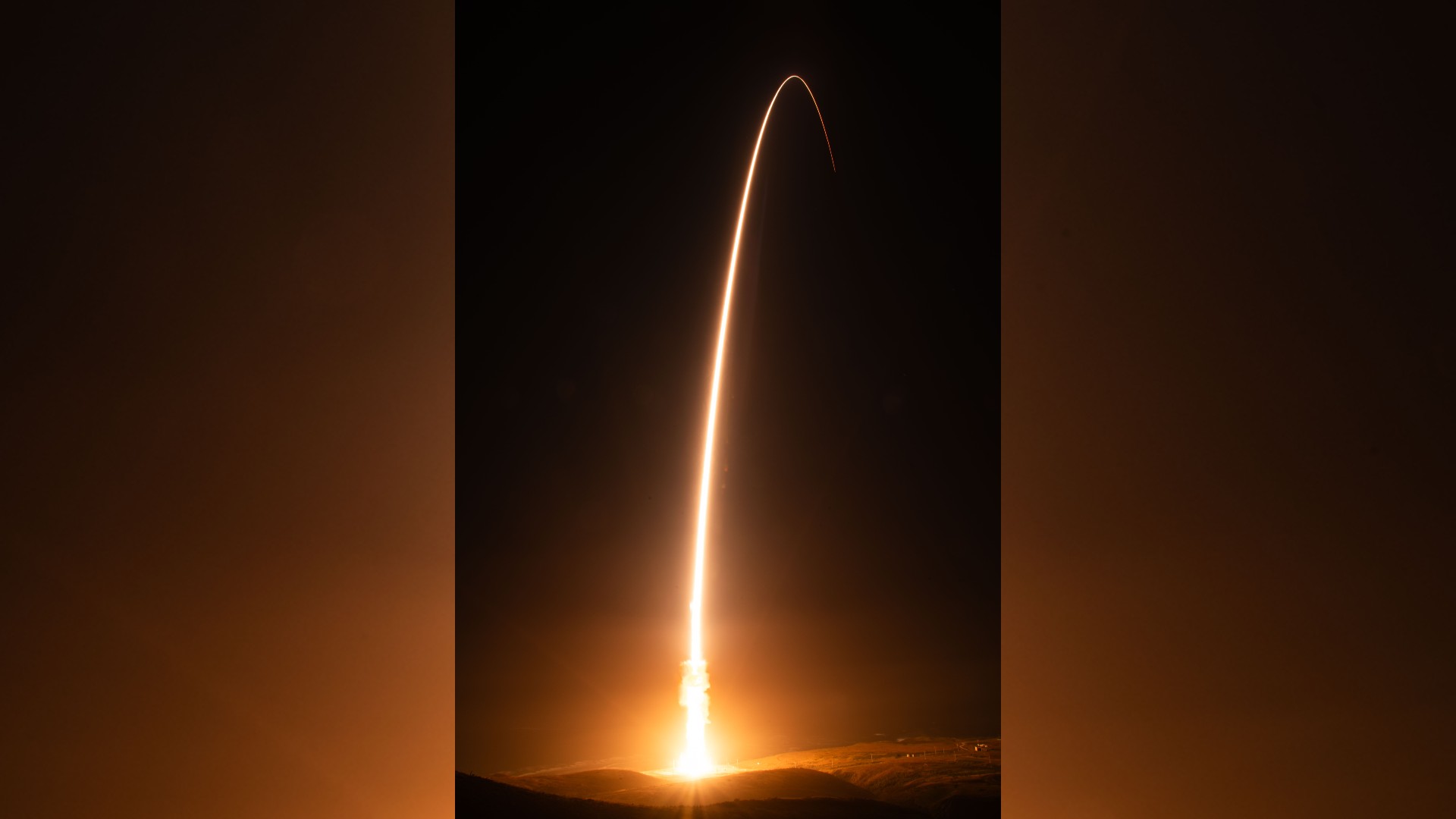
Modern ICBMs can travel distances of up to 3,400 miles (5,500 kilometers), and some variants can deploy multiple independent reentry vehicles that each carry their own nuclear warhead.
The United States is currently phasing out the Minuteman III missile. It will eventually be replaced by the upcoming LGM-35 Sentinel missile currently being developed by Northrop Grumman.