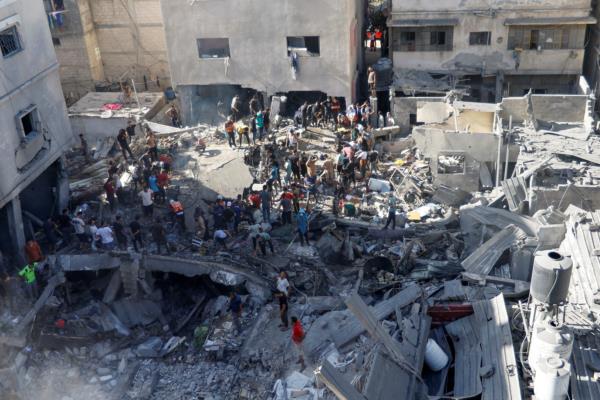
US-made munitions were used in the deadly Israeli strike on a camp for displaced Palestinians in Rafah on Sunday, as confirmed by a video from the scene and a review by explosive weapons experts. The strike targeted the camp for internally displaced people known as 'Kuwait Peace Camp 1,' resulting in tents engulfed in flames.
A video shared on social media, geolocated to the same scene, revealed the tail of a US-made GBU-39 small-diameter bomb (SDB), according to four explosive weapons experts who analyzed the footage. The GBU-39, manufactured by Boeing, is a high-precision munition designed for attacking strategically important targets with low collateral damage.
Despite its precision, using such munitions in densely populated areas always carries risks, as highlighted by explosive weapons expert Chris Cobb-Smith, a former British Army artillery officer. Another expert, Trevor Ball, a former US Army senior explosive ordnance disposal team member, identified the fragment as being from a GBU-39 based on its distinct features.
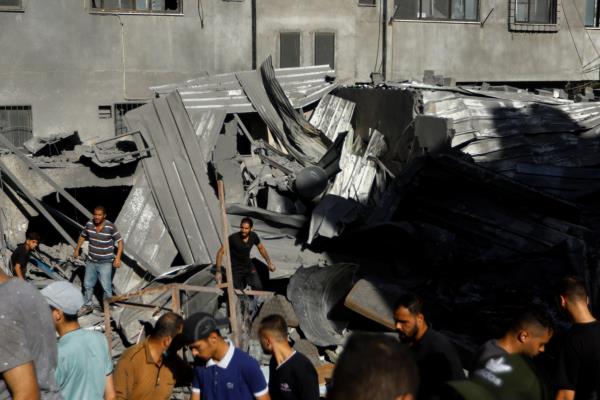

Israel Defense Forces spokesperson Rear Admiral Daniel Hagari confirmed in a briefing that the strike, aimed at senior Hamas commanders, utilized two munitions with small warheads containing 17 kilos of explosives. These bombs were described as the smallest munitions that Israeli jets could deploy, matching the traditional GBU-39 warhead's explosive payload.
Further evidence pointing to the US origin of the munitions was found in the serial numbers on the remnants, which matched those of a manufacturer of GBU-39 parts based in California. This revelation underscores the use of US-made munitions in the tragic incident at the camp for displaced Palestinians in Rafah.