MIAMI _ President Barack Obama issued a presidential directive on Cuba Friday that seeks to cement his policy changes toward the island and encourage further engagement even after he leaves office.
His administration also released a sixth set of regulatory changes designed to enhance business and trade between the United States and Cuba.
Obama said the presidential policy directive is "another major step forward in our efforts to normalize relations with Cuba. This directive takes a comprehensive and whole-of-government approach to promote engagement with the Cuban government and people, and make our opening to Cuba irreversible."
A senior administration official said that going forward the detailed, 12-page document, which builds on and consolidates changes the administration has made since rapprochement between the United States and Cuba began in December 2014, would be "the manual that will be used by various agencies" to guide them in their relations with Cuba.
The official said the directive, which supersedes any previous presidential directives on Cuba, would stand as U.S.-Cuba policy until it is replaced, but added: "It takes a significant amount of time to develop a presidential directive."
The senior administration official also said it seems unlikely a future U.S. president would try to close the U.S. Embassy in Havana, end regularly scheduled flights to the island or disrupt the increasing number of budding business partnerships with Cuba.
To do so, the official said, would be "cutting against the grain of public opinion here in the United States."
The directive makes it clear the president would like to see the embargo lifted: "The United States government will seek to expand opportunities for U.S. companies to engage with Cuba. The embargo is outdated and should be lifted.
"My administration has repeatedly called upon the Congress to lift the embargo, and we will continue to work toward that goal. While the embargo remains in place, our role will be to pursue policies that enable authorized U.S. private sector engagement with Cuba's emerging private sector and with state-owned enterprises that provide goods and services to the Cuban people."
The president said that "consistent with this approach, the Departments of Treasury and Commerce issued further regulatory changes today, building on the progress made over the last two years, to continue to facilitate more interaction between the Cuban and American people, including through travel and commercial opportunities, and more access to information."
It could be the final set of Cuba-related regulations issued by the Obama administration but a senior official said that further "refinements" are always possible.
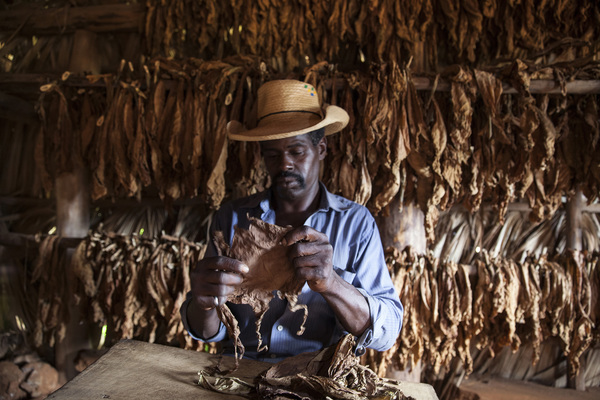
The new rules allow Cubans and Americans to engage in joint medical research and lift monetary limits on the amount of Cuban products Americans can bring back in their luggage for personal use. Currently the limit is $400, which included a combined total of $100 of alcohol and tobacco products. Now U.S. travelers can bring back as many cigars and bottles of rum as they like _ as long as they are for personal use and they pay the duties and taxes that would normally apply.
There will no longer be monetary limits on such products purchased in third countries that come into the United States as accompanied baggage.
The Commerce Department also will allow online sales of consumer goods by U.S. companies directly to Cubans without getting a prior U.S. license.
Asked what types of consumer goods Cubans would be allowed to purchase, a senior U.S. official responded: "Any type of consumer goods you could think of" from toothpaste to air conditioners, television sets and auto parts.
In a move that is expected to facilitate trade between the two countries, the Office of Foreign Assets Control also will lift a restriction that prohibited foreign ships from entering a U.S. port to load or unload cargo for a period of 180 days after calling on a Cuban port.
The changes take effect Monday when the regulations are published in the Federal Register.
"President Obama's historic announcement in December 2014 charted a new course for a stronger, more open U.S.-Cuba relationship," said Treasury Secretary Jacob J. Lew. "The Treasury Department has worked to break down economic barriers in areas such as travel, trade and commerce, banking, and telecommunications. Today's action builds on this progress by enabling more scientific collaboration, grants and scholarships, people-to-people contact, and private sector growth. These steps have the potential to accelerate constructive change and unlock greater economic opportunity for Cubans and Americans."
The new rules also expand the opportunities for Cubans to receive grants and scholarships to study in the United States. Two new categories have been added. Cubans will be able to receive such grants not only for traditional educational purposes but also to pursue scientific research and religious activities.
The regulations streamline some previous trade authorizations and allow U.S. nationals to provide services to Cuba or Cuban nationals related to developing, repairing, maintaining and enhancing Cuban infrastructure in order to directly benefit the Cuban people.
"These amendments will create more opportunities for Cuban citizens to access American goods and services, further strengthening the ties between our two countries," said U.S. Secretary of Commerce Penny Pritzker. "More commercial activity between the U.S. and Cuba benefits our people and our economies."
Despite progress in the U.S.-Cuba relationship, Obama said that "challenges remain _ and very real differences between our governments persist on issues of democracy and human rights _ but I believe that engagement is the best way to address those differences and make progress on behalf of our interests and values. The progress of the last two years, bolstered by today's action, should remind the world of what's possible when we look to the future together."