The Trump administration has officially designated Colombia’s Clan del Golfo drug cartel as a foreign terrorist organization, a move that significantly escalates financial pressure on its members and potentially paves the way for military intervention.
The decision comes amid increasingly strained relations between Washington and Bogotá.
The US State Department confirmed the listing of Clan del Golfo, also known by its Spanish acronym AGC, as both a foreign and global terrorist group.
It described the organization as a "violent and powerful criminal organization" that relies on cocaine trafficking to finance its illicit and violent activities. A statement from the department asserted that "Clan del Golfo is responsible for terrorist attacks against public officials, law enforcement and military personnel, and civilians in Colombia."
This designation follows a period of heightened tension, including the Trump administration’s decision in September to add Colombia to a list of nations failing to cooperate in the drug war – the first such inclusion in nearly three decades.
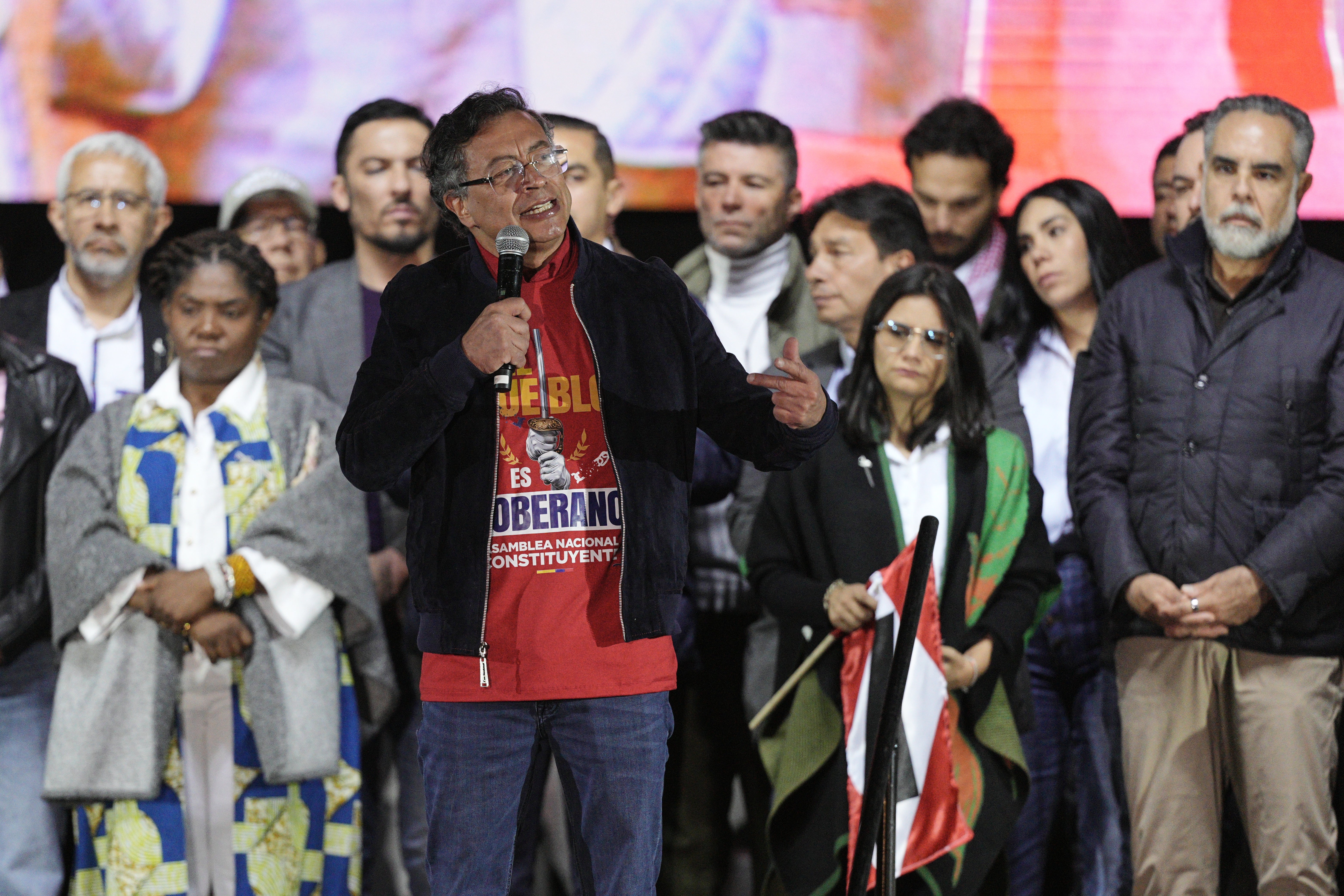
This was seen as a sharp rebuke to a long-standing US ally, reflecting a recent surge in cocaine production and a deterioration of ties between the White House and Colombia’s leftist president, Gustavo Petro. The United States also sanctioned President Petro in October, accusing him of allowing drug cartels to "flourish" and export cocaine to the US. President Petro vehemently denied these allegations, countering that Colombia is intercepting record levels of cocaine shipments without resorting to the killing of suspected smugglers.
With an estimated 9,000 fighters, Clan del Golfo stands as one of Colombia’s most formidable armed groups.
Its origins trace back to right-wing paramilitary squads that engaged in conflict with Marxist guerrillas throughout the 1990s and 2000s.
A report published last year by the Human Rights Defender's Office, a public agency, indicated that the AGC operates in approximately a third of Colombia's 1,103 municipalities, where it is known to extort local businesses and has faced accusations of recruiting children.
Crucially, Clan del Golfo has been engaged in peace talks with the Colombian government since September, discussions that could lead to the disarmament of its fighters in exchange for reduced sentences for its leadership. Earlier this month, the Colombian government and the AGC signed an agreement in Qatar, stipulating that from next March, the group’s fighters will be permitted to gather in specially designated zones in northern and western Colombia, where they will be immune from prosecution as peace talks continue. The agreement also includes a provision for the Colombian government to suspend any extradition of AGC leaders to the US during these negotiations.
Elizabeth Dickinson, a Colombia analyst at the International Crisis Group, suggested that Tuesday's designation could be interpreted as a message to the Colombian government to adopt a more stringent approach against the group. "The tensions between Colombia and Washington are at historic levels," Dickinson stated. She added that while terrorist designations typically aim to prevent third parties from conducting business with targeted groups, the action against AGC might be more "symbolic" and will "give pause to Colombian authorities ... going forward." Colombia has previously held peace talks with the National Liberation Army, another organisation designated as a terrorist group by the US, and reached a peace deal with the Revolutionary Armed Forces of Colombia (FARC) while it too was under a terrorist designation.
While the designation does not immediately grant the US government authority to conduct military strikes, it does strengthen the legal framework for potential attacks against targeted groups. Earlier this year, the Trump administration designated Venezuelan gangs Tren de Aragua and Cartel de los Soles as foreign terrorist organisations, preceding strikes against alleged drug smuggling boats off the coast of Venezuela, the legality of which has been questioned by US lawmakers. The Trump administration has also accused Venezuelan President Nicolas Maduro of orchestrating drug shipments to the US. Last week, Trump remarked that President Petro has been "fairly hostile" to the US and warned that he was "going to have himself some big problems if he doesn’t wise up."