The coronavirus outbreak has begun to wreak widespread disruption in the United States as the country recorded its 1,000th case, Democratic presidential candidates cancelled campaign rallies and two more states declared emergencies.
At least 35 US states and the District of Columbia had reported infections of Covid-19 by Tuesday night, increasing the national total by almost 50% in the space of 24 hours to 1,030. The global number of cases has risen close to 120,000.
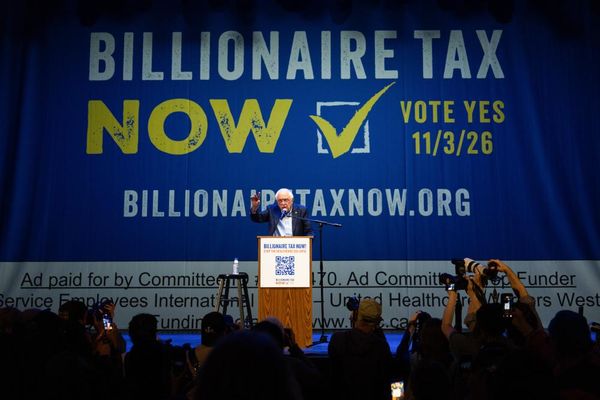
As the White House and Congress sought to thrash out a deal to try to cushion the economic impact of a nationwide slowdown, Democratic rivals Bernie Sanders and Joe Biden both cancelled campaign rallies in Ohio on Tuesday night.
The Sanders campaign said it was heeding warnings from Ohio officials about holding large, indoor events and added that: “All future Bernie 2020 events will be evaluated on a case-by-case basis.”
Large gatherings are likely to be scaled back elsewhere in the country. Washington state governor Jay Inslee will on Wednesday announce a ban on all gatherings of more than 250 people in the greater Seattle metro area, Associated Press reported, as he steps up measures to contain the spread in the state hit hardest so far with at least 23 deaths.
On the eastern seaboard, New York state called in the National Guard to scrub public places and deliver food in the New York City suburb of New Rochelle that is at the centre of the nation’s biggest known cluster of infections. Neighbouring New Jersey reported its first death.
In Michigan, where Biden triumphed over Sanders in a crucial primary contest on Tuesday, the governor declared a state of emergency after it recorded its first two cases. Massachusetts, which has 92 presumptive positive cases, according to CNN, later followed suit.
AP also reported that Major League Baseball, which is due to begin the new season on 26 March, was holding talks about rescheduling of games if host cities are shut down because of bans on large crowds.
Around the world, 119,120 people have contracted the coronavirus since it surfaced in China late last year, according to the Johns Hopkins University tracker. More than 4,000 people have died. Other developments around the world include:
Italy, which has the highest death toll outside of China, began a lockdown of its entire population of 60 million on Tuesday.
In the UK, junior health minister Nadine Dorries went into self-isolation after testing positive for the virus. She was thought to have come into contact with hundreds of people in the past week, including the prime minister Boris Johnson.
Sport continued to feel the impact with Arsenal placing some of their players in self-isolation and postponing their Premier League match with Manchester City set for Wednesday night. The move came after it emerged that the unspecified number of players met the chairman of Greek club Olympiakos on 27 February week. He has since tested positive.
In South Korea, where authorities had hoped a severe outbreak was being contained, cases spiked again on Wednesday by 242 compared with fewer than 100 the day before.
Japan reported 59 new cases on Wednesday, its biggest one-day rise since the outbreak began. The nation was also forced to scale back ceremonies to mark the ninth anniversary of the triple disaster of tsunami, earthquake and Fukushima nuclear meltdown in March 2011.
The rapid spread of the virus through the world’s biggest economy contributed to another rocky day on Asian share markets. Although Wall Street rallied on Tuesday on the hope of a Trump administration stimulus package, the lack of details and the mounting number of cases in the US sent stocks falling.
In Sydney the ASX200 slumped 3.6% and the Nikkei in Tokyo was off 2.2% and futures trading points took a dive of more than 3% when US markets open later on Wednesday. European stocks could be bolstered by the Bank of England’s announcement on Wednesday morning that it is cutting the base rate by 50 basis points back to the record low of 0.25%.
Eleanor Creagh, economist at Saxa Capital Markets in Sydney, said the drip-drip of information about the spread of coronavirus from around the world each day was creating a climate of uncertainty in financial markets, adding to volatility.
“As coronavirus spreads around the globe, the economic ramifications are only just beginning,” she said. “The longer it takes, the more aggressive the measures by governments will become and that drags on the economy and risks a meltdown.”