WASHINGTON _ Despite a furious few days of talks and intense pressure from President Donald Trump, U.S. and Canadian officials failed to meet a White House-imposed deadline of Friday to reach a deal on a revamped North American Free Trade Agreement.
Missing the Friday deadline, in itself, does not imperil a renegotiated NAFTA, which also includes Mexico. Senior Canada and U.S. negotiators plan to resume talks next week in hopes of settling outstanding disputes over Canada's protected dairy market and other sensitive issues.
"The talks were constructive, and we made progress," said U.S. Trade Representative Robert Lighthizer at the conclusion of the Friday's negotiations in Washington.
But the longer the discord remains, the greater the risk that a trilateral accord will be pushed out much further into the future, or that Trump's bid to overhaul NAFTA _ one of his top priorities _ will fall short.
And Trump's Twitter confirmation Friday that he had told Bloomberg News on Thursday that he would not compromise with Canada on trade did not help the prospects for a quick or easy settlement.
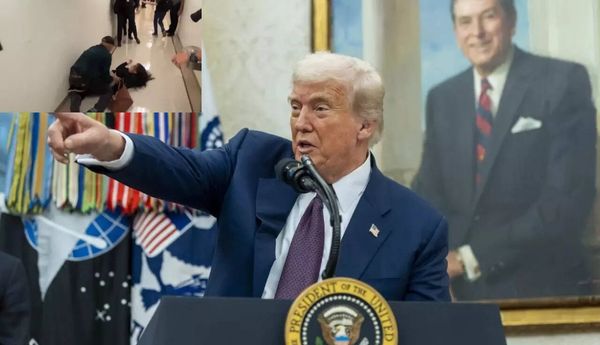
"If we don't make a deal on Canada, that's fine," Trump said later Friday in Charlotte, N.C.
Earlier this week Trump heaped pressure on Canada by announcing that the U.S. and Mexico had come to terms on a revised NAFTA and that he would move ahead with a separate U.S.-Mexico agreement if Ottawa did not come on board by Friday. Moreover, Trump threatened to slap tariffs on Canadian autos.
On Friday, Trump delivered a notice to Congress that he intended "to enter into a trade agreement with Mexico _ and with Canada "if it is willing" by the end of November.
The Friday deadline that Trump set _ and his hardball tactics _ brought Canada hurriedly back to the bargaining table after several weeks of being on the sidelines as the U.S. and Mexico negotiated. But they still weren't enough to push Canada to a speedy compromise, as there were thorny issues to resolve and in part perhaps because the Friday cutoff didn't have as much force as initially thought.
The deadline was meant to satisfy a congressional procedural requirement for a 90-day notice before a new NAFTA could be signed. The U.S. and Mexico wanted to ensure that the current Mexican president, Enrique Pena Nieto, could sign the agreement before he leaves office Nov. 30. Technically speaking, that meant the notice of a trilateral deal had to be given by Friday.
But experts said that rule didn't appear to be so rigid. A drop-dead date for the parties to agree to a deal looks to be closer to Sept. 30, because the so-called trade promotion authority granted to Trump calls for a full text of a revised NAFTA agreement to be issued 30 days after the notification is given.
If Pena Nieto doesn't end up signing, and responsibility for NAFTA talks passes onto the incoming Mexican president, Andres Manuel Lopez Obrador, many believe it will complicate and delay efforts for a completion of a new agreement.
Lawmakers have made clear their preference for keeping a trilateral NAFTA intact and have questioned whether Trump can push through a stand-alone pact with Mexico under the trade-promotion authority that the president currently enjoys.
Negotiations to rewrite NAFTA began more than a year ago after Trump threatened to withdraw from the pact unless there were substantial changes that are more favorable for the United States. The president has blamed NAFTA for the large U.S. trade deficit with Mexico and the loss of many domestic jobs and plant closures.
The U.S. preliminary deal with Mexico includes changes to increase North American auto production, limit investor dispute settlement for certain sectors, and strengthen labor rights in Mexico. Analysts and industry executives say these and other amendments should benefit some American workers and businesses, but note that it is too early to tell how big of an improvement they are likely to be from the existing pact.
Trade among the three NAFTA countries totaled about $1.2 trillion last year, more than triple the level since the agreement took effect in 1994.