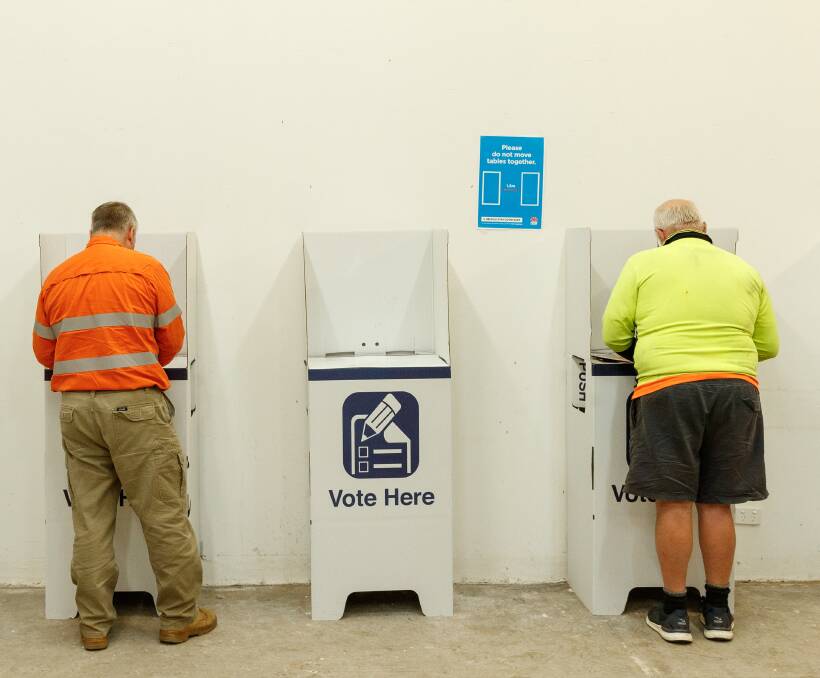
If there's one thing that's clear from the Upper Hunter by-election campaign, it's that most people do not understand the state's optional preferential voting system.
So here we go.
The by-election has 13 candidates for the vacant seat of Upper Hunter to serve in the lower house of NSW Parliament until the next statewide election in 2023.
Voters must put a "1" in the square next to their preferred candidate on the ballot paper.
Under the optional preferential voting system (which is different to the non-optional preference system in federal elections), voters can then assign as many preferences as they like from 2 to 13, or none at all.
Candidates and parties have how-to-vote cards which outline how they want their supporters to assign preferences, but voters can choose any order they like. Or they can assign no preferences beyond voting "1".
To emphasise, candidates and parties only recommend how voters should assign preferences; they do not decide how preferences are distributed down the ballot, even if they have a so-called "preference deal" in place with another party. Preference numbering is up to each voter.
Candidates and parties have how-to-vote cards which outline how they want their supporters to assign preferences, but voters can choose any order they like.
When polling booths close, counters start tallying up the "1" votes for each candidate.
If one candidate attracts more than 50 per cent of these "primary" votes, they win by "absolute majority". Game over.
This is highly unlikely in Saturday's by-election as no candidate is expected to dominate; the winner is almost certain to be decided by the allocation of preferences.
The candidate with the fewest primary votes is eliminated from the count. Anyone who voted for this candidate and who assigned a second preference will have their preference added to the vote tally of that candidate.
If the ballots for the excluded candidate do not include second preferences, these votes are "exhausted" and excluded from the count.
The process then repeats, eliminating the least popular candidate in each round.
The ballots of excluded candidates are reassigned according to their second, third, fourth etc preferences as applicable. Ballots of excluded candidates which do not assign preferences to someone still in the race join the "exhausted" pile.
The count continues until one candidate wins more than half the non-exhausted votes. In an election with 13 candidates and apparently no decisive leader, the count could continue for many rounds and stretch well beyond Saturday night.
Polling booths open at 8am on Saturday and close at 6pm. As of Wednesday, more than 10,000 people, or almost 20 per cent of the electorate's 56,127 registered voters, had voted at pre-poll booths. Another 3000 have registered to vote by post.
- Note: This story has been fact-checked by the NSW Electoral Commission.