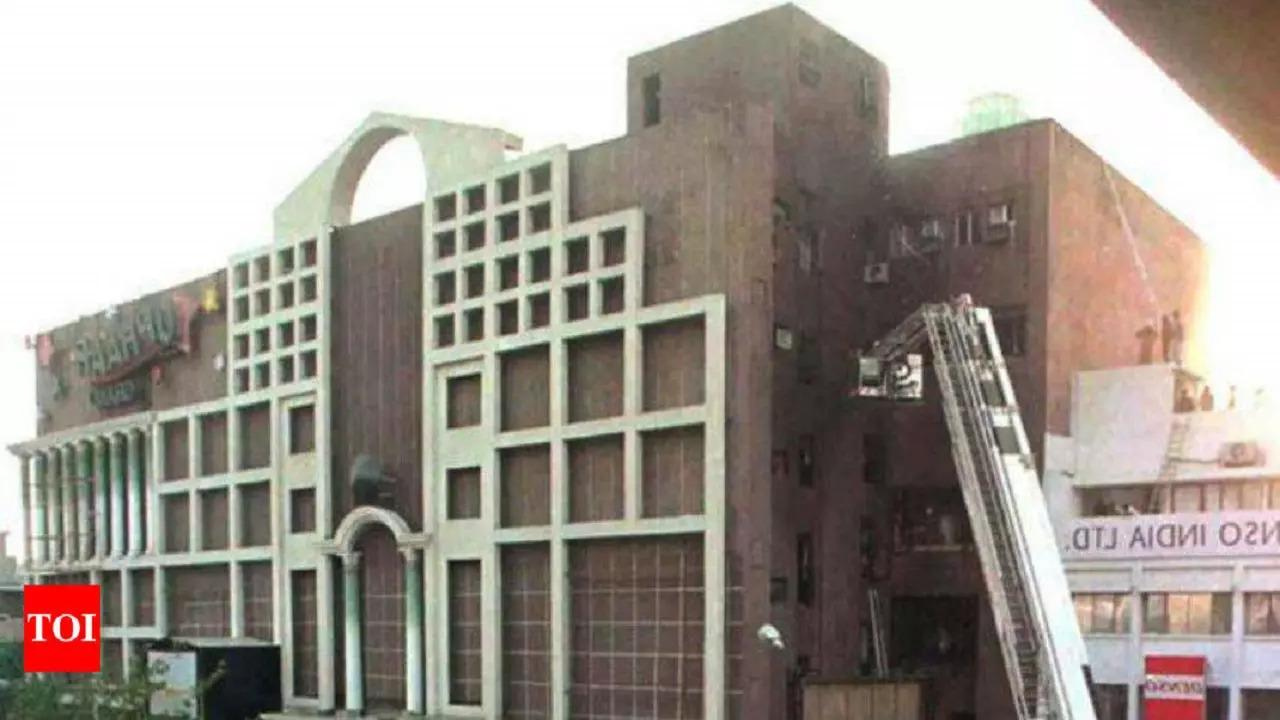
NEW DELHI: Real estate barons Sushil and Gopal Ansal were convicted on Friday for tampering with evidence in the 1997 Uphaar cinema fire tragedy with the court saying they attacked the very purity and sanctity of the justice system, thereby making it the “victim”.
The court further said the “high handedness” of the accused for securing benefit in the trial by any means demonstrated the scant regard they had for the justice delivery system, which is the bedrock of democracy.
During the trial in the main case related to the tragedy that claimed 59 lives, the Ansals, along with five others, including the then court staff, had torn, defaced and obliterated crucial documents of the prosecution evidence to secure their acquittal. The Ansals were convicted in this matter.
On Friday, Chief Metropolitan Magistrate Pankaj Sharma also convicted former court staffers Dinesh Chand Sharma, PP Batra and Anoop Singh in the evidence tampering case. Two co-accused — Har Swaroop Panwar and Dharamvir Malhotra — died during the course of the trial.
It was observed that the accused did their best to sabotage the trial but, unfortunately for them and fortunately for the judicial system, the legal process was robust and strong, immune from such nefarious attacks and could respond to such situations with resilience. “Although time and swift trial was the cost paid by the system,” said the 275-page judgment.
The court observed that the accused “tampered with, obliterated, tore, defaced some handpicked documents of the main case through meticulous planning to escape punishment by scuttling the trial process and fiddled with the judicial system with great impunity”.
“The manner in which the process of law was subjected to desecration by the accused is no less than defiling the justice administration system… The brazen attitude of the accused is reflective from their conduct, as after destruction of evidence they vehemently opposed the prosecution plea for adducing secondary evidence,” said the court.
It added that their misconception that they would get away with their nefarious design from punishment had been exposed to the world at large. The court noted that the trigger to the conspiracy was the order passed by Delhi high court in April 2002 wherein directions were passed to take up the matter of the main case 10 times a month and conclude the trial by December that year.
“...The tampering was detected in July (2002), which makes it plain that when the accused got convinced that trial would proceed in a speedy way, they hatched a conspiracy to remove the most crucial documents to escape punishment,” the court noted.
After Sharma was removed from service, he was given a job by the accused to ensure the secrecy of the conspiracy as they felt that if he worked anywhere else, he could spill the beans. The court said he was paid double the monthly salary, which went on to show that he was being rewarded for the crime.
“Merely because the secondary evidence was allowed to be led/adduced by the court and trial ended in conviction is no ground to believe that accused have not benefited from the said act of destruction of evidence. Their criminal plot/conspiracy to destroy the evidence was achieved at a crucial time knowing well its repercussions on the outcome of the ongoing trial,” said the judge.
Neelam Krishnamoorthy, who lost her two children in the fire, said justice had been served and the judgment would go a long way as it was very rampant that people with money tampered with evidence, which was hardly brought to the notice of the judiciary.
“The 59 people who lost their lives have got justice and I’m sure they will get peace. This has been due for a long time. These people with all their money power tried every possible thing… I hope it brings in a deterrent,” Krishnamoorthy told TOI.
Additional public prosecutor AT Ansari argued that this case had not only brought a bad name to the well-tested criminal justice delivery system, but also eroded the confidence and trust of a common man in the system.
Senior advocate Vikas Pahwa, appearing for the complainant, Association of Victims of Uphaar Tragedy, argued that the accused had destroyed the most vital piece of evidence.
Advocate Tanveer Ahmad Mir, appearing for Sushil Ansal, submitted that the allegations against him were baseless and illogical.