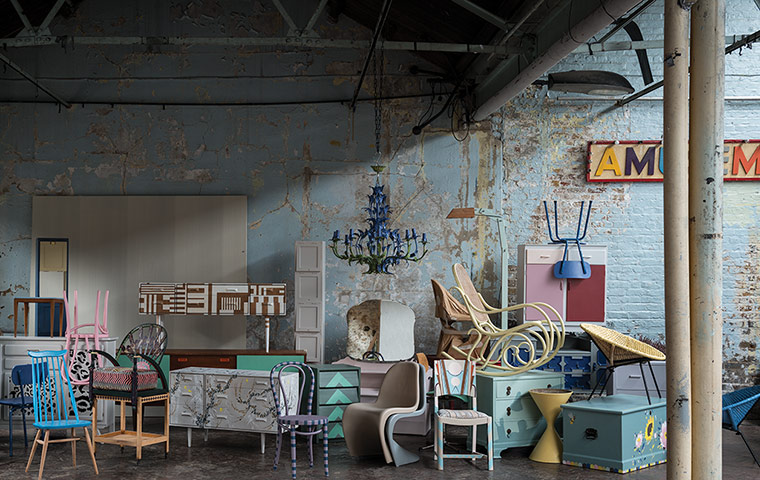
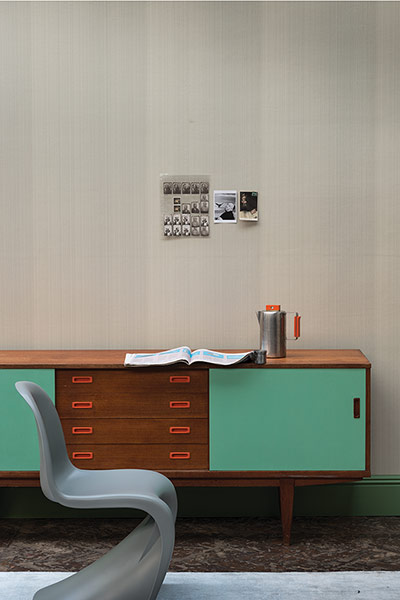
Not every inch of a furniture find needs to be painted – just painting the drawer handles or door panels can have a dramatic effect.
1. Remove cabinet doors and lightly sand them.
2. Remove drawers and sand the handle areas only.
3. Mask around the drawer handles with masking tape, mask off the handles on the doors. Apply Farrow & Ball Primer & Undercoat (Red & Warm Tones) to the cabinet doors, and (Mid Tones) to the drawer handles.
4. Paint two coats of Arsenic on the door panels, leaving to dry for a minimum of four hours between coats (ideally leave overnight). Ensure the paint is completely hard before closing newly painted cupboard doors.
5. Paint two coats of Charlotte’s Locks on the drawer handles, leaving to dry for a minimum of four hours (ideally leave overnight).
6. Reassemble the sideboard. Photograph: James Merrell
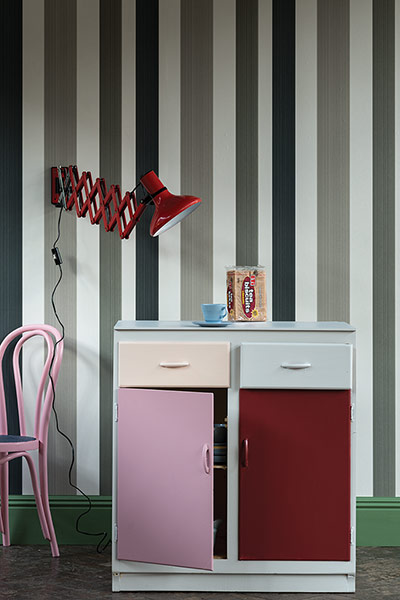
Using multiple colours on drawers and doors is a simple yet effective way of adding personality, depth and colour to a kitchen. Use bright colours to inject a sense of fun, or different shades of grey for a more grown-up look.
1. Prepare the cabinet – remove the doors and drawers and lightly sand the wood to improve paint adhesion.
2. Apply Primer & Undercoat to the unit, doors, drawers and handles.
3. Paint one draw in Calamine, the other in Dimpse. Paint one cupboard door in Cinder Rose, the other in Rectory Red. Paint the unit Dimpse.
Paint the handles to match the drawers and cupboard doors. Leave to dry for a minimum of four hours.
4. Paint a second coat on the unit, drawers and doors. Leave to dry for a minimum of four hours (ideally leave overnight). Ensure the paint is completely hard before closing newly painted doors and drawers.
5. Reattach handles and doors and replace drawers.
Photograph: James Merrell
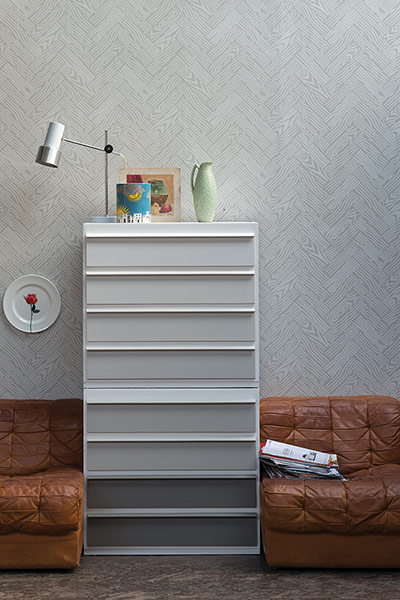
This is a simple yet effective technique to create a customised, stylish chest of drawers. It works particularly well with tall chests and with any colour family.
1. Lightly sand the chest and drawer fronts to improve paint adhesion.
2. Apply Primer & Undercoat (White & Light Tones) to the chest and four of the drawer fronts, (Mid Tones) to the remaining drawer fronts.
3. Paint two coats of Wevet on the chest.
4. Paint two coats of each colour to two drawer fronts: Cornforth White, Ammonite, Purbeck Stone and Mole’s Breath. Leave to dry for a minimum of four hours between coats (ideally leave overnight to completely harden). Ensure the paint is hard before closing newly painted drawers.
5. Replace your drawers, placing the darkest colour drawers at the bottom and working up to the lighter drawers at the top. Photograph: James Merrell
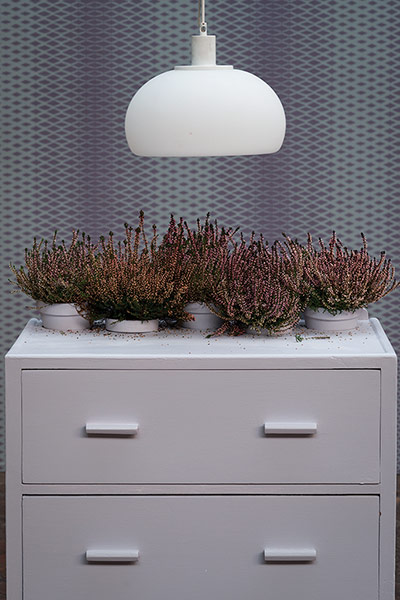
Not for the faint-hearted, this involves carrying out some bespoke carpentry to create a custom planter.
1. Lightly sand the chest and drawer fronts to improve paint adhesion.
2. Mark up the position of the pots at the back of the dresser. Be aware of any structural battens on the inside, and avoid drilling into these as it may affect the stability of your furniture piece.
3. Drill pilot holes, then use a hole saw to cut out holes to position your pots in place. Sand back any rough edges. Test the drawers, as the top drawer may require some adjustment (you may need to shorten the depth of the top drawer, or lower the back of the top drawer so it will slide now you have pots in place).
4. Apply Primer & Undercoat to the chest, drawer fronts and plant pots.
5. Paint two coats of Calluna, leaving to dry for a minimum of four hours between coats (ideally leave overnight).
6. Add your pots of heather. Photograph: James Merrell