MIAMI _ As it plowed up the coast Thursday, Hurricane Matthew cut a razor-thin path that threatened to make history: the first major hurricane to ever strike Central Florida's east coast.
While South Florida will likely continue feeling winds and rain Thursday night, the threat to Miami-Dade and Broward counties had clearly lessened. Authorities now sharpened their focus on coastal areas between Port St. Lucie and the Space Coast, an area that has boomed over the last few decades.
On its current path, the fierce Category 4 storm could come dangerously close, or make a fearsome landfall.
"A lot of communities are going to be underwater if predictions are correct," said Colorado State University meteorologist Phil Klotzbach. "You're going to see a very damaging storm in the next few days."
At 5 p.m. EDT, the storm was located 100 miles east, southeast of West Palm Beach moving northwest at 14 mph. National Hurricane Center forecasters reported sustained winds of 140 mph, but warn they could strengthen. In addition to winds, forecasters said the storm could also churn up life-threatening storm surges, rising 7 to 11 feet from Sebastian Inlet north to the state border over the next 36 hours.
During the day, Matthew plowed across the Bahamas on its way to Florida, but veered slightly east, helping keep South Florida from getting slammed harder.
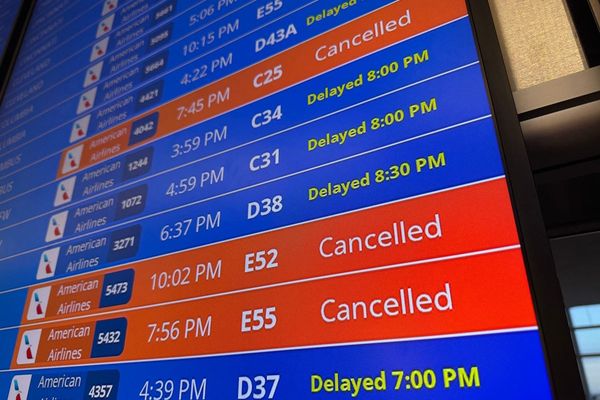
Much of the state had hunkered down by Thursday evening, after a day racing to make final preparations. Earlier, westbound traffic on I-10 out Jacksonville jammed up with people evacuating northeast Florida. On Alligator Alley, a service station midway across ran out of fuel. Further south, authorities urged 17,000 people in Martin County to leave barrier islands, although many stayed put.
Along the west coast, hotels began filling up. The state has partnered with AirBnb to offer free shelter to evacuating residents.
"My biggest concern is people aren't taking this seriously enough," Gov. Rick Scott warned at his third hurricane briefing of the day from St. John's County Thursday. "I don't want people to lose their life."
Residents should expect winds of up to 100 mph, reaching the Palm Beach County coast first and then barreling up the coast to Brevard and Volusia counties at the peak of its destructive power, Scott said.
In Melbourne, residents were anxious, though not necessarily heeding orders.
"I'm worried. They're telling us this going to be the worst one we've ever seen," said Marion Smith, 76, who lives in the Palm Bay Estates trailer park just yards from the bay. Thursday evening, senior citizens began filing into the clubhouse, where they planned to ride out the storm next to a stockpile of pool noodles, deck chairs and board games.
The National Weather Service in Melbourne warned Thursday that the approaching storm is the "strongest hurricane to affect this area in decades," and that wind damage could leave some areas uninhabitable for weeks. Bryan Norcross, a meteorologist with The Weather Channel who grew up in Melbourne, said on Facebook that "there is nothing in the record book even close."
Though the Space Coast has dealt with tropical storms over the last decade, Klotzbach said no major storm has ever been recorded making a hit going back to 1851. In 2004, Frances and Jeanne sent damaging winds north, but both made landfall in Martin County. In 1995, Hurricane Erin hit Vero Beach, but it crossed Brevard County with peak winds of about 100 mph, making it a Category 1 storm.
The area has benefited from the geometry of its coast, Klotzbach said, which swings to the west.
"Hurricanes track from east to west and as you get to the western part of the Atlantic, they move more toward the north," he said.
In Jacksonville, local officials worried about apathy, and ignorance. The city hasn't taken a hit since Hurricane Dora in 1964, long enough for a generation of Gen X-ers and millennials to have never experienced a storm.
"To be clear, if this storm stays toward the left side of the National Hurricane Center cone and comes ashore over East Central Florida," Norcross wrote, "this will be the worst hurricane ever recorded in that part of the state."