Shelf cloud, Minnesota, US. When seen from the ground shelf clouds appear as low, wedge-shaped clouds and are usually associated with severe thunderstormsPhotograph: Science Photo Library/Rex FeaturesSouth Dakota, US: Mammatus clouds over South Dakota. Mammatus is a meteorological term applied to a cellular pattern of pouches hanging underneath the base of a cloudPhotograph: Science Photo Library / Rex Feat/Science Photo Library / Rex FeatCumulonimbus cloud over western Africa, taken from the International Space Station (ISS). Cumulonimbus clouds rise vertically until they hit a natural barrier, known as the tropopause (the atmospheric boundary between the troposphere and the stratosphere), and then flatten out. Cumulonimbus usually herald a severe stormPhotograph: Science Photo Library/Rex Features
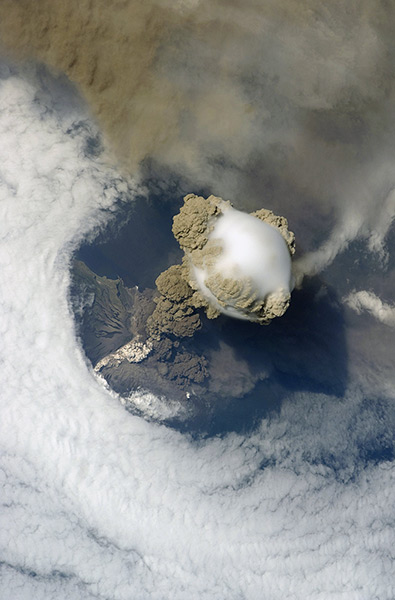
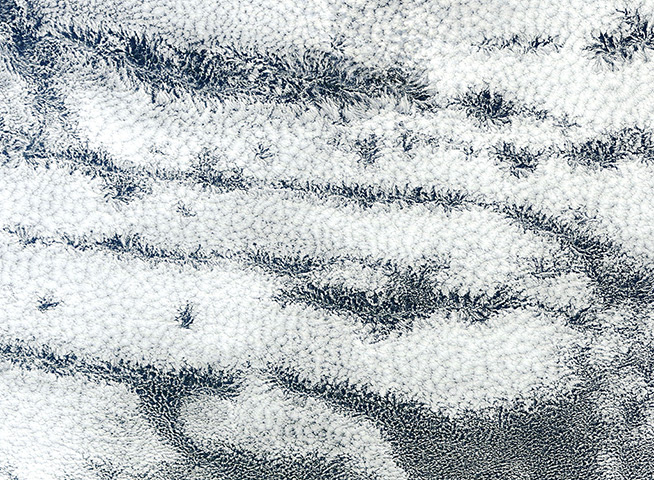
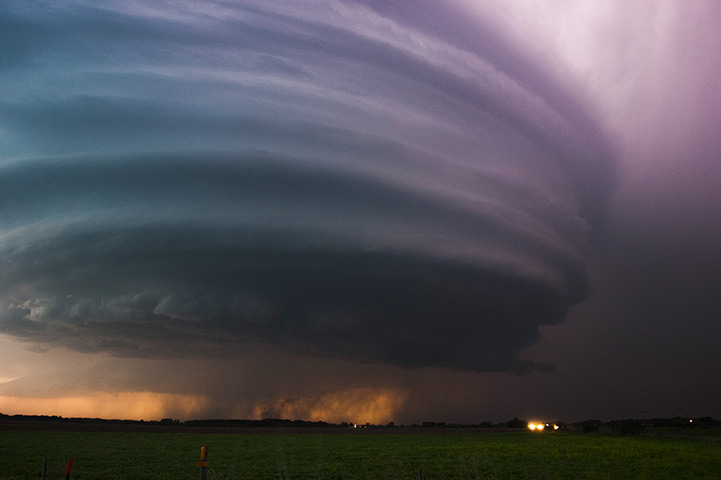
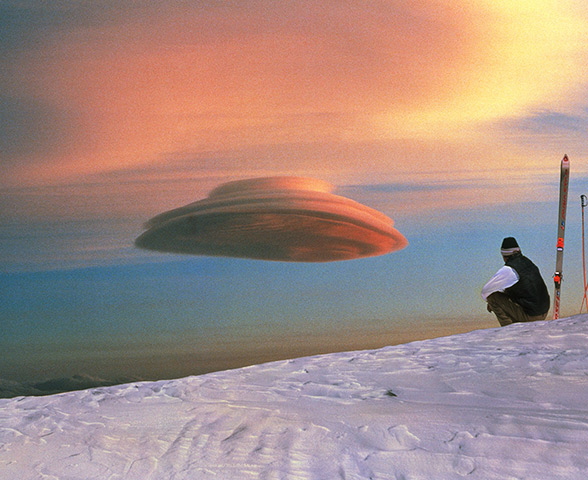
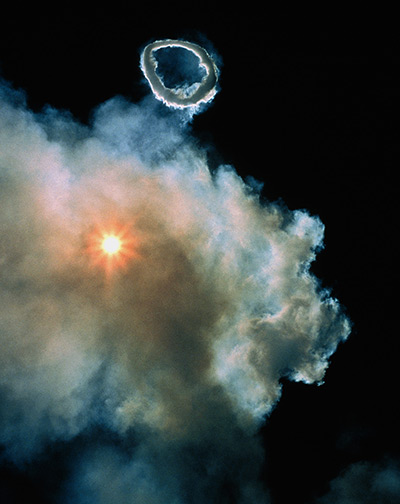
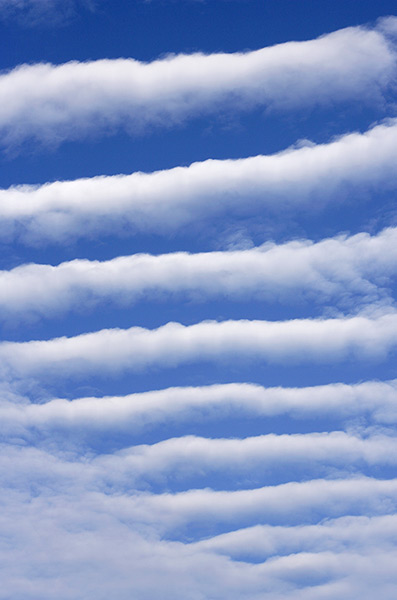
Noctilucent clouds are crystals of ice hanging around 50 miles high in the atmosphere that catch the light of the sun long after it has set on the horizon.Photograph: Science Photo Library/Rex FeaturesPileus cloud above the Sarychev volcano as it erupts, at the Kuril Islands, Russia. Pileus clouds are small clouds that form on top of a bigger cloudPhotograph: Science Photo Library / Rex Feat/Science Photo Library / Rex FeatActinoform clouds are only visible from space. These large formations form ray-like patterns over hundreds of miles. They are associated with drizzle and gloomy weather. Very British, perhaps?Photograph: Science Photo Library/Rex FeaturesA supercell just north of Grand Island, Nebraska, US. Supercell thunderstorms rotate with immense energy, causing a strong updraft and severe weather, including tornadoes, hail, heavy rain, lightning and heavy windsPhotograph: Science Photo Library/Rex FeaturesLenticular cloud, Mauna Kea, Hawaii. The lens-shaped clouds form at high altitude and are usually formed when air passes over mountain topsPhotograph: Science Photo Library/Rex FeaturesA steam ring being blown from the Bocca Nuova vent of Mount Etna, Sicily. Steam rings are generated when a pulse of steam is ejected from a near-cylindrical volcanic ventPhotograph: Science Photo Library/Rex FeaturesVon Karman cloud vortices above Alexander Selkirk Island, Chile. These naturally occurring vortices are crafted by wind patterns on the cloudsPhotograph: Science Photo Library / Rex Feat/Science Photo Library / Rex FeatAltocumulus undulatus clouds at Abruzzo national park, Italy. This cloud formation consists of parallel bands of cumulus clouds, occuring when wind shear affects a layer of altocumulusPhotograph: Science Photo Library / Rex Feat/Science Photo Library / Rex Feat
Sign up to read this article
Read news from 100’s of titles, curated specifically for you.