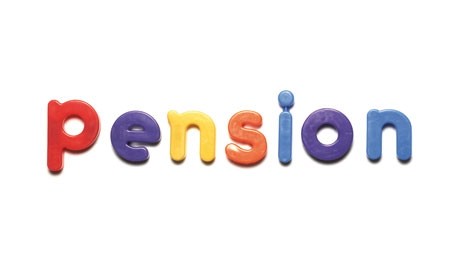
As a trustee of my company pension fund, I take my responsibilities very seriously. A lot of people in my company rely on my good judgement to ensure that they have a comfortable retirement. I find that quite scary sometimes, because it's not easy to make the right decisions on investment. We have good advisors, of course. And we have systems in place to make sure that the investments we have made are performing in line with, or better than, the benchmark on a quarterly basis.
We gave our investment mandate to a few different fund managers, in different asset classes. They have to provide us with evidence that they are managing social and environmental issues. I don't think there's any real way of knowing how good they are at doing this, but we ask the right questions and try to assess their quality of their answers. There are a few fund managers that are clearly engaging more actively with companies than others, to improve their social and environmental standards. Maybe this has a positive knock-on effect for all of us. But I'm not keen for my own pension fund to bear the cost of that engagement.
My responsibility is to generate as high a return as possible for the people who need a pension. We do offer an ethical investment fund as an option for pension fund investors but there hasn't been much take-up. Some people don't like the fund we have chosen – they say that they would prefer to have a fund that positively invests in good companies rather than just screening out bad ones. You can never please everyone, can you? But most people just don't feel able to take the risk. We haven't talked to our pension fund members about their approach to social and environmental issues. I don't think they'd appreciate it, really, and in any case it would be very complicated to try to include their preferences. It seems to me that it's better to make solid investments in companies that generate the highest profits. This will give people a bigger pension pot. If they then choose to give some of that money away to good causes, that's their decision.
Our advisors have talked to us a bit about climate change and about allocating more investments to activities that will help to reduce carbon emissions. But until this makes commercial sense it's really not realistic to expect that we'll do that. We're not a charity. Maybe when the carbon price is higher then our fund managers will move investments towards the more carbon-efficient producers. But not yet.
Key points
• How good are the managers? It is difficult to get an independent assessment of how well fund managers are managing social and environmental risk in their portfolios.
• It's expensive to be a leader. There is a problem with free-riding on a few fund managers' strategy of active engagement with companies. Active engagement with companies is expensive and it makes sense to reap the benefits from others doing the work. This creates a clear disincentive to be a leader in this space.
• Choices are limited. Occupational pension funds offer a limited choice of funds and there are in any case few funds that are designed to drive capital towards the transformation to a sustainable economy.
• Pension fund members cover a wide range of ages and preferences. Pension fund trustees may not talk to pension fund members about what their preferences are, or to separate out different groups – for example, younger members may have a different view from older members.
• Pension funds already look exposed, and high short-term returns look attractive to 'close the gap'. But the focus on high short-term returns may have a direct impact on the ability of a pension fund to meet its liabilities in future years, because it may increase the risk of a higher burden of climate change, water scarcity, biodiversity loss and social break-down.
Key actions
• Performance ratings should be produced for all fund managers to assess their approach to identifying and managing social and environmental issues.
• Pension fund trustees should talk to their members about their investment preferences and stratify the different responses – for example, by age and gender.
• Pension fund trustees should ask fund managers to explain their strategy on the transition to a low-carbon, resource-efficient economy.
Alice Chapple is director of sustainable financial markets at Forum for the Future
This content is brought to you by Guardian Professional. Become a GSB member to get more stories like this direct to your inbox