KOCHI -- I had assumed ghosts usually appeared by themselves, but in the Shikoku and Chugoku regions it is believed that bands of seven ghosts roam around together. Various areas have differing stories about how these groups began, but they all involve the same number -- seven. Many people believe seven is a lucky number, but these groups of seven spirits bring misfortune.
Among the tales behind the origins of these ghosts, one time-honored story from Kochi Prefecture describes how these seven vengeful spirits (called "shichinin-misaki" in Japanese) came to be. I traveled to Kochi to find out more about this legend.
According to a tale told by elderly people in Kochi Prefecture, long ago when someone who had been healthy suddenly was laid low with illness, the whispers would start: "They came across the shichinin-misaki," or "They have been cursed by the shichinin-misaki."
The word misaki can be spelled with two different kanji combinations. One meaning is "a sign from a deity," but it often means "a divine curse."
Kochi's shichinin-misaki has its origins in Kira Chikazane (1563-88), a military commander, and seven of his retainers. It is believed that encountering them would result in a serious illness. Although there were eight people in total, fear of Chikazane reportedly was why he was not included.
Why did they become vengeful spirits? One theory is put forward by sources including a war chronicle that depicted the rise and fall of Chosokabe Motochika (1538-99), a daimyo feudal lord who ruled what is now Kochi Prefecture.
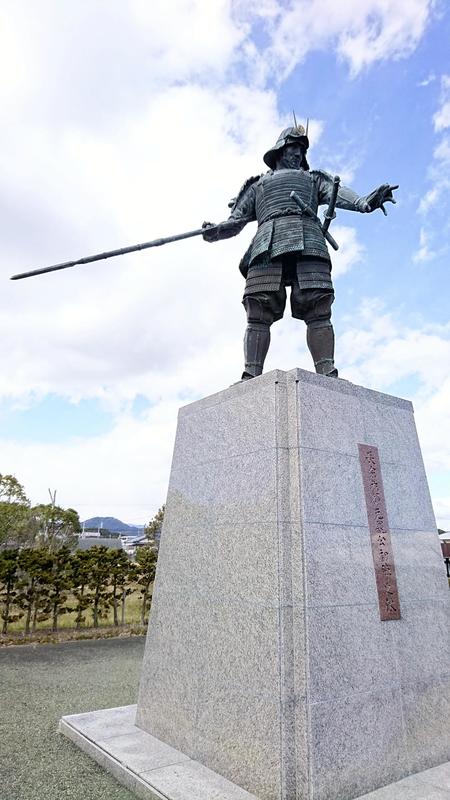
In 1588, Motochika's heir died during a battle in Kyushu, sparking a tussle over who should become his successor. Motochika wanted to name his adored fourth son, who was later named Morichika, but this was opposed by Chikazane, a senior vassal. Chikazane was Motochika's nephew and married to Motochika's daughter, which is probably why Chikazane did not hold back in his criticism.
However, another senior vassal who nursed a hatred of Chikazane suggested his opposition to Motochika was fueled by his ambition to have all the power in the domain. Motochika, who accepted this claim as true, ordered Chikazane to commit hara-kiri. Seven of those who were close to Chikazane also were slain.
Before committing hara-kiri, Chikazane left some prophetic words: If Motochika insisted on killing his loyal vassal, decline would soon befall his family. This warning proved to be true.
Morichika, who had become head of the family, joined the Battle of Sekigahara in 1600 as one of the loyalists for Toyotomi Hideyoshi against daimyo fighting for Tokugawa Ieyasu, who later became the first shogun of the Edo period in 1603. However, the Toyotomi loyalists were defeated, and Morichika was stripped of his territory.
In a bid to recover from this setback, Morichika sided with the Toyotomi clan in the Summer Siege of Osaka in 1615, but was eventually executed. This spell led the end of the Chosokabe family.
Chikazane's body was buried in the area where he committed hara-kiri, in what is now Kochi City. However, legend has it that balls of fire were seen there night after night, and Chikazane and his group would appear from that spot when somebody walked nearby.
The senior vassal who disparaged Chikazane had eight children, but all except the youngest child died in strange circumstances. His wife also took her own life. This number matches with the seven members of the shichinin-misaki.
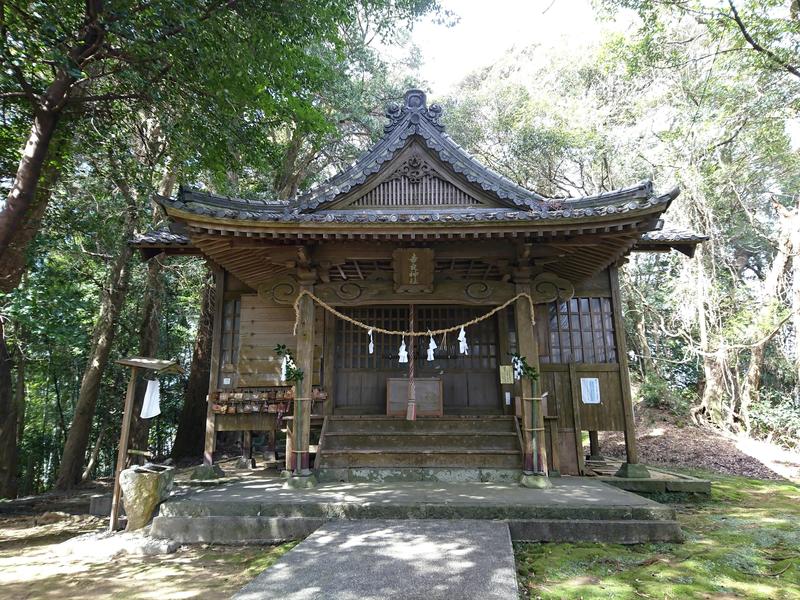
Motochika heard these stories and decided to perform memorial rites to appease Chikazane's spirit. An 8- or 9-year-old child who claimed to be Chikazane's messenger appeared, and then collapsed after telling Motochika to build a shrine on a mountain and hold a festival. Kira Jinja shrine stands on what is now part of the Harunocho district in Kochi.
A book detailing the history of Harunocho also mentions the shichinin-misaki. People who came across a headless warrior riding a horse and a huge monster with a tonsured head dragging an iron bar developed a raging fever from that very day, according to the book.
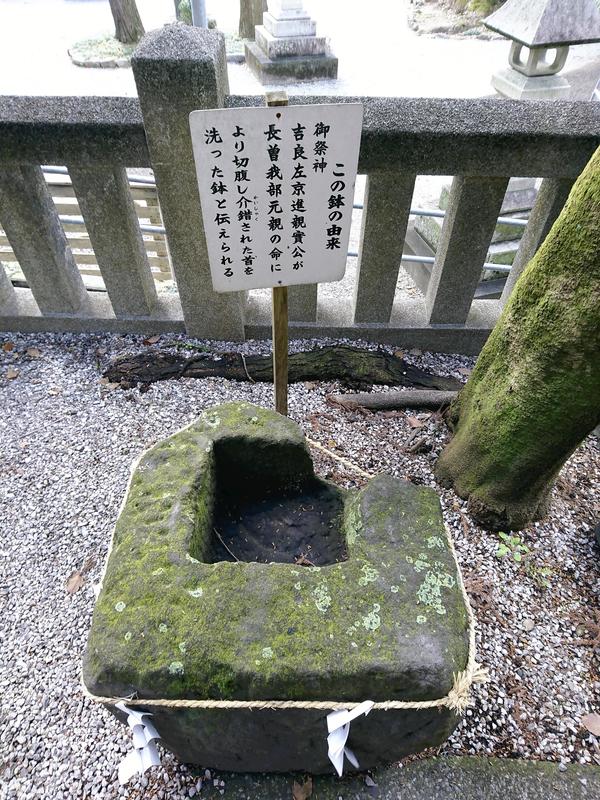
One more Kira Jinja shrine stands in the city center. About a 20-minute walk from Kochi Castle, this small shrine is on the grounds of Nyakuichi-Ojigu shrine. An ancient washbowl can be found close to the torii shrine gate, and an explanation board states this was where Chikazane's head was washed after he was decapitated.
This temple originally was located closer to the castle where Chikazane had a residence, but it apparently was moved to its current location during the Meiji era (1868-1912).
Reminders of the shichinin misaki are dotted around Kochi. You just never know where you might come across them.
Read more from The Japan News at https://japannews.yomiuri.co.jp/