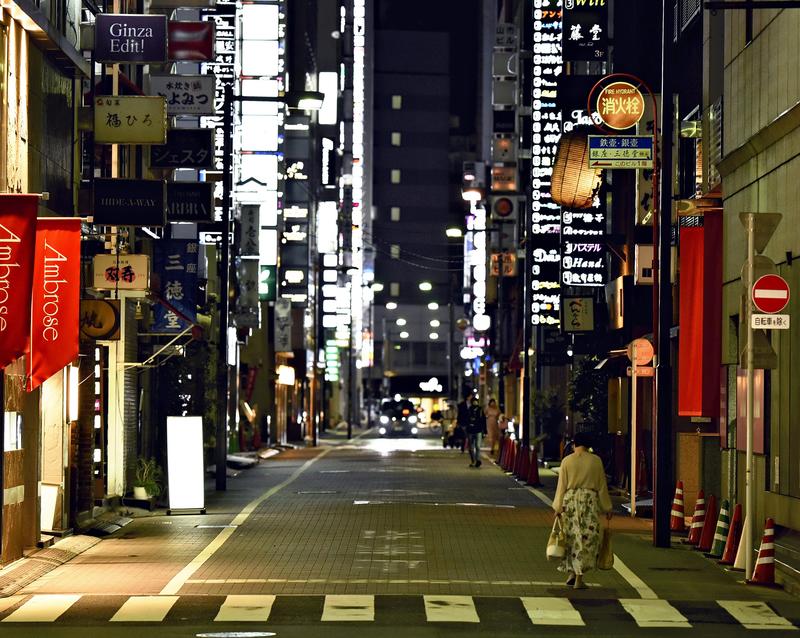
A group of drivers arrested on suspicion of operating unlicensed taxis in Tokyo's Ginza shopping district has been paying protection money to a yakuza crime syndicate for years, according to investigative sources.
One of the drivers was found to have been making payments for about 40 years, the sources said.
The drivers are believed to be currently inactive amid coronavirus measures that have left Tokyo's streets relatively quiet, but the Metropolitan Police Department is wary of the possibility that unlicensed taxis, dubbed shirotaku, will reappear when the crowds return.
"I just thought of it as part of the cost of operating an unlicensed taxi in Ginza," a driver in his 80s told The Yomiuri Shimbun.
The man said he was told to pay the protection fee, so-called mikajimeryo, by a fellow driver when he started up about 40 years ago.
He had allegedly been paying 10,000 yen every month, except in January and August when he had to give 15,000 yen due to the New Year holiday period and Bon festival.
Totaling 130,000 yen each year, the protection money was allegedly paid to a Sumiyoshi-kai-affiliated criminal group through a male driver who acted as a mediator. Over 40 years, this amounts to about 5 million yen.
"I actually thought that paying 10,000 yen a month wasn't that bad if it meant I could avoid trouble," the man said.
In November last year, the MPD arrested three men aged 75 or older, including the man interviewed, on suspicion of violating the Road Transportation Law for operating unlicensed taxis in Ginza. All three were ordered to pay fines.
After questioning, all of the drivers admitted that they had been paying protection money, which is alleged to have been paid to the Sumiyoshi-kai affiliate crime syndicate, according to sources close to the investigation.
It is believed that the protection racket has existed for some time. The protection money is alleged to have been collected by the intermediary on behalf of the crime group. After the broker retired, another driver is alleged to have taken over the role of collecting the payments.
"The group may have been able to take advantage of the drivers' guilt," a police source said.
As of last year, 100 unlicensed taxis were operating illegally in Ginza. The MPD suspects that many of the drivers paid protection money, amounting to as much as 10 million yen annually.
Under the Tokyo metropolitan government's Ordinance for Eliminating Organized Crime Groups, both gang members and operators of such businesses as restaurants and entertainment establishments in 29 districts in Tokyo, including Ginza, risk punishment for receiving or paying protection money.
However, unlicensed taxi operators are not subject to the ordinance.
The MPD hopes to end the relationship between criminal groups and unlicensed taxi drivers by applying the Law on the Prevention of Unjust Acts by Organized Crime Group Members, which prohibits protection racketeering.
Operating shirotaku taxis in vehicles such as private cars without permission from the Land, Infrastructure and Transport Ministry is illegal in Japan.
The drivers of unlicensed taxis solicit passengers waiting at taxi stands in downtown areas and airports and offer fares lower than those charged by licensed taxis.
The act is prohibited under the Road Transportation Law, and those who violate the law face up to three years in prison and fines.
Read more from The Japan News at https://japannews.yomiuri.co.jp/