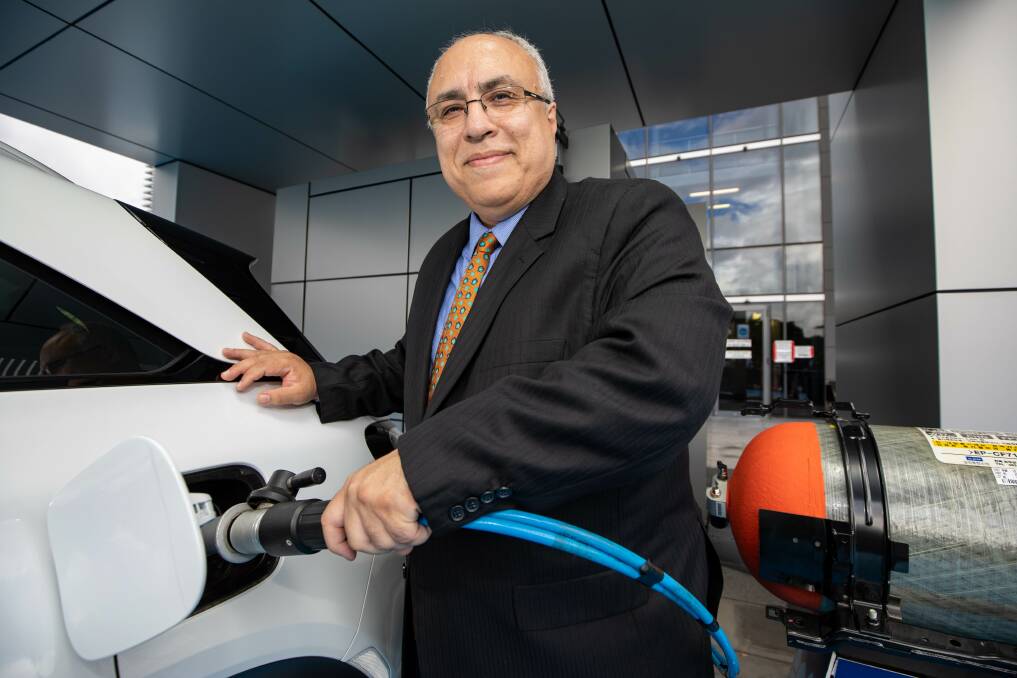
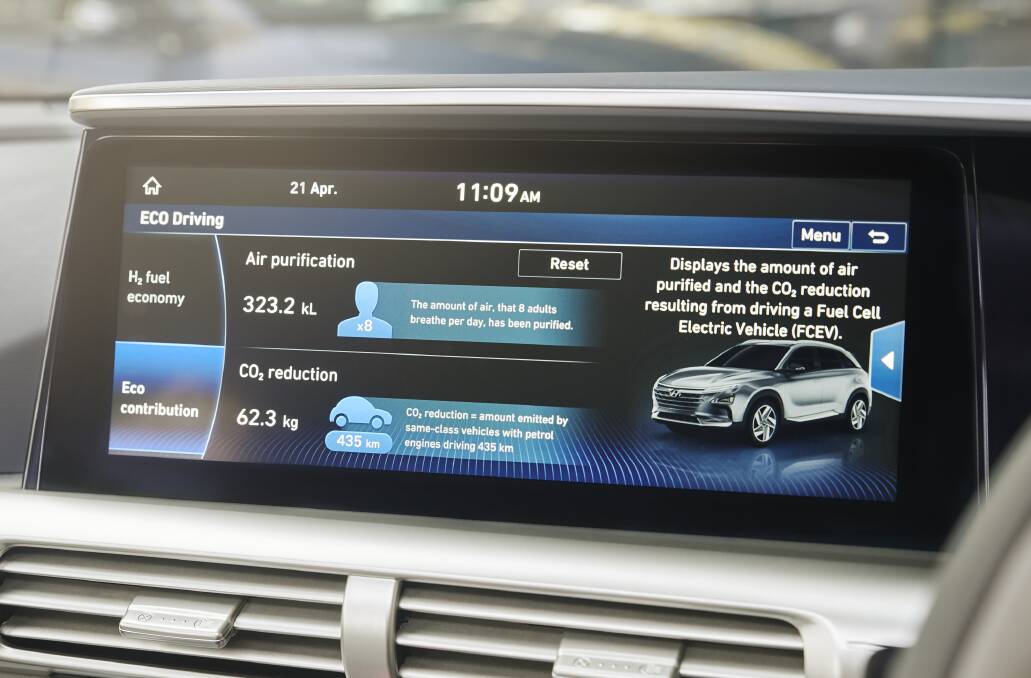
Next generation green hydrogen created at the University of Newcastle has been used to fuel a passenger vehicle in an Australian-first demonstration at Hyundai Australia's Sydney headquarters.
The renewable energy breakthrough, a partnership between the university and Southern Green Gas, represents a major step towards creating a carbon-neutral road transport fleet.
At the heart of the fuel technology, which was demonstrated in Hyundai's NEXO hydrogen fuel cell SUV, is the ability to extract pure water from air.
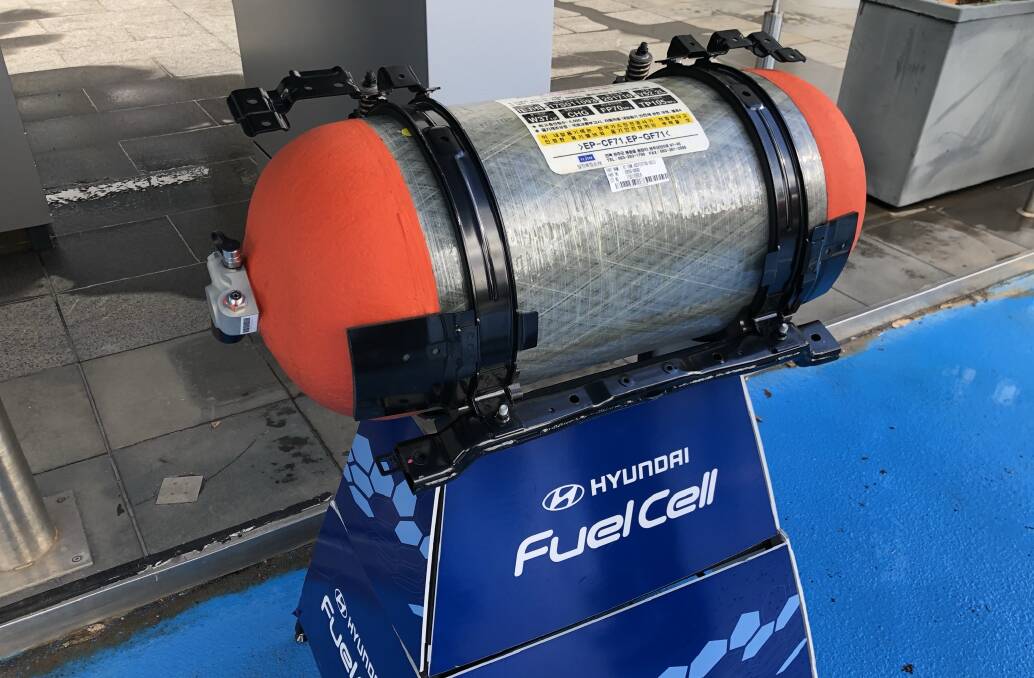
Electrolysis using electricity generated from solar panels splits pure water into hydrogen and oxygen before storing the hydrogen as a gas, which can be used to power vehicles.
The partnership is developing manufacturing capability across other renewable fuels, including green methane which is made by combining hydrogen with carbon dioxide from the atmosphere.
Easily transported in existing gas pipeline infrastructure, green methane can be used as a renewable form of natural gas or converted back to hydrogen at the point of use.
A research team led by Professor Behdad Moghtaderi worked with Southern Green Gas on the project to manufacture green hydrogen at lab scale.
"Seeing this fuel hit the roads is a proud moment for my team, who have worked to perfect it over several years," he said.
"We're now looking forward to scaling this technology, working with Southern Green Gas toward commercial rollout and a wide range of possible applications."
Vice-Chancellor Alex Zelinsky said the project demonstrated the Hunter's capacity to lead Australia's hydrogen economy.
" The University of Newcastle is ideally placed to leverage regional cooperation across industry, infrastructure and government. This project, demonstrating green hydrogen on our roads for the first time, is a potent example of this region-wide approach translating into real-world results," he said.
Managing Director of Southern Green Gas Rohan Gillespie said renewable methane had enormous potential to decarbonise the global mobility sector.
"We believe this technology represents an important pathway in achieving zero emissions driving worldwide and we are excited to work with our technology partners to make this vision a reality," he said.
Southern Green Gas is supported by its technology partners - specialty gas supplier, Coregas, electrolyster manufacturer, Enapter and gas technology company, Haskel.The project is supported by ARENA and the NSW Government.
Newcastle team plots the future of hydrogen fuel production
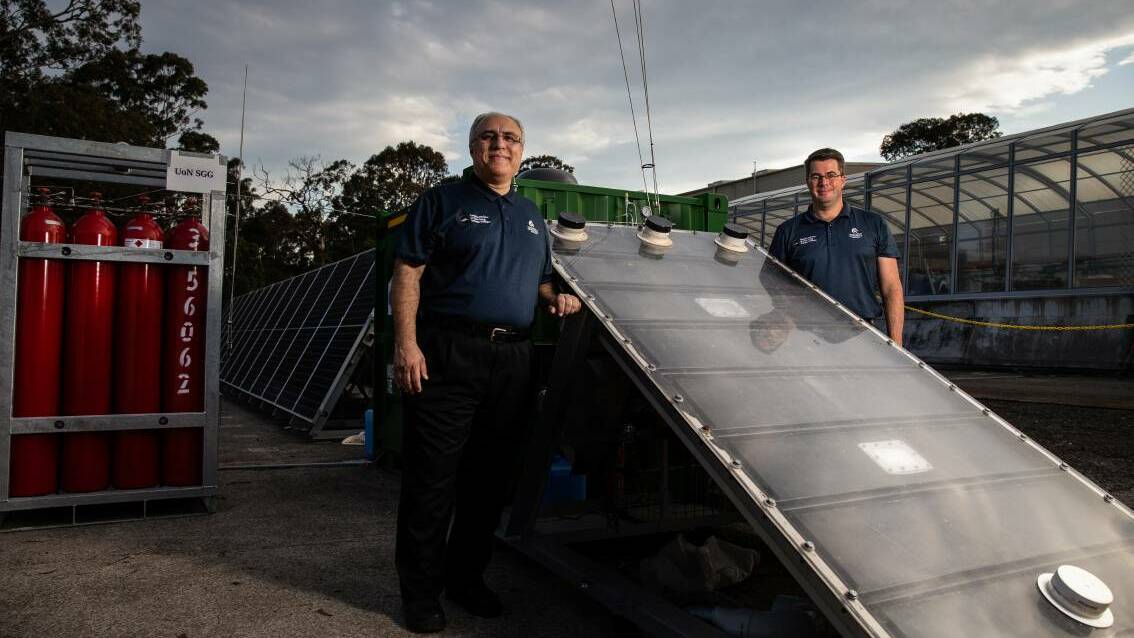
The green fuel technology that captured the interest of international vehicle giant Hyundai has been in development at the University of Newcastle's Institute of Energy and Resources for more than three years.
By employing a 'hydro harvester' - an innovation that 'harvests' pure water from the air, energy scientist Behdad Moghtaderi and his team were able to overcome some of the key challenges that have limited the domestic production and availability of hydrogen fuel.
An electrical current generated from solar panels (electrolysis) is applied to split the pure water into hydrogen and oxygen before storing the hydrogen as a gas.
The pilot plant demonstrator produces one kilo of hydrogen a day, however a commercial scale system could produce thousands of kilos per day.
"By harvesting water from the air we aren't placing added pressure on potable water supplies for drinking and household use, which in climates like ours is a long-term consideration for viability," Professor Moghtaderi said.
"Importantly, the water we produce via our hydro harvester technology is so pure it can be directly fed into the electrolyser, which is a huge advantage over other sources of water.
"Sea water, wastewater or even tap water require multiple treatment steps to reach the level of purity required in electrolysis. By removing the need for treatment, we can dramatically reduce hydrogen production cost."
The project is also helping Australia move closer to achieving the Commonwealth government's vision of delivering renewable and low-carbon hydrogen.