CHICAGO _ The University of Illinois on Monday advised some of its students and researchers not to travel abroad in response to President Donald Trump's recent immigration restrictions.
In an advisory sent to the campus community, U. of I. President Timothy Killeen cautioned those traveling to the seven countries most affected by the new policy to wait "until there is a further assessment."
There are more than 150 people from the affected countries at the university's Urbana-Champaign campus, a spokeswoman said. The university is not aware of any students, faculty or staff who are currently overseas and unable to return to the U.S., Killeen said.
"We are greatly concerned about the negative consequences for members of our community and their families arising from President Trump's recent Executive Order instituting changes in immigration policy," Killeen's message stated. "We want to assure you that we are monitoring events closely and we are working with other universities, national organizations, legal counsel and government officials to support and protect all of our international faculty, visiting scholars and students."
Killeen's message comes as universities across the country are scrambling to assess the impact of the president's decree, which was signed Friday. The executive order immediately denied any Syrian national entry to the country, as well as citizens of six other majority-Muslim countries, including Iran, Iraq and Yemen.
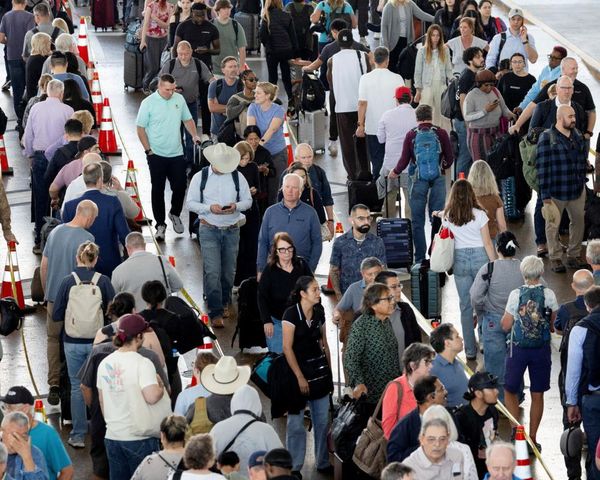
The order upset many across the country, stoking mass protests at major international airports throughout the weekend as arriving travelers were held by immigration authorities, and in some cases, sent back to their home countries. U.S. citizens and those holding green cards were among those stopped and questioned by immigration authorities.
Federal judges struck down parts of the order, but the Department of Homeland Security said it would continue to enforce the remainder of the policy. Throughout the weekend, confusion has spread over how exactly the policies will be enforced and whom it will affect.
The University of Chicago and Northwestern University also sent messages to their students, staff and faculty during the weekend, doubling down on their previously stated commitment to international students and those in the country illegally. While some have urged school officials to declare the universities "sanctuary campuses" in an effort to protect noncitizen students, none has agreed to go that route.
The U. of C. and Northwestern both strongly criticized the executive order.
"Unnecessary restrictions on the flow of talented scholars and students into the United States damage the University's capacity to fulfill its highest aspirations in research, education, and impact," U. of C. President Robert Zimmer and Provost Daniel Diermeier said in a joint message. "This has been an important part of the University's stance since its inception, and in the past decade we have actively sought to increase the presence on campus of those from around the world. We are committed to articulating the importance of this matter to policy makers, and we are committed to the direct support of those in our own community who may be affected by changes in current immigration policy."
Northwestern also advised students from the affected countries not to travel abroad.
"The order already is being challenged in court, so it is not clear what the immediate impact will be," Northwestern President Morton Schapiro said. "However, we believe strongly that there is no legitimate basis for depriving students and scholars from those countries who have already obtained visas from entering the United States to study and conduct research at Northwestern or elsewhere."
Hearing these messages of inclusion from management, whether it's a university president, a CEO or even a school principal, is critical for those affected by Trump's order, said Maryam Kouchaki, assistant professor of management and organization at Northwestern's Kellogg School of Management.
"They feel really alone, not respected, not valued," she said. "Research has shown exclusion hurts."
Research also has shown that companies and universities benefit from having employees and students from different backgrounds, Kouchaki said. "The value of diversity is not something anyone is making up," she said. The order could prevent students from attending Northwestern, she said, and it comes right as the school is finalizing decisions on whom to invite to some graduate programs.
Kouchaki is Iranian and holds a green card. Since the order came down Friday, her parents put plans for a trip to visit her this summer on hold. She came to the U.S. about a decade ago for school. The best universities in her field are in the U.S., she said, no comparison. But she says she was lucky.
"I have my dream job," she said. "Now it's my and all of our responsibilities to make sure other people can achieve their dream and we benefit from them."
.jpg?w=600)