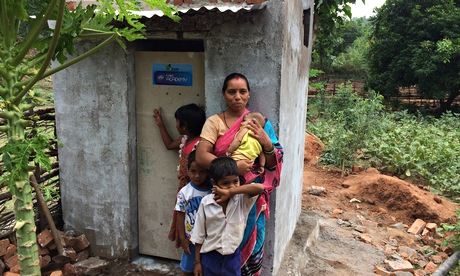
The toilet. We spend about three years of our lives sitting on it. But how much time do we spend thinking about it? Most people take a clean, flushable toilet for granted. Yet the world is in the grip of a sanitation crisis. 2.5 billion people live without access to a toilet. Of these, over one billion defecate in the open. Poor sanitation has serious impacts on health, nutrition, education, gender equality and sustainable economic development.
While the target on water has been met five years ahead of schedule, the sanitation target is the most off-track of all of the Millennium Development Goals (MDGs). With all the efforts of governments, IGOs and NGOs, why does the sanitation crisis stubbornly persist and how will solving it support other key issues in social and economic development?
Phones versus thrones
Of the world’s seven billion people, a staggering six billion have mobile phones. But only 4.5 billion people have access to toilets or latrines. Mobile phones were first demonstrated to the public by Motorola in 1973. Yet we humans have been thinking about how best to deal with our waste since our earliest days. So how can it be that more people in the world have phones than toilets?
Part of the answer lies in the uncomfortable silence we have on the subject of toilets – people simply don’t want to talk about it. Tackling the sanitation crisis is a complicated business. Many assume that the crisis persists because of a lack of money or infrastructure. But often sanitation projects have failed because communities have been given latrines or toilets that they choose not to use, continuing instead to defecate in the open. Any sustainable sanitation solution needs to take into account the beliefs and barriers that people may have to changing their deeply ingrained behaviour and adopting the use of toilets.
Toilets play a role in other development issues
To provide sustainable solutions to the big issues in social and economic development, we need to recognise how one issue impacts another. Studies are increasingly showing that of the 162 million children under the age of five who are malnourished, many are suffering less from a lack of food than they are from poor sanitation. Without access to proper sanitation, children fall ill more often and may be unable to attain a healthy body weight no matter how much food they eat. Energy and nutrients are diverted away from growth and brain development, to prioritise infection-fighting survival. When this happens in the first two years of life, it results in stunting and the lost height and intelligence are permanent. Similarly, providing a community with clean, safe water only deals with half the issue. Without access to proper sanitation the water supply may become contaminated.
Missing out on education
It is estimated that 443 million school days are lost each year due to WASH related diseases such as diarrhea. Girls are impacted more severely. When girls start to menstruate and there are no sanitation facilities at school, they prefer to stay home. One study in Ethiopia reported that over 50% of girls miss between one and four days of school per month due to menstruation. Missing out on school affects their academic performance, so many drop out of school permanently, impacting their economic and social prospects.
Women bear the brunt
Poor sanitation affects everyone, but women are often most affected. When women don’t have access to a toilet, they are forced to go out, often at night, to defecate. This can mean travelling long distances to find some privacy and retain their dignity. Women who have to wait until nightfall and leave their homes to defecate risk harassment, sexual violence and even rape.
As women go through different stages of life, including pregnancy, the ability to access a toilet becomes more significant. Tragically, every day, around the world, 1,600 mothers lose a child to diarrhea caused by the lack of access to safe toilets and clean water.
We can’t wait
At Unilever, we believe that the private sector must be a part of the solution to the big social, environmental and economic issues that face us today. That’s why we are implementing our Sustainable Living Plan, to positively contribute to the societies where we operate. We also believe that universal access to water, sanitation and hygiene (WASH) is essential to helping people out of poverty.
Today, at the Global Citizen Festival in Central Park, New York, Unilever announced our new sanitation target. We have committed to help 25 million people to gain improved access to a toilet by 2020. The new target bolsters our WASH programme and will help us to achieve our goal of helping one billion people to improve their health and well-being by 2020.
We can’t wait any longer to find sustainable solutions and end the global sanitation crisis. The international community must come together and take decisive action.
More from the Unilever partner zone
- Ben & Jerry turn ice cream into energy
- NextDrop: Improving access to water for communities in India
- Unilever: eliminating all non-hazardous waste from factories - video
Copy on this page is provided by Unilever, supporter of the sustainable living hub