Title: Vietnam: The legacy of war
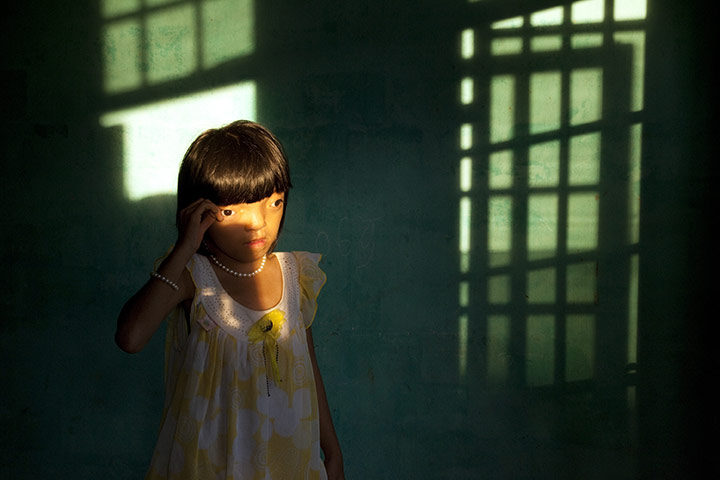
The Vietnam war ended in 1975. The US withdrew their troops and north and south Vietnam were reunited. But for the Vietnamese people the legacy of American warfare continues. US forces used the herbicide Agent Orange to destroy foliage that the north Vietnamese were using as cover. Agent Orange contains dioxins that are known to cause cancer and damage genes. The effects of the toxic substance can be seen among Vietnamese people to this day, such as cancer, immune disorders and severe deformities. According to official estimates, 1.2 million children, including nine-year-old Nguyen Thi Ly, are disabled. In rural areas, the percentage of disabled children is significantly higher than in urban areas Photograph: Ed Kashi/Agency VII/UNICEF Photo of the Year 2010
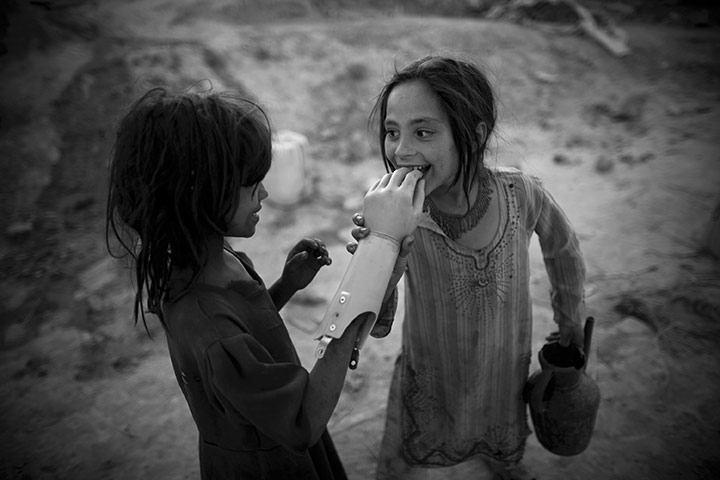
Title: Afghanistan: The devastating consequences of civil wars
Approximately 4 million refugees have returned to Afghanistan from Pakistan and Iran and are now trying to settle down again in their home country. Among these refugees was the family of eight-year-old Akram. His family had looked for shelter in the Pakistani city of Peshawar and Akram tried to make money by collecting scraps on a rubbish dump in the city. While rummaging through the rubbish, he accidentally touched a non-insulated cable, which caused severe burns. Both his hands and arms had to be amputated. Akram’s family have now returned to Kabul and he received arm prostheses thanks to the help of the International Red Cross Photograph: Majid Saeedi/Getty Images/UNICEF Photo of the Year 2010
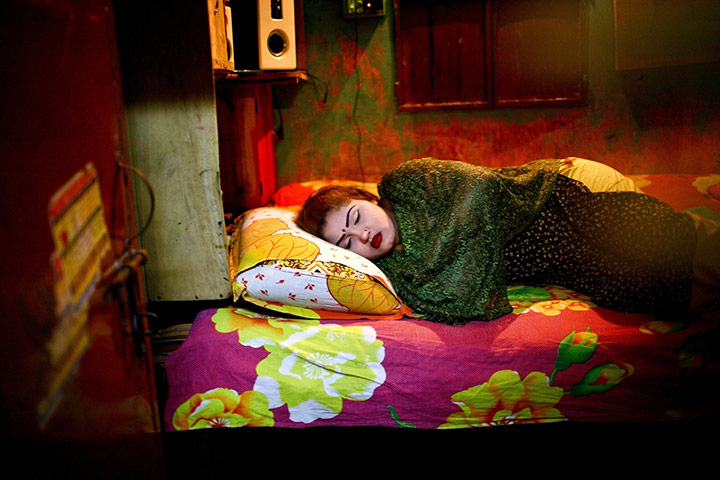
Title: The oldest profession in the world destroys the lives of young girls
Bangladesh-based photographer GMB Akash shows the plight of child prostitutes in Bangladesh, some of whom are extremely young. Young girls in the brothels of the Faridpur region have to take a steroid daily to “plump up”, so they appear older and presumably more attractive. It is the same drug that is also used to fatten cattle. It was originally intended for use by people suffering from arthritis, asthma or allergies. Yasmin, 20, has a puffy face because of the steroid. She has lived in this brothel since she was a child – just like her mother, who worked here as a prostitute for 30 years Photograph: GMB Akash/Panos Pictures/UNICEF Photo of the Year 2010
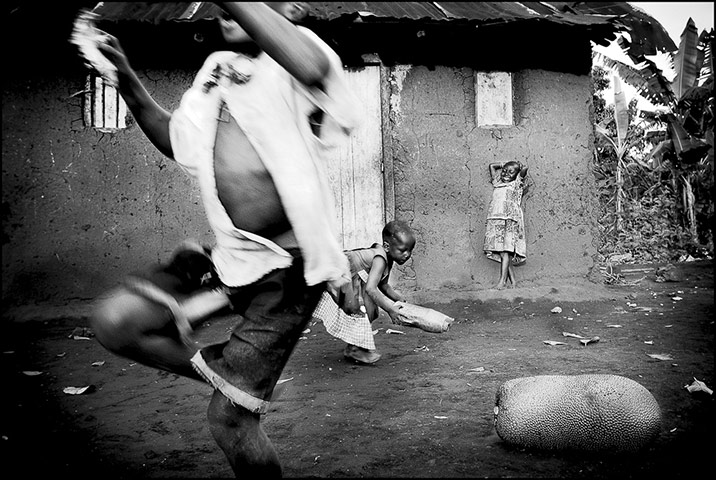
Title: Uganda: Lust for life
Photographer Leslie Alsheimer wanted to offer a different view of life in some African countries, commonly associated with disease, hunger and war. She focused on the lust for life of African children, their lack of prejudice and their loving care for each other Photograph: Leslie Alsheimer/UNICEF Photo of the Year 2010

Title: Puberty: The search for a new self
Insecurity, confidence, doubt and searching. Even though adolescents would prefer to hide it all, their faces, their make-up and the decoration of their rooms reveal a lot about these young girls’ inner state, says Lebanese born photographer Rania Matar Photograph: Rania Matar/UNICEF Photo of the Year 2010
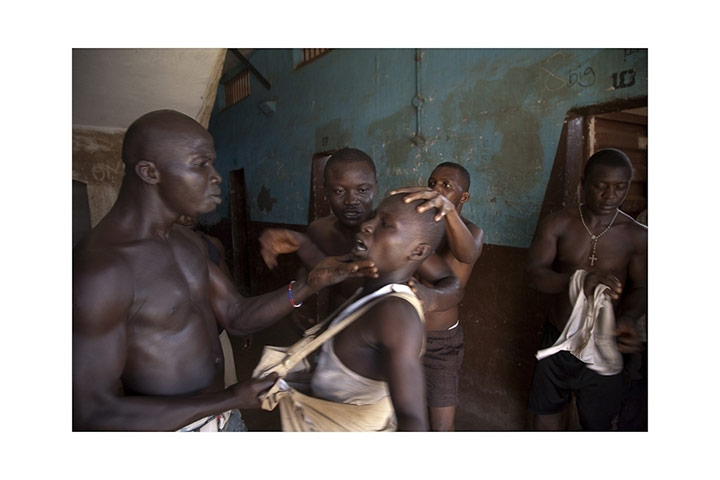
Title: Sierra Leone: Merciless justice
Fernando Moleres witnessed the brutal conditions inside Central prison, usually known as Pademba Road prison, in Sierra Leone’s capital Freetown. Although the prison was only built to house 300 prisoners, it has more than 1,100, many of whom are underage. There are few beds and mattresses and no sanitary facilities, electricity or water, and hardly any food. Prisoners' relatives often don’t learn of the fate of incarcerated family members Photograph: Fernando Moleres/UNICEF Photo of the Year 2010
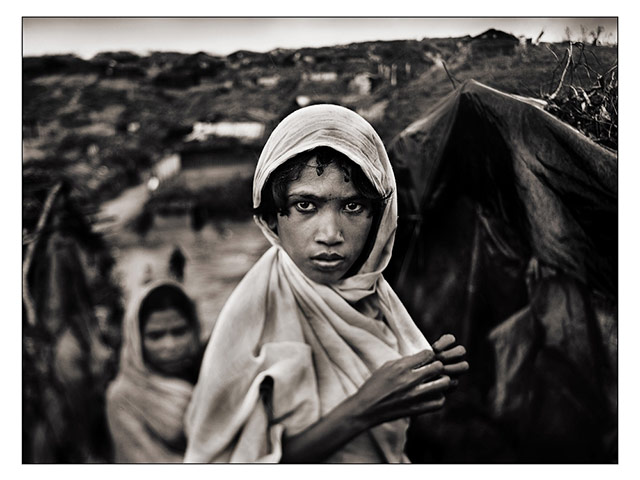
Title: Bangladesh: Refugees from Myanmar
Javier Arcenillas captures images of the Rohingya, an ethnic Muslim group that fled from Myanmar (Burma) to Bangladesh due to persecution and oppression by the country's military junta. The regime does not regard members of the group as citizens and their fate is mostly unknown Photograph: Javier Arcenillas/UNICEF Photo of the Year 2010
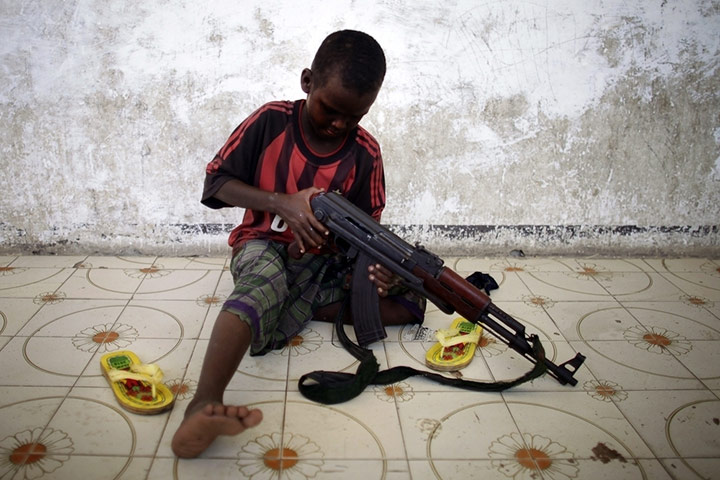
Title: Somalia: Children in arms
Despite being banned, the use of child soldiers is still common around the world. Young people are usually easier to recruit than adults. They are often threatened with violence to make them join a military faction. In Somalia, the various militias have around 70,000 combatants. The number of children among these soldiers is growing. According to Unicef, the militias have recruited children as young as nine Photograph: Ed Ou/Getty Images/UNICEF Photo of the Year 2010
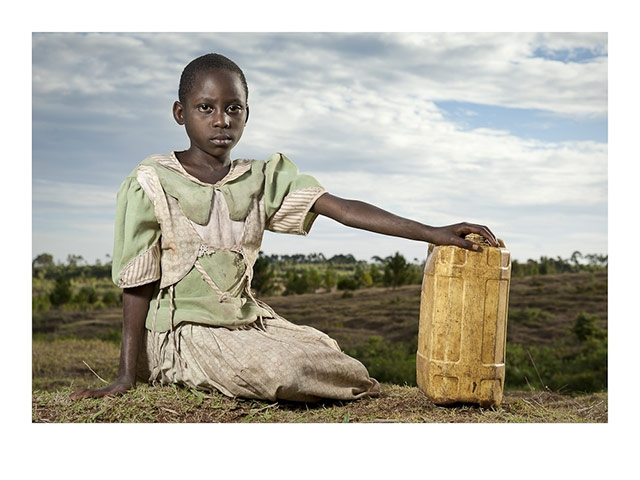
Title: Tanzania: Brave water carriers
In places with little access to safe water sources, many children have to walk long distances to fill jerrycans with water for their families. In Tanzania, Christoph Gödan saw the fatigue experienced by a group of children who collected water from the Kagera River one early morning. On their way to the river they appeared quite carefree, but after filling their containers, the heavy load took its toll. About 884 million people worldwide have no access to clean drinking water. Some 125 million of them are children under five Photograph: Christoph Gödan/Laif/UNICEF Photo of the Year 2010
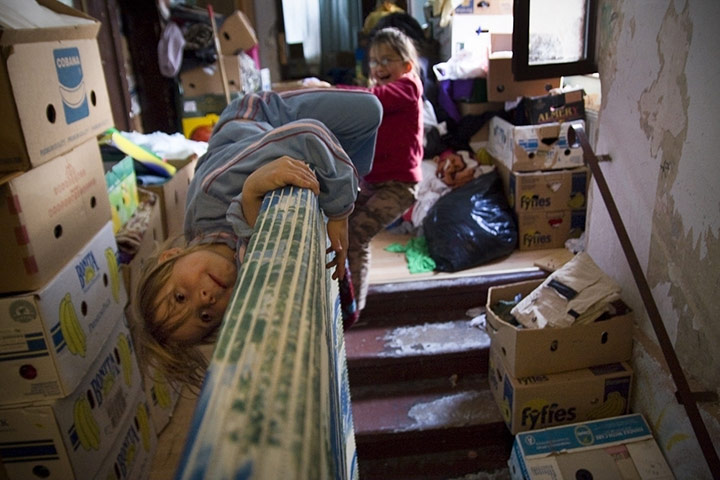
Title: Germany: Victims of hoarding at home
Fara Phoebe Zetzsche photographed the towers of furniture, cardboard boxes, crumpled clothes, plastic bags, unopened packaging and old worn-out toys that people hoard. She saw first-hand the negative impact hoarding can have on children and families Photograph: Fara Phoebe Zetzsche/UNICEF Photo of the Year 2010