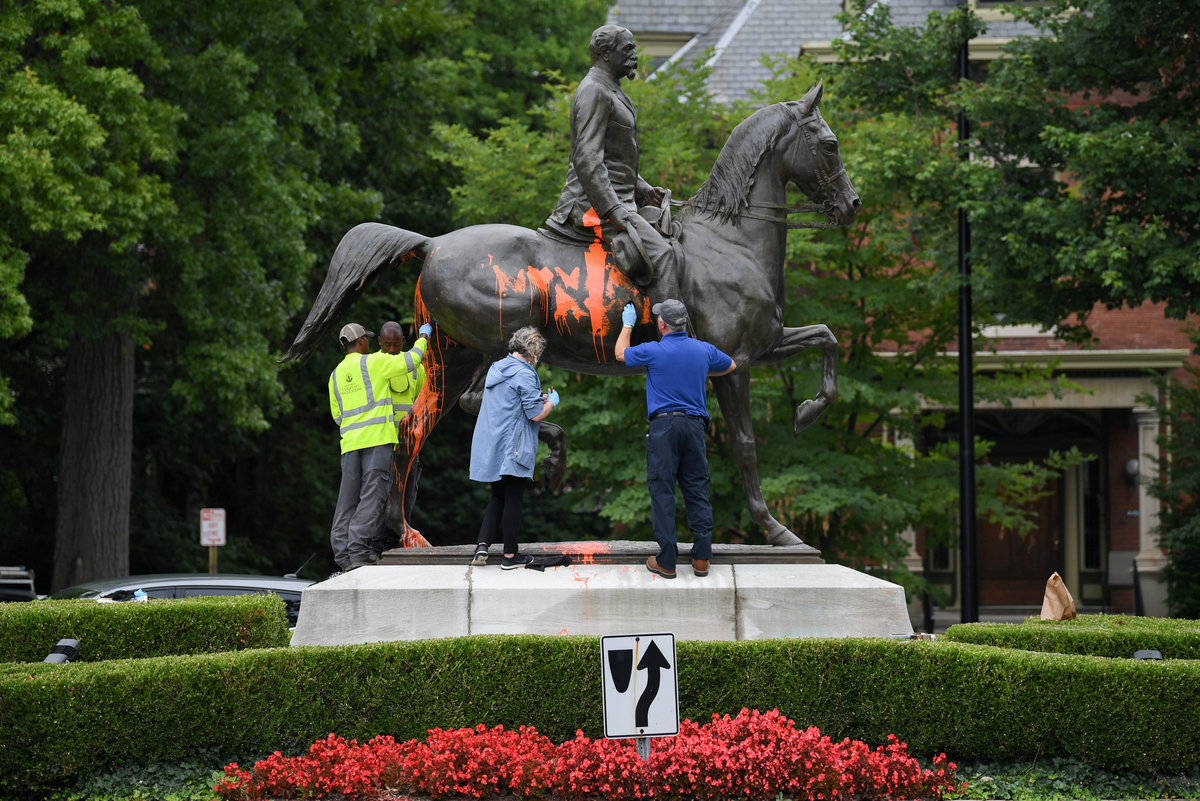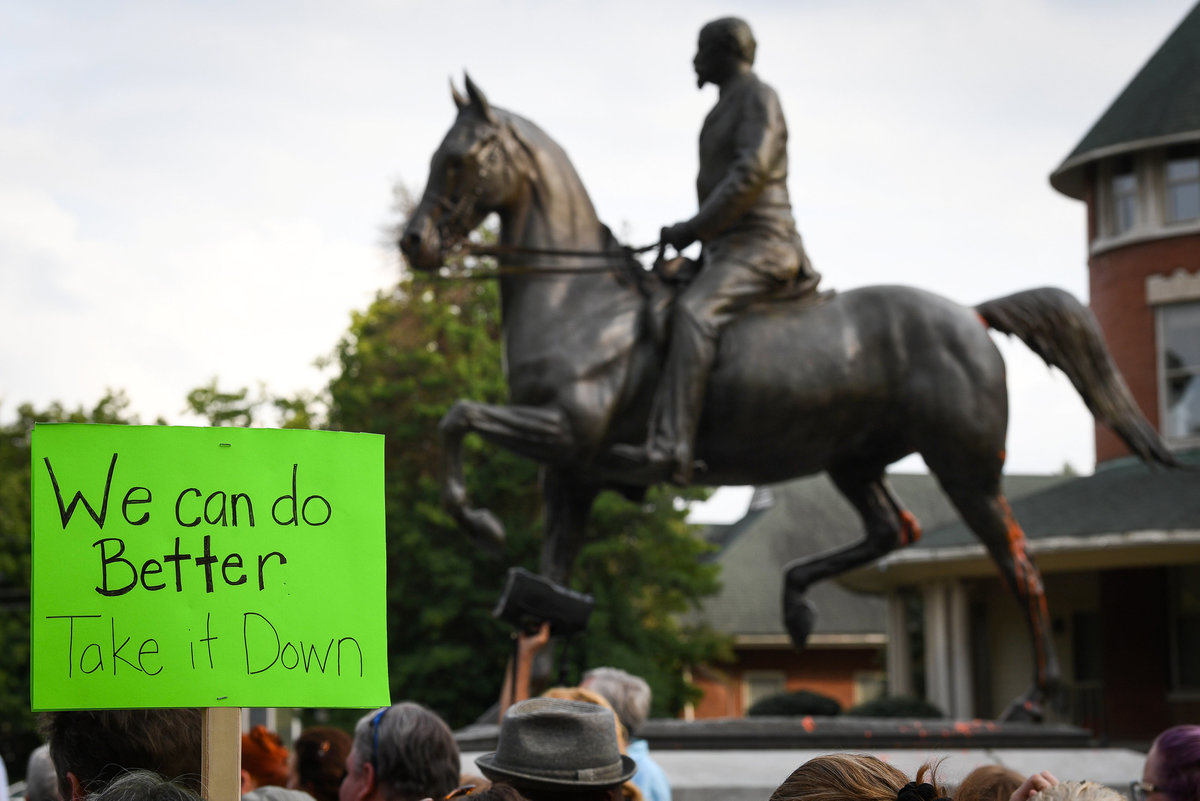
(Reuters) - Undeterred by violence over the planned removal of a Confederate statue in Charlottesville, Virginia, state and city leaders across various U.S. southern states said this week they would step up efforts to pull such monuments from public spaces.
Maryland Governor Larry Hogan on Tuesday joined a growing list of officials seeking to remove statues as a national debate flared anew over whether monuments to the Confederacy are symbols of hate or heritage.
Hogan, a Republican, called for taking down a statehouse statue of U.S. Supreme Court Justice Roger B. Taney, who wrote the 1857 Dred Scott decision affirming slavery.
"While we cannot hide from our history – nor should we – the time has come to make clear the difference between properly acknowledging our past and glorifying the darkest chapters of our history," he said in a statement.
A rally by white nationalists protesting plans to remove a statue of General Robert E. Lee, commander of the pro-slavery Confederate army in the U.S. Civil War, sparked clashes with anti-racism demonstrators in Charlottesville on Saturday. The rally turned deadly when a car rammed into a crowd of counter-protesters, killing a woman and injuring 19 other people.
Saturday's violence appears to have accelerated the drive to remove memorials, flags and other reminders of the Confederate cause.
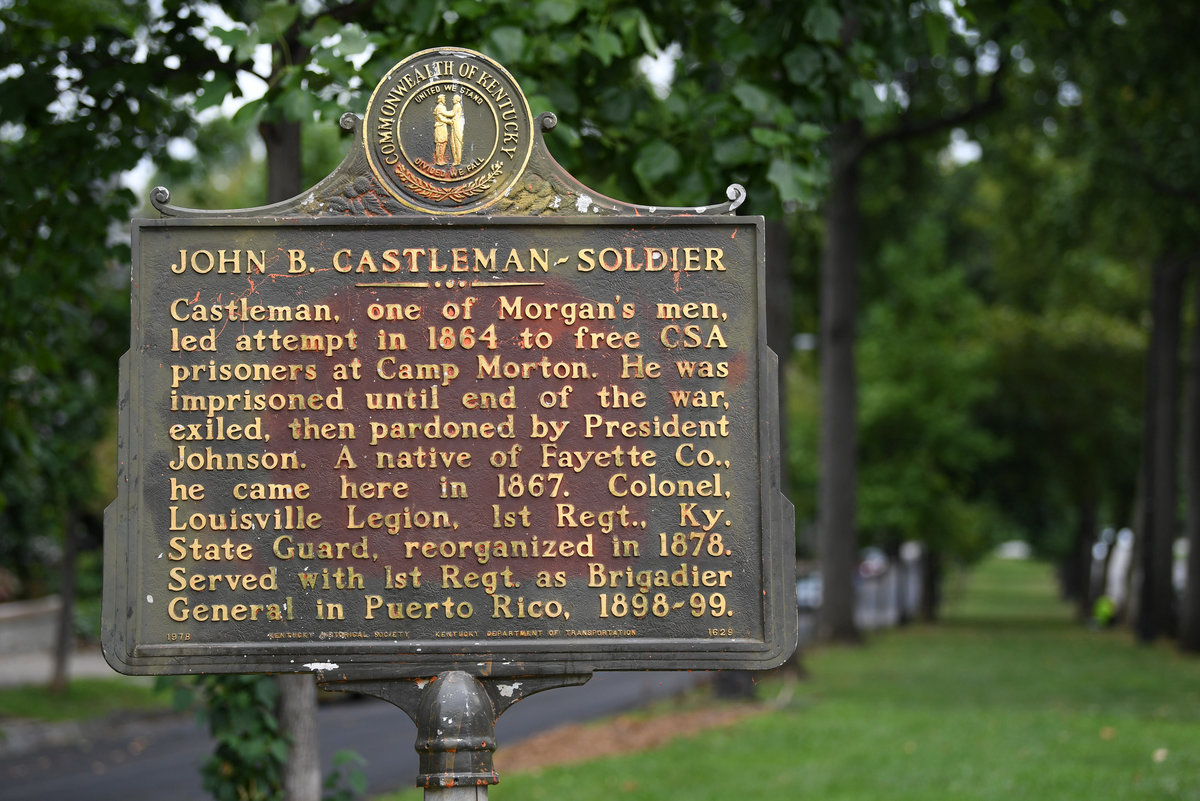
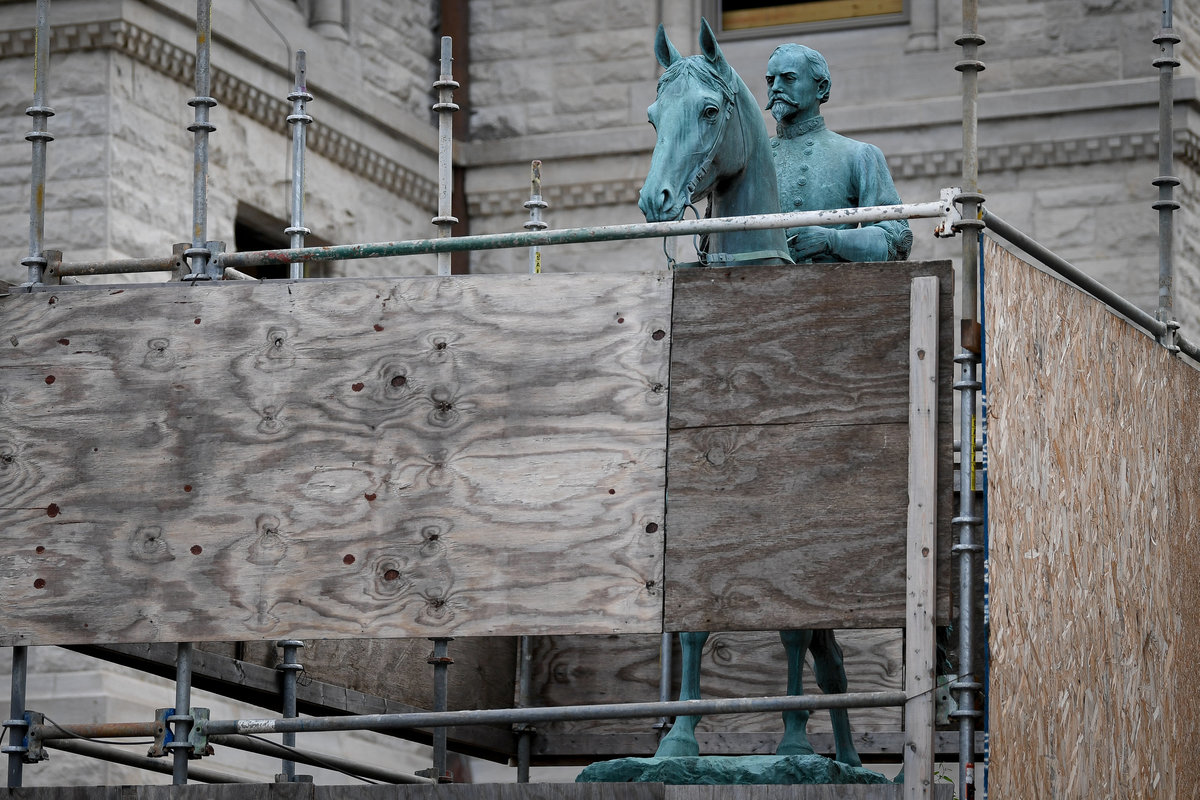
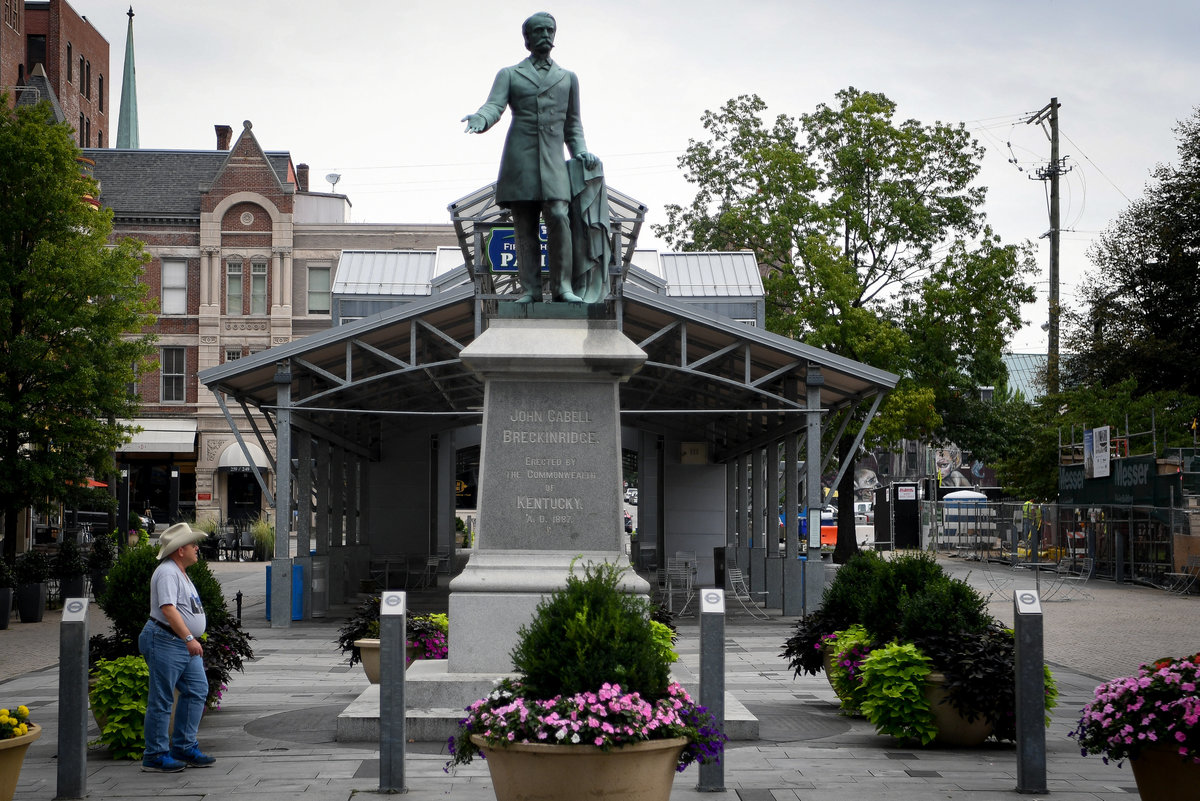
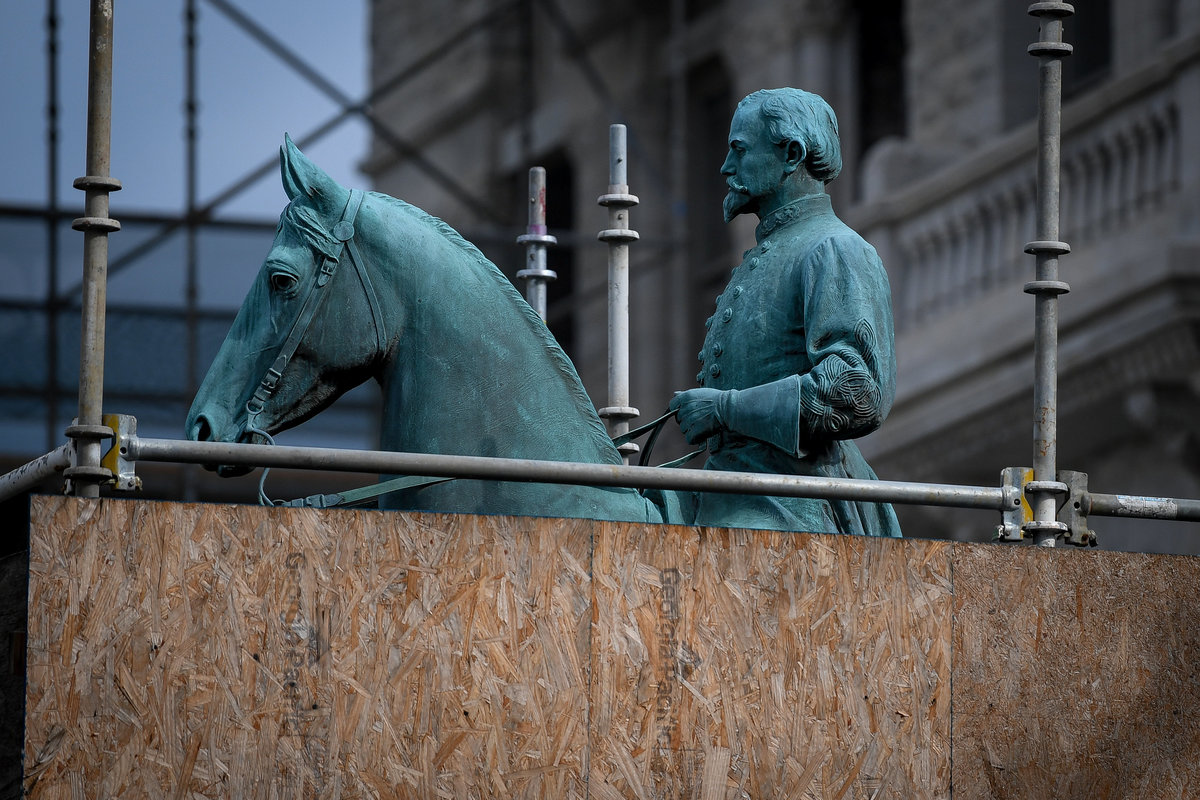
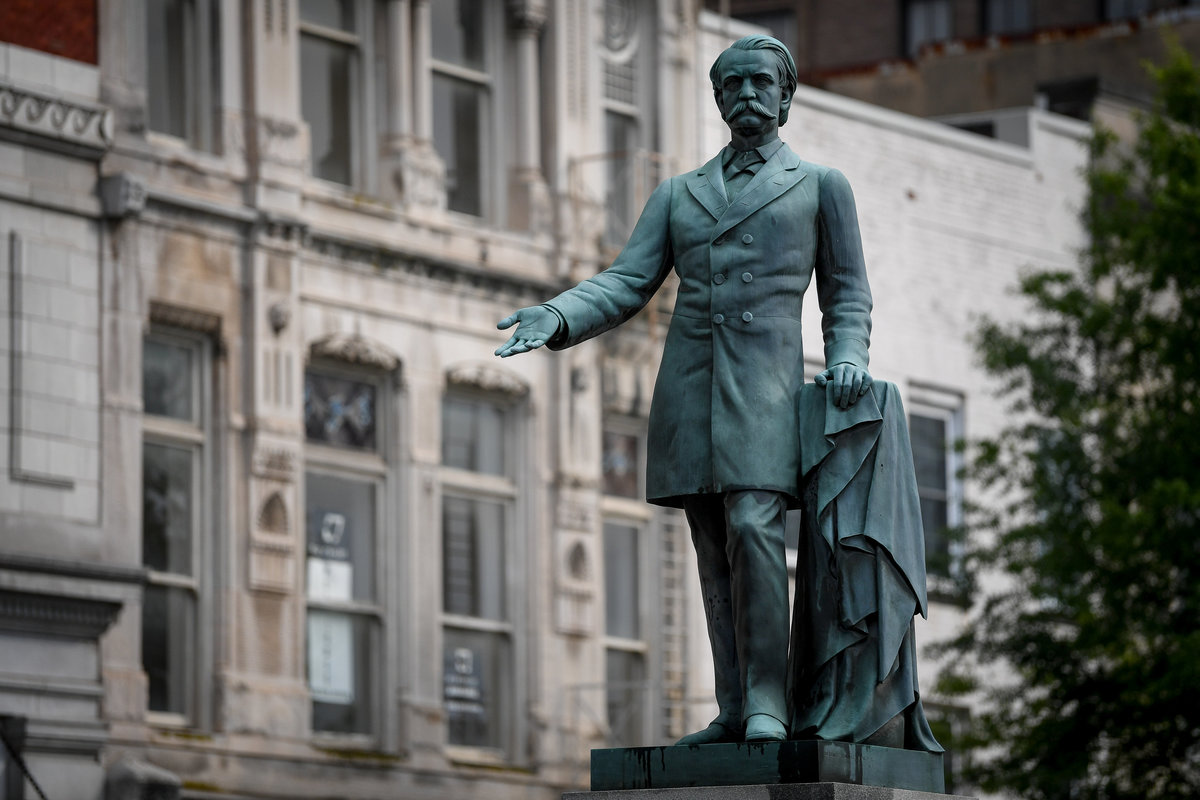
Since then, mayors of Baltimore and Lexington, Kentucky, said they would push ahead with plans to remove statues, while officials in Dallas; Memphis, Tennessee; and Jacksonville, Florida; announced initiatives aimed at taking down Confederate monuments.
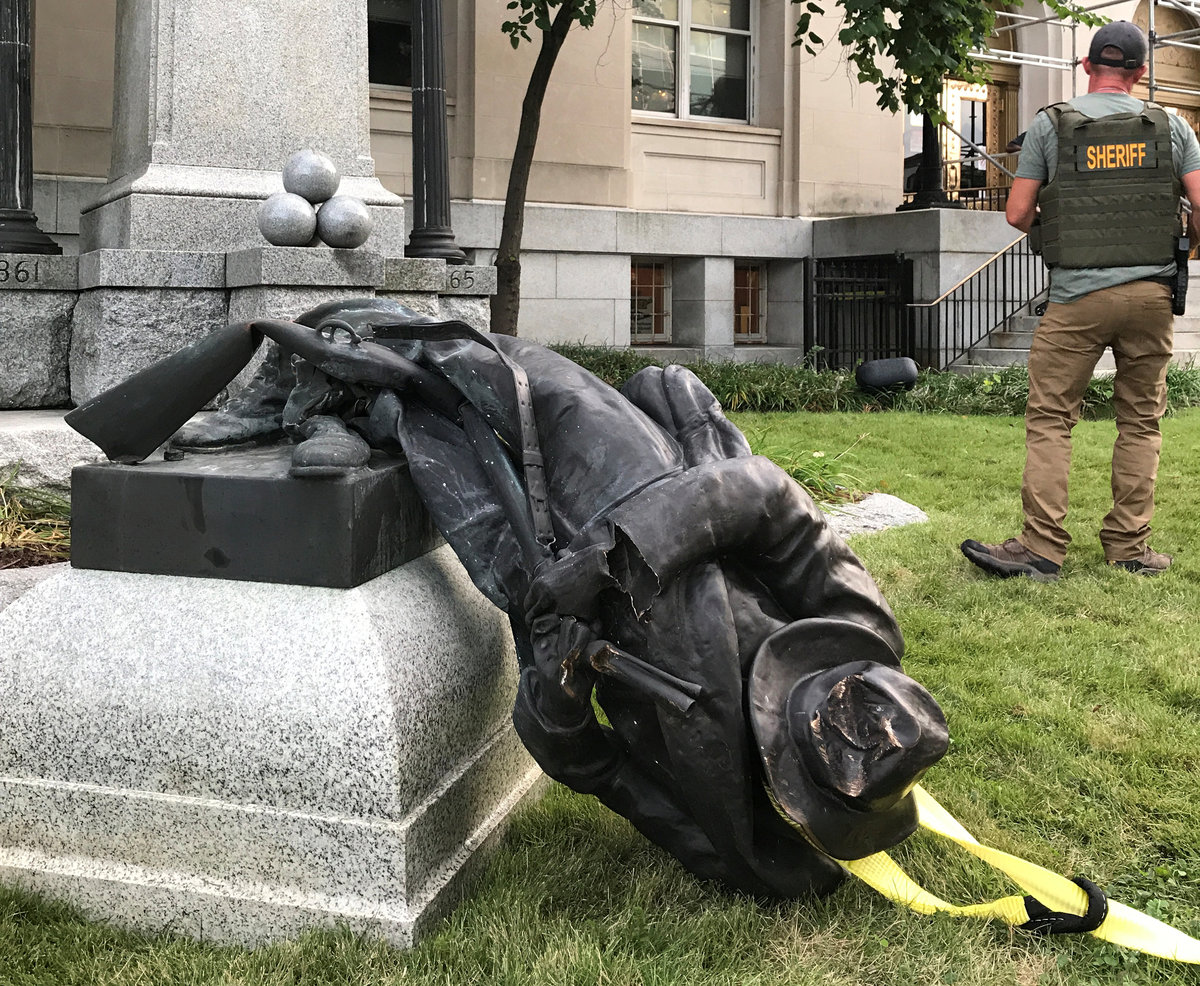
Some opponents took matters into their own hands. Demonstrators stormed the site of a Confederate monument outside a courthouse in Durham, North Carolina, on Monday and toppled the bronze statue from its base.
Durham County Sheriff Mike Andrews said in a statement on Tuesday that his office would seek vandalism charges against those involved.
The Civil War involved 11 southern states that seceded from the Union, and most Confederate monuments are located in southern states.
The efforts by civil rights groups and others to do away with Confederate monuments gained momentum two years ago after avowed white supremacist Dylann Roof murdered nine African-Americans at a church in Charleston, South Carolina. The shooting rampage ultimately led to the removal of a Confederate flag from the statehouse in Columbia.
As of April, at least 60 symbols of the Confederacy had been removed or renamed since 2015, according to the Southern Poverty Law Center, which tracks hate groups.
But such efforts have also made Confederate flags and memorials a rallying point for white supremacists and other extreme right groups, according to Ryan Lenz, a spokesman for the center.
Opponents of Confederate memorials view them as an affront to African-Americans and ideals of racial diversity and equality. Supporters argue they represent an important part of history, honouring those who fought and died for the rebellious Southern states in the Civil War.
Carl Jones, chief of heritage operations for the Sons of Confederate Veterans, said he would continue to make the case that the monuments are items of historical value.
Across the country, 718 Confederate monuments and statues remain, with nearly 300 of them in Georgia, Virginia or North Carolina, according to the Southern Poverty Law Centre.
White nationalist leaders plan to hold a rally in Lexington, Kentucky, to oppose the removal of the statues there and are considering a lawsuit, Matthew Heimbach, chairman of the Traditionalist Worker Party, told the Herald-Leader newspaper on Tuesday. The group said it has not set a date for the protest and did not respond to requests for further comment.
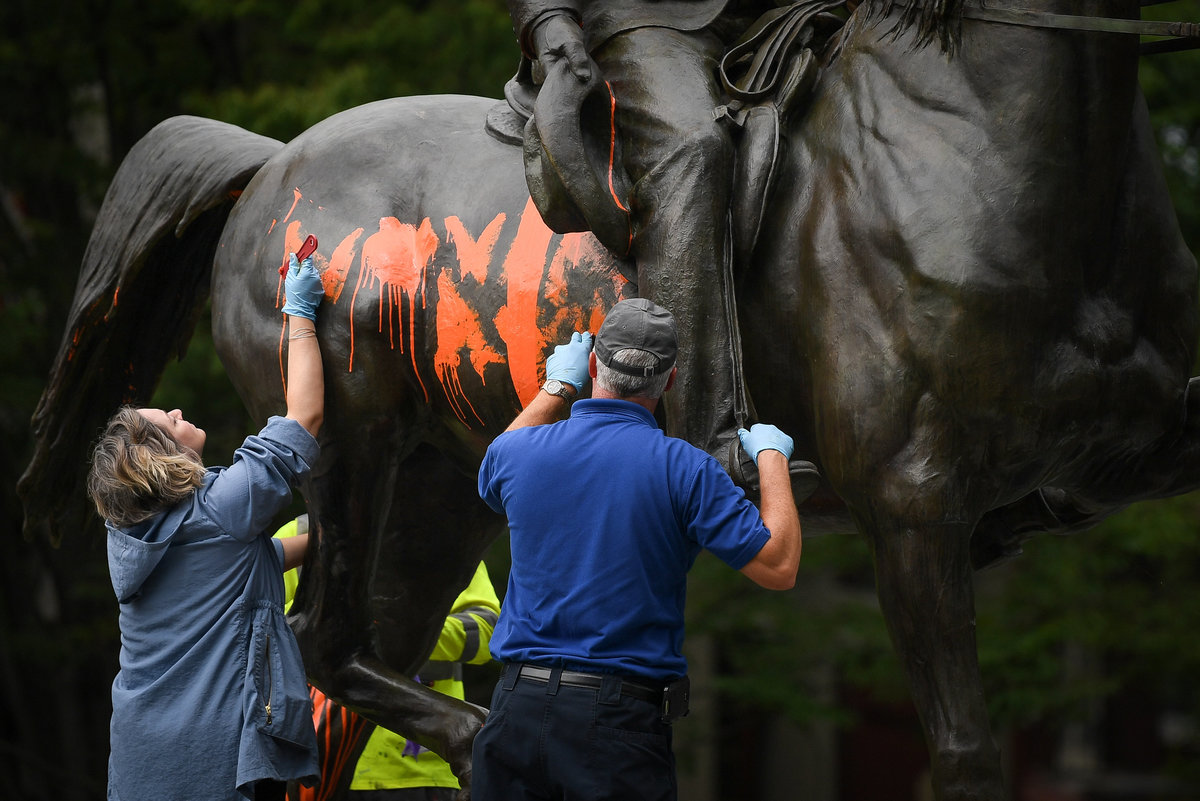
Some elected leaders pushed back against the trend of removing Confederate monuments.
Kentucky Governor Matt Bevin, a Republican, told a WVHU radio show on Tuesday: "I absolutely disagree with this sanitization of history."
(Reporting by Chris Kenning; Additional reporting by Steve Gorman; Editing by Colleen Jenkins and Leslie Adler)