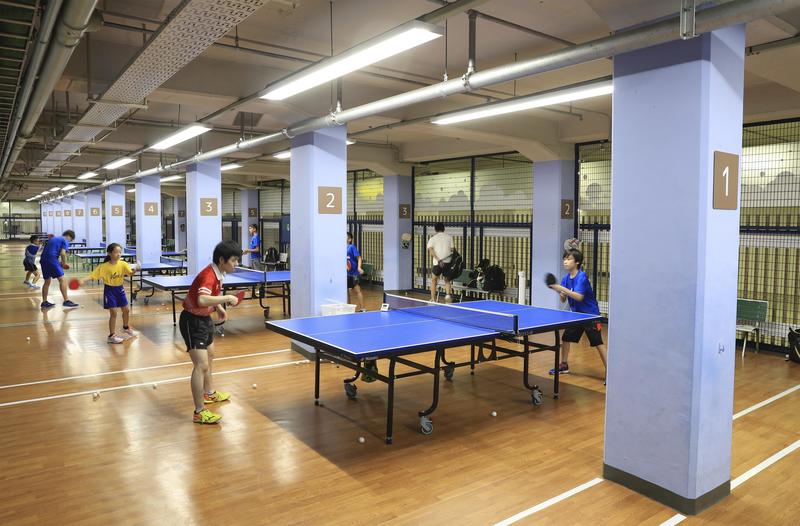
KOBE -- The crisp sound of table tennis balls could be heard in an old underground passage. Children and middle-aged women faced each other over a line of tables, swinging paddles as they focused on their games.
They were playing in Metro Takkyu-jo (table tennis spot) in Chuo Ward, Kobe, the only table tennis venue in Japan that is located in an underground passage. It has been loved by people from many generations since it opened about a half-century ago.
Rentals available
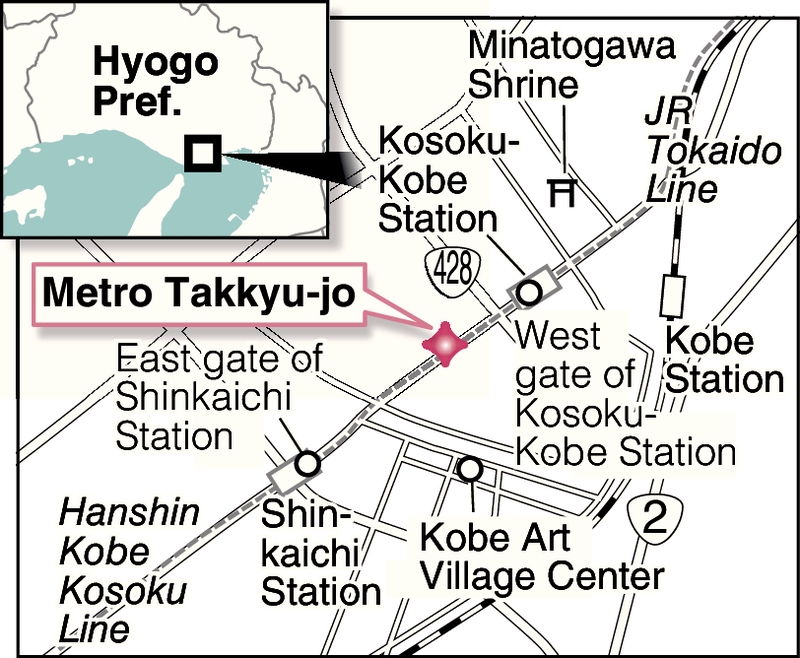
This unique venue is situated almost in the middle of an underground street named Metro Kobe, which is about 700 meters long. It connects Kosoku-Kobe and Shinkaichi stations of the Kobe Rapid Transit Railway.
Metro Takkyu-jo is in a passage a short way from an area with stores and restaurants. There are 13 table tennis tables in the space, which is 67.5 meters long and 9.5 meters wide.
An endless stream of passersby are drawn by the sounds and watch people play through fencing in the passage. It costs 900 yen per hour to use a table, and paddles and balls can be rented.
Even people who do not have their own equipment can easily play, so company employees often get in some games on the way back home in the evening.
I thought it would be cool underground, but the space is not air-conditioned. In summer, you get soaked in sweat after playing for a short time.
"Beer tastes great after playing," Masako Sato, 61, from Kita Ward, Kobe, said with a smile, "It's also appealing that I can get here right from the station and there are many stores around." She has played here twice a week for about 10 years.
Loved for half-century
Metro Takkyu-jo opened in 1971, when U.S. and Chinese table tennis players deepened their friendly ties in Nagoya. The exchange later led to diplomatic normalization between the two countries, and has been dubbed "ping-pong diplomacy."
According to Kobe Rapid Transit Railway, which operates the venue, the underground street opened three years before that, but it was initially just an underground passage without any stores.
Passersby told the company that the passage was dimly lit and made them feel scared. A company executive came up with the idea that a recreational facility would make the atmosphere cheerful and safe, which led to the table tennis venue.
It is not clear today why table tennis was chosen. Hirokazu Ishitobi, 64, manager of the company's business division, said: "It was difficult to utilize the space because there are large pillars every four meters. The most common view is that careful consideration led to the conclusion that tables for this sport were suitable for the space."
In August last year, the venue was significantly refurbished in tandem with the 50th anniversary of the opening of the underground street. The concrete walls were painted a cheerful blue, and the floor was covered with shock-absorbing materials to reduce the impact on players' knees.
A 53-year-old self-employed man who visited the venue for the first time in 40 years said: "I had the impression it was dark here, but now it's bright. I can enjoy this with my family."
Future Olympians?
In 2012, when a Japanese table tennis team won a medal for the first time at the London Olympics, players at Metro Takkyu-jo increased by 50 percent from the previous year to about 50,000. That number has been steadily rising since then, backed by the popularity of table tennis.
In September, a local nonprofit organization began a program for children to play table tennis. "When passersby watch and cheer, the students get energized," said Kentaro Imazu, 25, who serves as a coach in the program.
Ryoji Otani, 66, who runs an okonomiyaki restaurant and is the head of Metro Kobe Meiten-kai, an association of business owners on the underground street, said his dream was for the venue to produce world-famous players.
"If a player says in an interview at the Olympics, 'I was fostered in Metro Takkyu-jo,' I'd be over the moon," he said.
From this underground passage to the Olympics -- seeing children enthusiastically chase table tennis balls made me feel like this might not be just a fantasy.
-- Metro Takkyu-jo
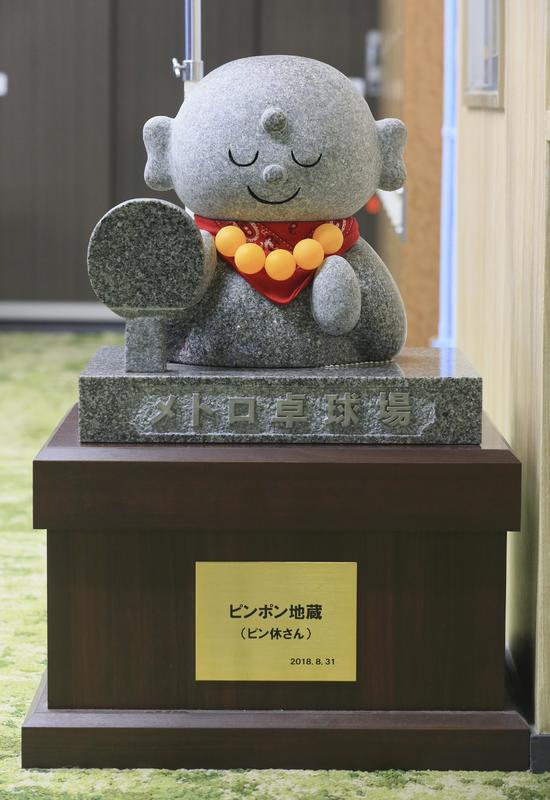
This table tennis venue is an underground passage about 100 meters west from the west exit of Kobe Rapid Transit Railway's Kosoku-Kobe Station. At the entrance, a Ping-pong Jizo statue nicknamed "Pinkyu-san" welcomes visitors. There is a shop specializing in table tennis goods, where people can buy their own paddles.
Open from 10 a.m. to 8 p.m., with no admission after 7:30 p.m. Closed only on Jan. 1. For reservations and inquiries, call (078) 371-0868.
Read more from The Japan News at https://japannews.yomiuri.co.jp/