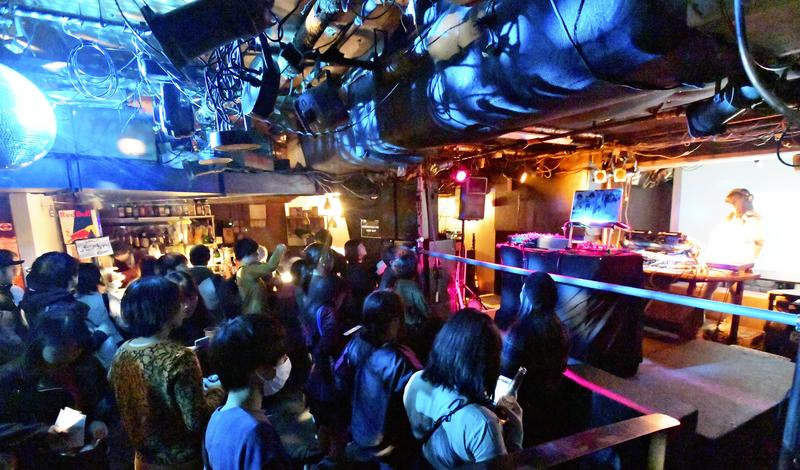
KYOTO CITY -- Nestled underground in Kyoto City, Club Metro is the place to be for those in the know.
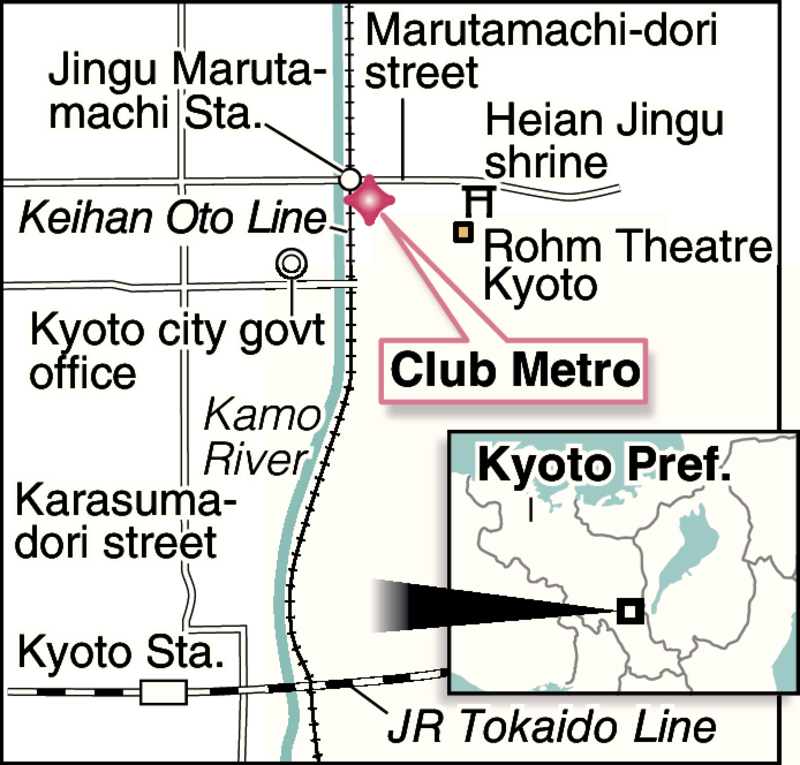
You'll find the nightclub along an underground passageway if you head toward Exit 2 after disembarking at Jingu Marutamachi Station on the Keihan Oto Line. The name Club Metro refers to the subway.
This club in Sakyo Ward, Kyoto City, has standing-room capacity for about 250 people but many big-name musicians from home and abroad have appeared there, including Yoshihide Otomo, who was responsible for the music of NHK's morning serial drama "Ama-chan."
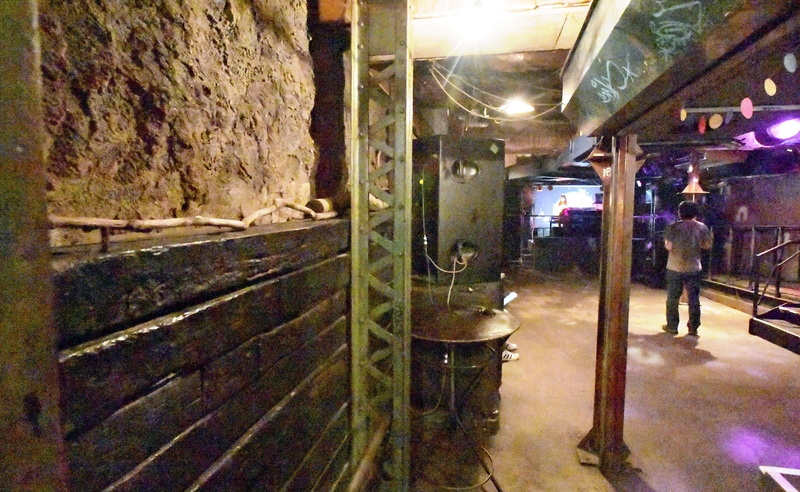
Club Metro has taken root as the birthplace of subculture in the ancient capital.
Wide variety of clientele
On a weekday in late November, a wave of people surged into the club when the doors opened at 6 p.m. They covered a wide range, from young people wearing hip-hop fashion to office workers clad in suits and women with feathered Japanese fans reminiscent of discotheque dancers during the bubble era.
The show on this particular day focused on popular Japanese songs in the Showa era (1926-1989). When the DJ played songs from the 1980s such as "Gin Gira Gin ni Sarigenaku," people got amped up and danced crazily to the music.
"Metro offers various kinds of performances, like hip-hop and singers who accompany themselves with an instrument. The club always picks fascinating performers, for sure," said Kazuhiro Kimura, 32, a company employee from Nishinomiya, Hyogo Prefecture, who often visits the club on his way home from work.
Bands, DJs on same stage
Metro opened in 1990, one year after the Keihan Oto Line went into operation. The owner was interested in the location for its direct connection to the station and also because it is like a traditional long and narrow kyo-machiya house. He decided to open the club there, thinking the location was interesting because it felt like he was digging his way underground.
At that time, the word "club" was not widespread in Japan, but Metro attracted a lot of young people partly for its novelty.
"There were a lot of students who majored in arts in Kyoto, so I guess the city had an environment that was open to accepting edgy forms of expression," said Kaoru Hayashi, 50, a producer who has been involved with the club since its opening.
While nightclubs typically only have booths where DJs play music, Metro has a stage where bands can perform.
"The audience is able to enjoy a mix of musical styles and this approach definitely offers more inspiration for performers who appear here," he said.
In the early days, Hayashi designed a kind of live performance where a DJ and a band appear alternately. It was a groundbreaking setup back then.
The club hit the mark. The stage came to life, with front men from some bands offering to DJ as well.
Famous musicians, such as Yasuharu Konishi, a former Pizzicato Five member, and Takkyu Ishino of the Denki Groove, were often seen in the DJ booth. The small club drew attention and gained respect.
"This place is a foundation of club culture. It's challenging to DJ here because the patrons are really switched on," said DJ Miharu, 22.
Showcasing subculture
With the club gaining a reputation overseas as well as at home, many big-time artists began to take the stage. When popular U.S. band G. Love and Special Sauce appeared, the club overflowed, with people spilling out into the passageway. So, the band went outside and sang and danced in front of the club. That performance has been shared among the band's fans as a legendary event.
In 2004, the club launched "Metro University" to hold lectures and workshops. Poet Shuntaro Tanikawa, writer Ramo Nakajima and other cultural figures have delivered lectures on both soft and hard topics, such as politics, literature, art and movies.
Metro started holding the lectures to provide people with a place to familiarize themselves with culture in a light-hearted manner while having a drink. Now, each event attracts lots of young people, expanding the base of subculture.
This year marks 30 years since the club's opening.
"I want to maintain this place as one that always spreads new culture," Hayashi said.
The long-established club's next move is eagerly awaited.
How to get there
-- How to get there
To get to Jingu Marutamachi Station on the Keihan Oto Line, take a limited express or another train from Kyobashi Station in Miyakojima Ward, Osaka City, for about 50 minutes. Club Metro is located right by the station. An Australian website listed it as one of 14 clubs in strange places around the world. Visit the website to check performance schedules and admission fees. The space can also be reserved as a venue for wedding after-parties and alumni meetups. For more information, call Club Metro at (075) 752-4765.
-- Extend your trip!
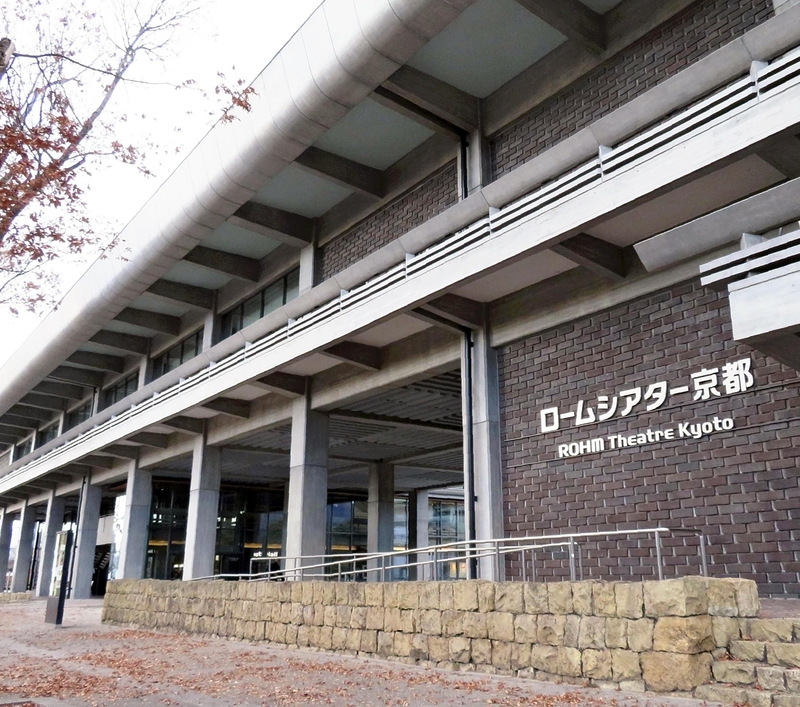
Rohm Theatre Kyoto
The Kyoto municipal government opened Rohm Theatre Kyoto in January 2016, after renovating the aging Kyoto Kaikan hall, which was opened in 1960, at a cost of about 11 billion yen. The main hall has about 2,000 seats and hosts large-scale musicals and opera performances. The South Hall has about 700 seats and the North Hall is used for plays with small audiences. The Heian Jingu shrine and Okazaki Park are located nearby.
Read more from The Japan News at https://japannews.yomiuri.co.jp/