
So-called newcomer vegetables have recently become more common on store shelves. These vegetables, imported or improved through selective breeding, are introducing one new taste after another. Amid a decline in the consumption of vegetables in Japan, wider efforts are being made to win consumers' hearts over to newcomer vegetables by emphasizing their novelty, convenience or healthy attributes.
Catering to raw consumption

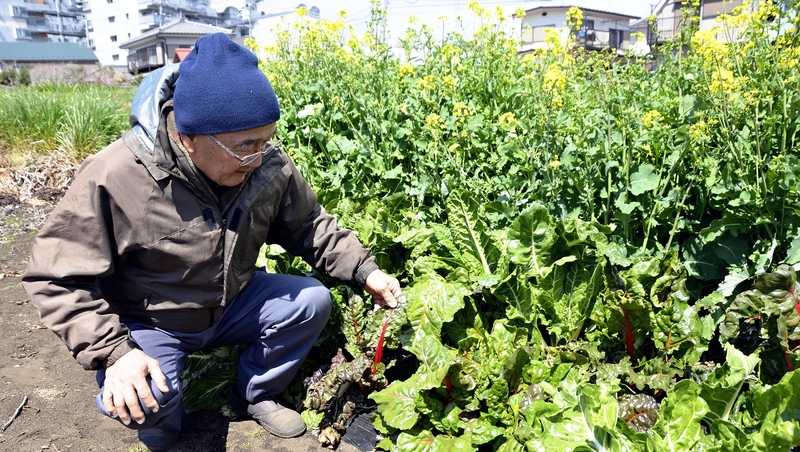
Three days a week, Misao Osada sells his produce at a stand at the edge of his field in Sagamihara or at other locations. Especially popular is the 67-year-old farmer's bagged salad set featuring a mix of uncommon green leafy vegetables. In early April, Osada prepared a salad set that included Swiss chard and romaine lettuce.
A customer in his 30s said the best thing is that the fresh vegetables can be eaten immediately after washing them.
Osada likes eating different kinds of vegetables, so he grows about 100 varieties each year in his approximately 1.2-hectare field. While the low production volume requires much time and effort, Osada said, "I want young people to buy vegetables, so I grow uncommon, new varieties."
According to a survey by the Agriculture, Forestry and Fisheries Ministry, per capita annual vegetable consumption is on the decline, falling to 89 kilograms in fiscal 2016 from about 102 kilograms in fiscal 2000. On the other hand, spending on prepared salads per household has been growing, rising 70 percent from 2000 to 2016, according to an Internal Affairs and Communications Ministry survey.
The new vegetables are also often intended for consumption in salads, so varieties that require little fuss before using have increased. These include curly kale, which can be eaten raw, whereas usual kale is known as a key component of the green health drink aojiru; cilantro, which is widely used in various types of ethnic cuisine; and petit vert, a brussels sprout-kale hybrid that can be eaten after being parboiled.
Familiar vegetables are also being improved for raw consumption. The kodomo piman green pepper for children is, according to the developer Takii & Co., less bitter than regular ones. Sakata Seed Corp., for its part, developed a small hakusai Chinese cabbage called tiny chouchou.

"Vegetables that only need to be cut before eating them and those suitable for small families are in demand," a Takii official said.
A rise in eateries offering authentic European and Asian fare is another factor behind the increase in the new types of vegetables. A research group for Italian vegetables consisting of 17 farmers in the town of Kahoku, Yamagata Prefecture, grows about 40 varieties used for Italian cuisine, including cavolo nero, or black cabbage. The organization was founded in 2012 at the request of a chef who trained in Italy and wanted to create authentic flavors. The group said that with an increase in chefs who have trained abroad, farmers are growing new kinds of high-value vegetables to meet their demands.
Agrigate Co., which operates fruits and vegetable stores, teaches customers how to prepare the new vegetables. Many customers become interested in these new varieties when they are told that they can be enjoyed raw, even if they have little information about them, according to Agrigate.
"Such vegetables are popular particularly among working women who want to shorten their food preparation time," Agrigate buyer Takuno Matsune said. "Once they realize the vegetables are easy to eat, they will become regular consumers."
The ease of finding recipes by searching on the internet is also supporting the diffusion of these new vegetables.
"This makes it easier for people to try cooking even unfamiliar vegetables," Matsune said. "The presence of new vegetables might increase as a way to generate interest in vegetables in general."
Side act to leading role
Ways to consume vegetables have changed considerably since the Showa era (1926-89). According to Takeshi Nishida, general manager of the Salad Research Institute at Kenko Mayonnaise Co.'s Product Development Operations, it was after the end of World War II that people in Japan started to eat raw vegetables on a daily basis.
Nishida said lettuce and other foreign vegetables began to be grown in Japan after the war for consumption by occupying U.S. military personnel.
Consumption of such vegetables started to spread among general households in the 1970s. Partly thanks to refrigerators becoming widespread, vegetables suitable for salads came to be grown in Japan. In the 1980s, burdock root, pumpkin and other vegetables that had usually been used in simmered dishes also were used in salads. A rise in households with microwave ovens to easily cook vegetables also helped increase the number of salad variations.
Department stores are among the shopping places increasingly selling salads as everyday dishes for takeout.
"Vegetables used to be consumed as a side dish, but they are now being treated as main dishes," Nishida said.
Nishida added that some health-conscious people who want to avoid spending too much time cooking vegetables have come to eat salads more as main dishes.
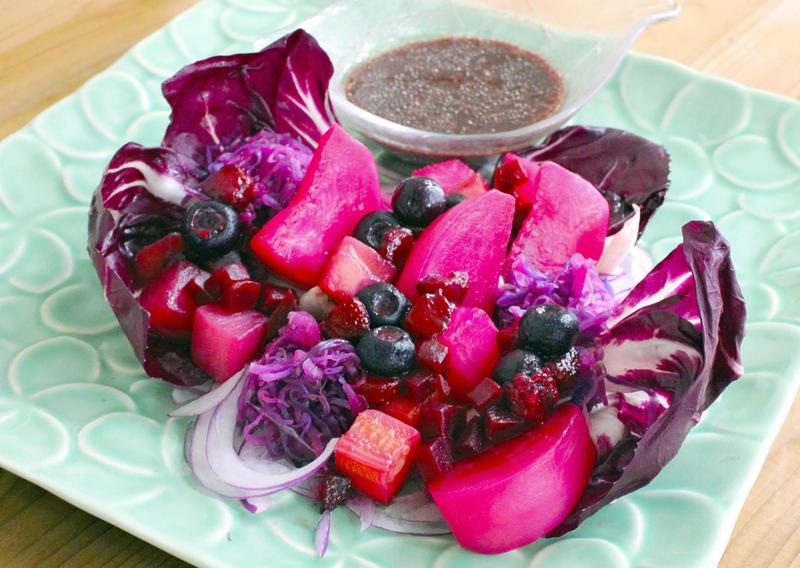
Vegetables cut to long noodle-like strips, rice alternatives made from vegetables and photogenic salads featuring several kinds of colorful vegetables are also becoming popular.
"From now on, consumer interests may shift more to the beneficial attributes of vegetables, including whether they contain specific nutritional components," Nishida said.
To find out more about Japan's attractions, visit http://the-japan-news.com/news/d&d
Read more from The Japan News at https://japannews.yomiuri.co.jp/









.jpg?w=600)



