Amonth has passed since the March 24 election but the sense of uncertainty in politics is nowhere close to being cleared up.
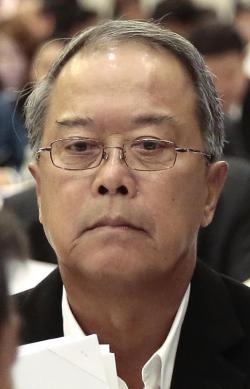
Chusak: Constitution is flawed
Adding insult to injury is a suggestion by the Pheu Thai Party to rewrite the constitution, which some critics see as a ticking time bomb in the context of a political arena moving toward a state of deadlock.
Critics say the confusion surrounding the complex way of calculating the party-list votes is giving way to conspiracy theories.
The most controversial theory relates to the allegation that one particular party was manipulating the system in a bid to garner support from small parties to form the next government with a razor-thin majority in the House.
The Election Commission (EC) asked the Constitutional Court to rule if its calculation formula was valid, but the court dismissed the request on Wednesday on technical grounds. It ruled that the EC can use whatever method it likes provided it doesn't violate the charter or the organic law governing the election of MPs.
This has put the EC in something of a quandary. Pundits say it will be a challenge to please all quarters, especially those blocs of parties battling to capture a majority in the House to set up a new government.
As if the matter has not caused enough of a commotion, another unsettling development emerged when Pheu Thai declared it had given serious thought to amending the constitution, which it describes as a product of the May 2014 coup.
This week, Chusak Sirinil, head of Pheu Thai's legal team, announced a plan to roll out a new charter-rewriting body, arguing this opens the door to a more "inclusive" process of resetting the country's supreme law.
People's representatives would sit on the rewriting panel and decide what issues in the constitution need amending.
Political observers said Mr Chusak sounded as though he was taking a shot at the defunct Constitution Drafting Committee (CDC) chaired by Meechai Ruchupan. Critics have described this as an "exclusive" club that went to work with the regime's blessing to put together the present constitution.
Mr Chusak insisted the constitution is flawed, citing the mixed-member proportional representation election method as an example, which has left many confused.
Pheu Thai's leading legal expert said that once the charter-redrafting panel finishes the rewrite, the proposed amendments will be put up for public scrutiny. They should help solve problems identified with the present constitution, he added.
However, Deputy Prime Minister Wissanu Krea-ngam explained that since the present charter was approved in a referendum, if it has to be altered, the amended draft must be put up for another referendum.
Mr Chusak was a step ahead. He said that to change the charter, a motion must be tabled before parliament. But before that, a referendum would be needed to determine whether the constitution should be redrafted.
But the observers felt Mr Chusak was simply counting chickens before they hatch.
The road to amending the charter is strewn with obstacles. First and foremost, the bitter wrangling over the party-list calculation method must be resolved.
Who makes the cut for the next government will make or break the prospect of the charter being redrafted. If the pro-regime Palang Pracharath Party leads the next administration, the idea will most likely be killed off.

Familiar face enters the race
The Democrat Party leadership contest has become even more colourful and interesting since former Bangkok governor Apirak Kosayodhin put his name in the hat as a third contender for the party's top job.
Mr Apirak was nominated as a candidate -- following Korn Chatikavanij, and Jurin Laksanavisit -- for the post at the party's general assembly on Wednesday.
There are unlikely to be any more Democrat figures signing up for the contest. The three-horse race is expected to be tough, not only for the candidates but also for the party members who are choosing to replace former leader Abhisit Vejjajiva.
The selection of the leader and the new board has been scheduled for May 15. This was made necessary after Mr Abhisit resigned in the wake of the party's election debacle.
Mr Apirak was not a candidate in the election, unlike his two rivals who are tipped to be party-list MPs after the Election Commission (EC)'s official endorsement of the results.
Mr Apirak, who spent two terms as Bangkok governor, is seen to be a modest and humble man with a pleasant personality and having good relations with party colleagues, which has won him recognition among party members, a party source said.
However, the country's oldest political party suffered a humiliating defeat and is expected to gain only an estimated 52 House seats when the EC releases the official election results on May 9.
In light of this, several key party figures believe that the priority now is to restore unity among its members, especially by avoiding a discussion on whether to join a coalition government led by the Palang Pracharath Party (PPRP).
Without unity, it will be difficult for the party to move forward whatever side it picks, the source said.
The Democrats are divided over whether to partner with the PPRP, which has nominated Prime Minister Prayut Chan-o-cha as its prime ministerial candidate or work as an independent opposition.
The meeting on Wednesday agreed that the three contenders should avoid commenting on the issue until after the new leader and new executive board are chosen on May 15.
The meeting proposed that a primary system not be used for the selection of the new leader on May 15, the source said.
Instead, each contender would be given an opportunity to outline their vision and approach for steering the party forward.
They would not need to give their opinions on whether the party should join the PPRP-led bloc, the source said, adding that the party agreed that the issue should be decided by the new executive board and elected MPs.
The Democrats must swallow their pride and come to terms with their new status as a medium-sized party while working out how best to carry out the major overhaul necessary in order to reemerge as a major party in the future, the source said.
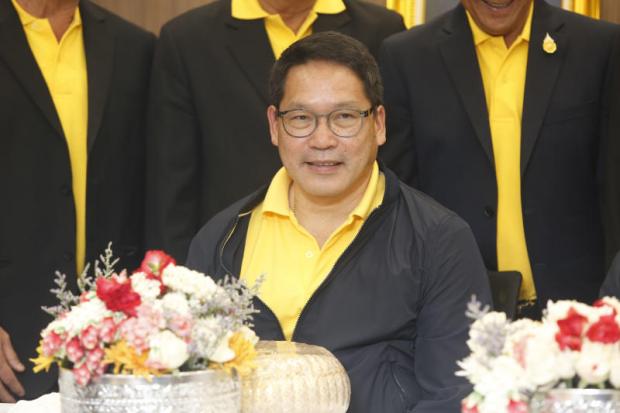
Party-list conundrum
Political parties went into the March 24 poll assured all the votes they would receive from voters would not go to waste. But they did not seem to have a clue as to how things would play out until the Election Commission (EC) unveiled its method of calculating and distributing part-list seats.
By the EC's calculation, about 13 small parties which garnered fewer voters than the number required to be allocated a party-list seat would be awarded a House seat each. This method goes against what was expected and has left many bewildered.
Apparently unsure of its own formula, the poll commission sought a ruling from the Constitutional Court -- only to be told it is the duty and power of the EC to figure out the calculation method in compliance with both Section 91 of the charter and Section 128 of the organic law governing elections of MPs.
The court went on to say that the EC has yet to show it has performed its duties under the constitution and so there is no justification for the EC to bring the issue for a ruling.
So, the EC will have to pick a method it believes to be in line with the laws.
It did not come as a surprise that the Pheu Thai Party issued a statement to warn the EC against allocating party-list seats to small parties as the calculation will have a significant bearing on the formation of a coalition.
Pheu Thai has announced a seven-party alliance and insisted that only parties that won 71,000 votes should be allocated list seats.
It is estimated that up to 13 small parties will get a seat each and if this is the case the scale will be tipped in favour of the pro-regime Palang Pracharath Party (PPRP) headed by Uttama Savanayana when it comes to forming a government.
However, it is still too early for the PPRP to celebrate, according to political observers.
First, the PPRP has still yet to convince the Democrat Party, which is expected to win about 52 seats in the March 24 poll, to join its bloc.
There is also the New Economics Party of Mingkwan Saengsuwan for the PPRP to court. Mr Mingkwan has so far stood firm that he is with the Pheu Thai-led alliance and will not vote for Gen Prayut Chan-o-cha who is the PPRP's prime ministerial candidate.
If the Democrat Party and the NEP agree to side with the PPRP, it is believed that the PPRP camp will have 261 seats in its pocket, and the controversial vote of the regime-appointed Senate in selecting the prime minister will see it secure Gen Prayut's return as premier.
However, a lot is at stake here, and the EC's calculation method will not satisfy all parties. According to observers, as soon as the election result is endorsed, tentatively on May 9, the EC's decision will be challenged and it is highly likely the matter will be again brought to the attention of the Constitutional Court.