ST. LOUIS _ So far this year, more than 1,750 unskilled labor jobs have been advertised in Missouri that are pretty much guaranteed if applicants can pass a drug test. Most of the positions are in the St. Louis region and pay $13.81 an hour, plus $20.72 an hour for overtime.
That's the prevailing wage set by the federal government's H-2B program for foreign seasonal workers. The jobs must first be offered to U.S. citizens, but they rarely apply _ or last.
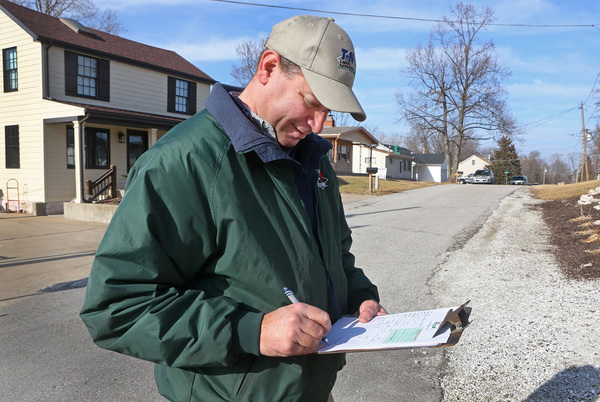
"We've had one application in the past three years off those ads," said Jason Rives, general manager of Brake Landscaping and Lawncare.
Instead, Rives said he hopes 95 laborers from Mexico will be able to step up, as they've done in the past. Many landscaping companies in the region _ large and small _ say they do the same to keep their businesses going strong and to support full-time office and supervisor jobs.
The companies say a domestic labor force to maintain residential yards and commercial grounds doesn't exist anymore. American laborers who are willing and able often move up the ladder to higher-paying, year-round jobs, such as in construction, while high school and college students aren't showing up in the summer like they used to.
The reliance on seasonal workers from abroad has been a well-documented economic issue. But there is a lot of uncertainty in the H-2B program since the November 2016 presidential elections that is putting pressure on landscaping firms as well as the hospitality and tourism industries.
There's been an unprecedented number of visa applications from employers this year and the policy is more uncertain than usual. Companies want to be able to plan better for what's to come and ensure more growth.
"We jump through the government's hoops every year for these needed workers," Rives said. "We need to get a long-term policy that will take some pressure off us."
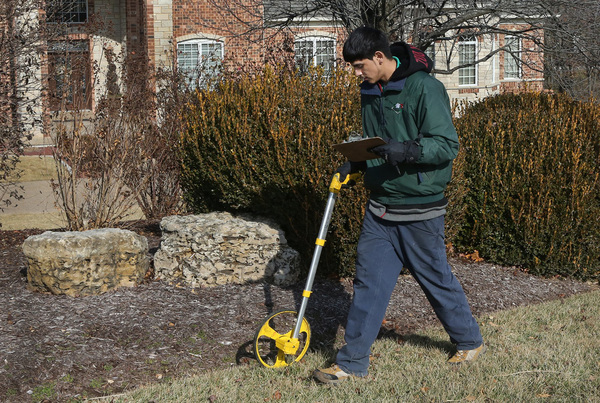
While Brake had the largest request for seasonal workers in Missouri since Jan. 1, more than 100 companies in the state are in the same line.
"I only asked for three, but there are guys who need 20, 40, 50," said Adam Callison, of Done Right Lawn Care in St. Peters, who praised the work of Mexican laborers. "They pay taxes here in America and come back every year."
Under the H-2B program, 66,000 visas are granted annually to foreign workers for up to 10 months of non-agricultural labor. In late 2015, Congress temporarily expanded the program to say people who'd worked for an H-2B employer in the previous three years wouldn't count against the 66,000 limit. But that latest exemption to the program _ which was criticized by labor groups and some conservatives for allowing thousands more guest workers into the U.S. _ wasn't renewed in 2016, disrupting landscapers, hotels and other businesses.
Facing pressure from those employer groups, the 66,000 cap ended up being raised by 15,000 by the Department of Homeland Security in 2017, but that didn't happen until July, well after the growing season started. Earlier this year, a whopping 81,600 foreign seasonal visas were requested on Jan. 1 for a work period starting April 1 that has 33,000 visa slots available.
It's unclear how the shortage will be handled by the government this time around, as elected officials grapple with a wide range of immigration laws. Landscaping companies say they have reached out to lawmakers such as Sen. Roy Blunt, R-Missouri, and Sen. Claire McCaskill, D-Missouri.
"Senator Blunt has heard from Missouri small business owners and seasonal employers about the challenges they face in meeting workforce needs," said spokeswoman Katie Boyd. "Given the critical role many of these businesses play in sustaining our state's robust tourism industry, he is continuing to look at reforms that need to be made to the H-2B program to ensure workforce needs are met."
McCaskill didn't elaborate on her position, though she has supported extension of the returning worker exemption provision in the past: "This program is another example of a broken system in need of reform."
Among the database of applicants for seasonal workers in Missouri since Jan. 1, Six Flags requested 36 for food service, Big Cedar Lodge and other hospitality businesses near Branson applied for more than 150 cooks, maids and front-desk attendants. Others seek seasonal help with guttering, masonry and painting.
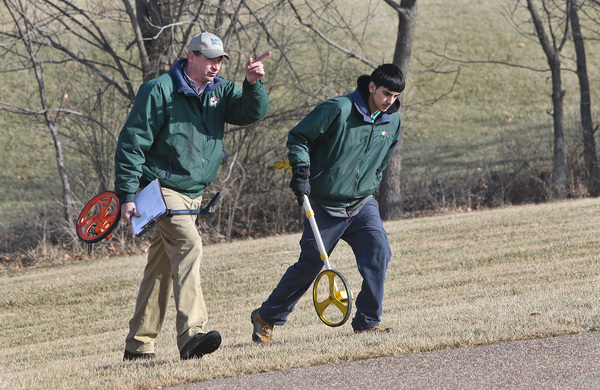
But most of the numbers are for landscaping, particularly in the St. Louis region.
Don Willey, business manager for Laborers Local No. 110, described workers in the H-2B program as modern-day indentured servants because employers hold a lot of power. But he said it's even hard to find workers in construction for $30 an hour and up.
Union landscapers are paid $20.65 an hour to install projects. He said there are about 150 H-2B seasonal laborers in the union that do mowing and trimming for $13.81.
"Manual hand labor _ rake, pick, shovel, ax _ that's not for everybody," Willey said. "Paying more money would definitely attract more people to it."
He said if firms aren't allowed H-2B visas then companies would have to "up the ante for the workforce." Under the current arrangement, he said there would be a "lopsided playing field" among competing businesses if some firms are approved seasonal help and others aren't.
According to one study by the American Enterprise Institute that Blunt's office provided, one H-2B worker sustains 4.64 jobs in the U.S.
"The H-2B program has allowed us to grow," said Aaron Dippold, of Irreco in University City. With the seasonal help, he said he was able to hire a landscape designer and other full-time help.
Kyle Fults, of Full Care, an Overland-based company with two other offices in Indianapolis and Louisville, Ky., said the economic impact of the business is exponential. He said he bought 47 lawnmowers in recent years at $8,000 a pop. He spends thousands of dollars on trucks, tires and fuel. Without the seasonal workers, he said, he couldn't buy all that and keep a lot of full-time employees.
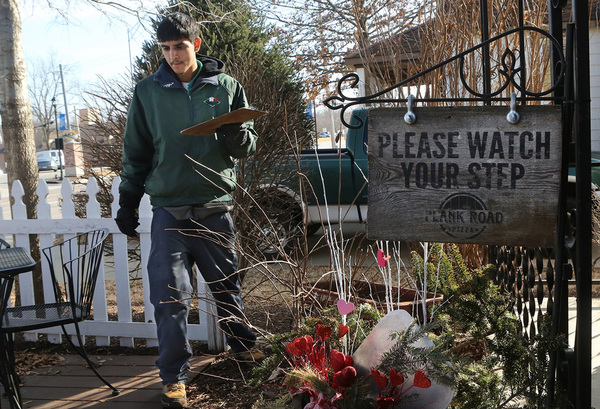
"Every time we get delayed or experience harsher policy change it affects the economy; Full Care is forced to stop buying and hiring!" he wrote in a letter to lawmakers. "Growing our business, hiring Americans, purchasing equipment and buying American-made trucks all have been reduced because of the uncertainty."
But sitting behind a desk in Overland, he made a more personal point.
"How am I going to feed my family?" he said.
Christian Valdez, 22, a naturalized U.S. citizen in St. Ann, hears similar concerns from across the border. Five of his friends and cousins in Nogales, Mexico, are champing at the bit to work another season for TNT Lawn Services in St. Charles and St. Louis counties.
When they can land jobs near home, Valdez said they earn about $10 a day.
"They are just desperate, man," he said. "They really want to come and work and make some money. They are very hard workers. They will stay late. They don't complain a lot. They are always on time."
Ted Haeffner, owner of TNT, and leaders of many other landscaping companies, say it's the opposite experience with the few job applicants who actually do apply from the local job pool.
"For an employee to last and do the quality work and show up on time and not bring baggage from their personal life," Haeffner said, "it's impossible to do."