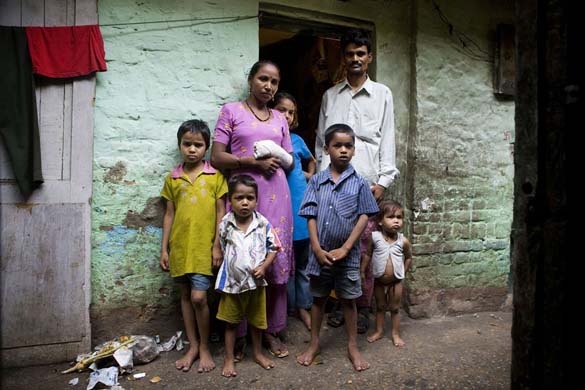
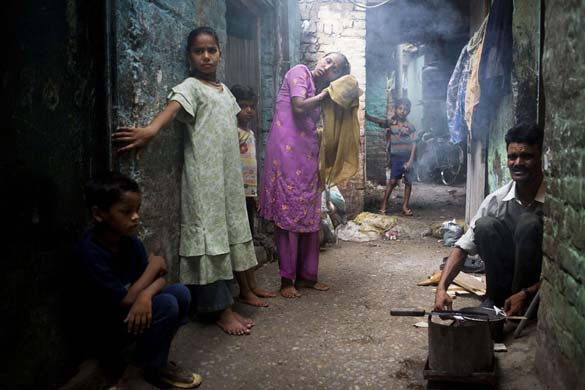
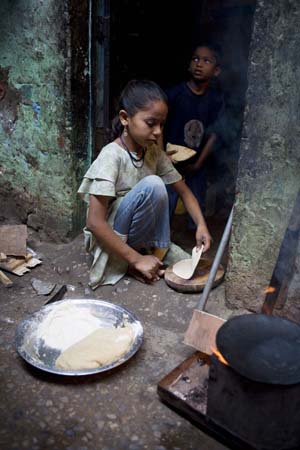
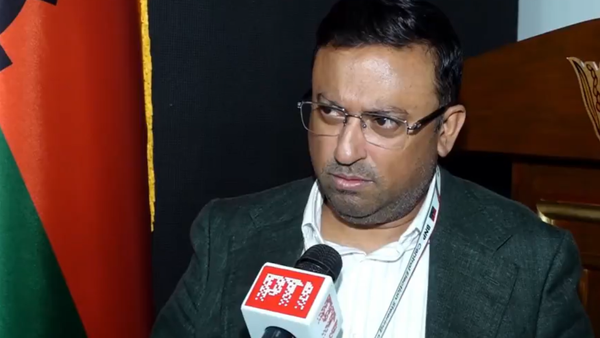
New Delhi, India: Security guard Vinod, 40, and his family live in a camp near New Delhi and eat only enough to survivePhotograph: Mahmud Rahman/Christian AidNew Delhi, India: Despite the country's economic boom the poorest have been hit by food bills rising on average by 40%Photograph: Mahmud Rahman/Christian AidNew Delhi, India: Vegetable prices have shot up and now people can buy only potatoes or onions. Their motto is ‘eat less, if possible avoid eating’. Nearly half of all children are undernourished and at least 80 million people go to bed hungryPhotograph: Mahmud Rahman/Christian Aid
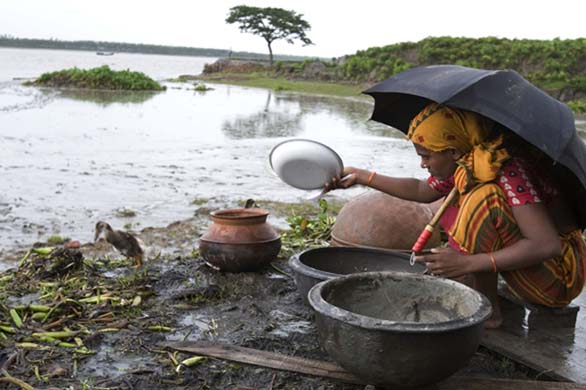
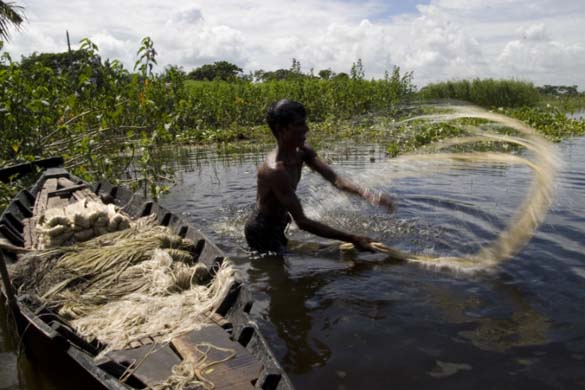
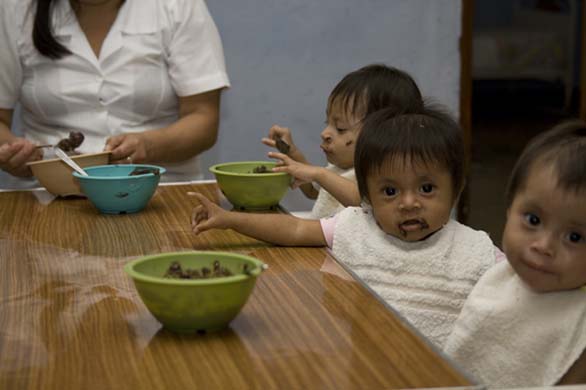
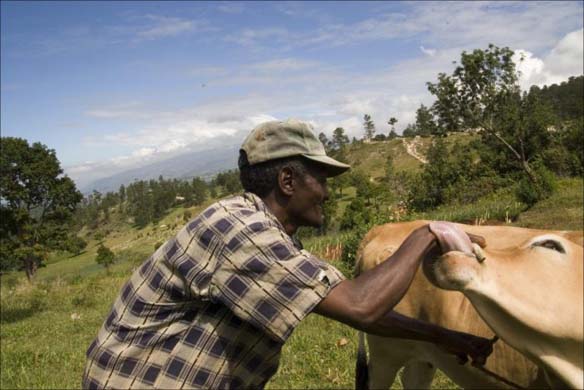
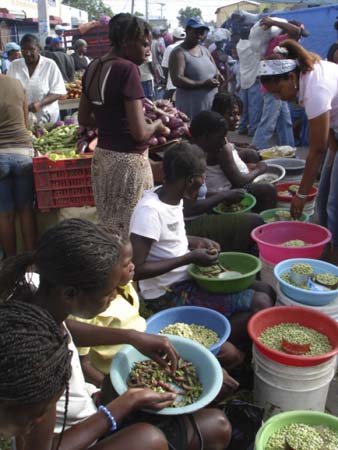
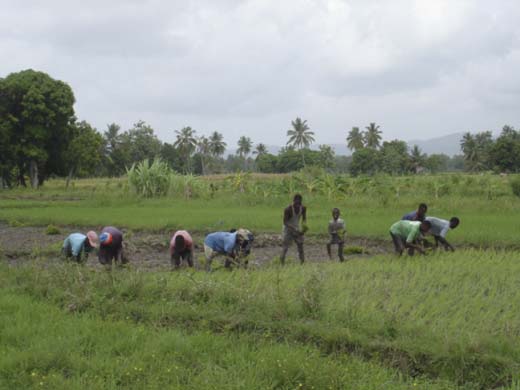
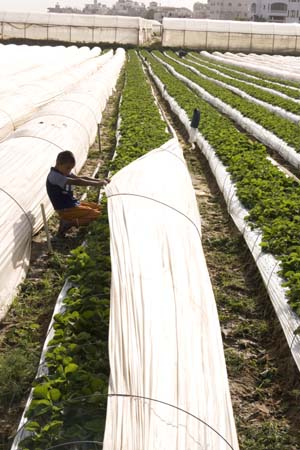
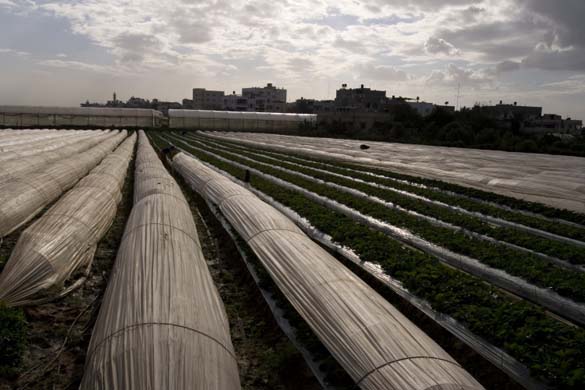
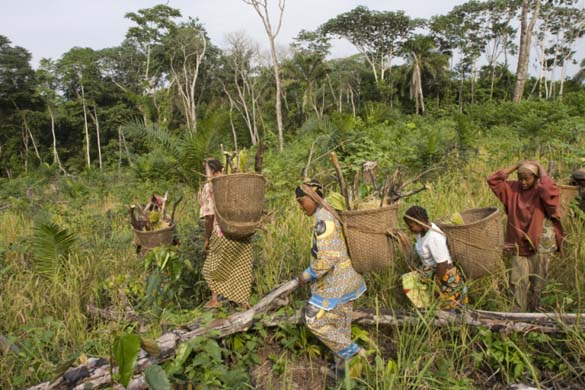
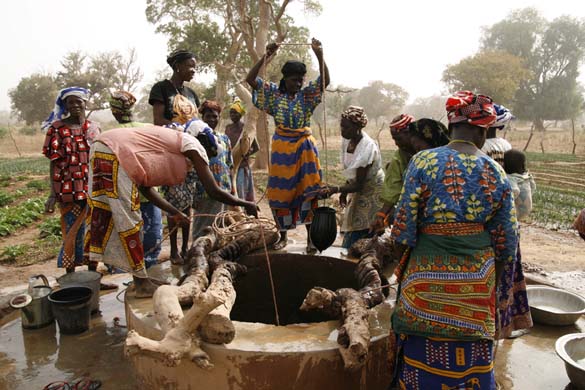
Khulna, Bangladesh: Migrants who lost their homes to river erosion and other disasters now live along this flood defence embankment on the outskirts of Khulna city, Bangladesh. This woman collects shrimp fry to sell as a means of making a livingPhotograph: Mohammadur Rahman /Christian AidCentral Bangladesh: The flood plains of central Bangladesh are waterlogged for at least six months a year. Farming is almost impossible as fields lie under up to two and half metres of water. Instead farmers turn to fishing to feed themselvesPhotograph: Mohammadur Rahman /Christian AidGuatemala: The country has one of the highest child malnutrition rates in the world. The children at this malnutrition clinic are all girls; this is because boy children are more valued and given more food at homePhotograph: Sian Curry/Christian AidHaiti: Four deadly storms in less than four weeks this year have devastated Haiti’s already fragile farming industry, leaving the country struggling to feed all its citizens. Investing in the agricultural sector is vital to Haiti’s recovery. Dairy farmer Emanuel, 61, has formed a cooperative with other small-scale farmers and together they have set up a dairy. By sharing production costs they can make their milk, cheese and yoghurt more competitively pricedPhotograph: Sarah Wilson /Christian AidDajabon, Dominican Republic: On Mondays and Fridays, hundreds of Haitians walk across the border with the Dominican Republic to buy and sell goods in the markets. The stronger economy on the Dominican side means there are more goods available and some foods are cheaperPhotograph: Sarah Wilson /Christian AidLes Cayes, Haiti: These farm workers are harvesting rice in the south-western region. The country used to be self-sufficient in rice, but the industry was severely damaged when tariffs were slashed in 1994 under structural adjustments and cheap Miami rice flooded the market. Since the food crisis, the price of Miami rice has gone up and there is not enough indigenous rice to fill the gap, despite it now costing less than importsPhotograph: Sarah Wilson/Christian AidBeit Lahiya, Gaza Strip: A young boy covers up strawberry plants in the afternoon sun. The agricultural sector in Beit Lahiya has suffered numerous blows due to repeated Israeli incursions that have destroyed orchards, fields and polytunnels. Farmers have resorted to cash crops such as strawberries and potatoes as these comply with Israeli orders that nothing is planted over 40cm highPhotograph: Sarah Malian/Christian AidBeit Lahiya, Gaza Strip: Cash crops are costly to produce and heavily reliant on accessible export markets. Many farmers have been crippled by Israel’s continued border closures, which do not allow produce such as strawberries to reach EU markets.Photograph: Sarah Malian/Christian AidDemocratic Republic of Congo: These women walk for miles to sell their crops at market. In the past, corrupt officials would extort illegal ‘taxes’ from them and much of their produce was lost along the way. These days they are better educated, they know their rights and wear a special pass to prove itPhotograph: Heidi Bradner/Christian AidBurkina Faso: These women work as part of a cooperative; they grow vegetables to feed themselves and their family and any excess they sell at market. The well, funded by Christian Aid’s partners Reseau Marp, has enabled them to cultivate this otherwise barren landPhotograph: Karen Hedges/Christian Aid
Sign up to read this article
Read news from 100’s of titles, curated specifically for you.