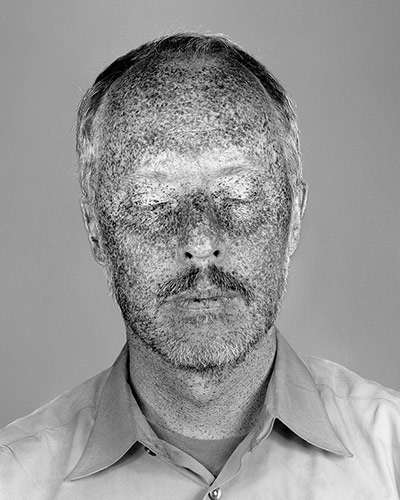
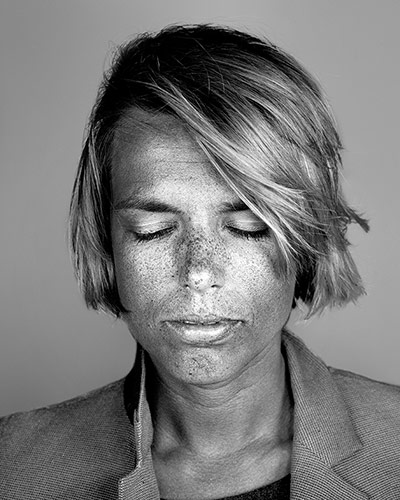
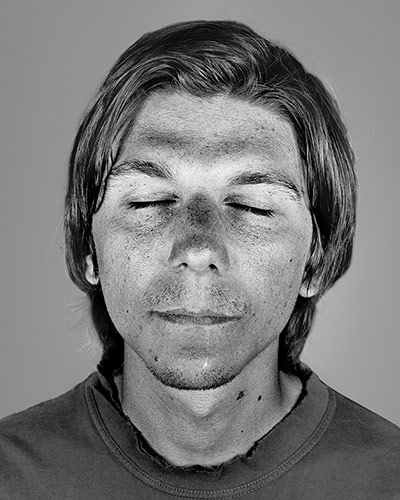
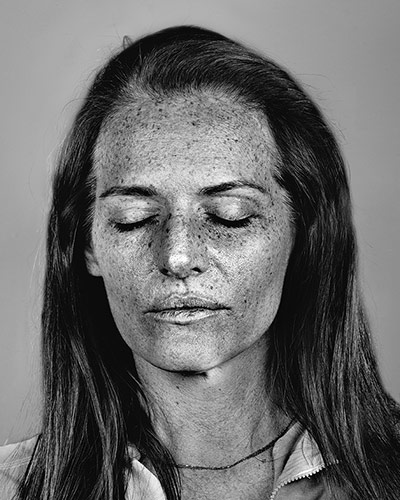
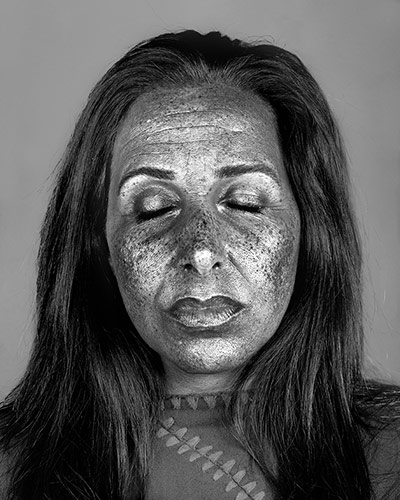
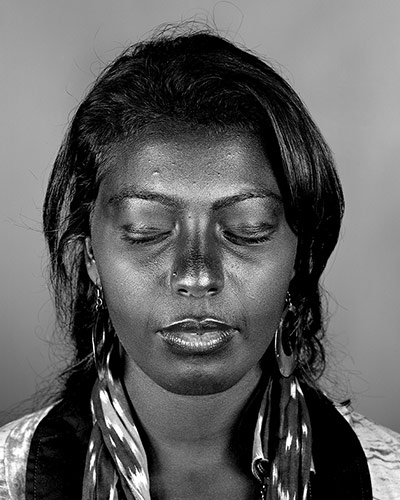
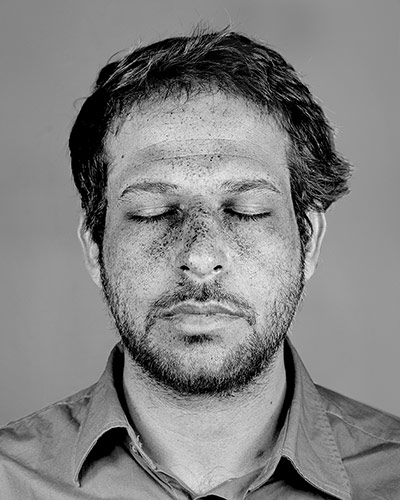
The faces in these images are shot using ultraviolet photography that reveals every sun spot, freckle and speck of pigmentation lurking beneath the surface of the subjects' skin. It's a technique used by dermatologists to reveal the "future" skin of their patients before they flog them expensive cosmetic treatments, despite the fact there is no guarantee that this invisible damage will ever materialise. Portraits like this – patients' eyes closed, as if in prayer, to protect against the UV light – often fill the walls of skincare professionals' offices, which Phillips photographed for a previous project. → Photograph: Cara Phillips
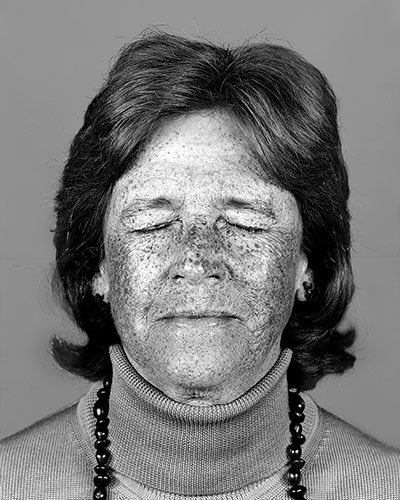
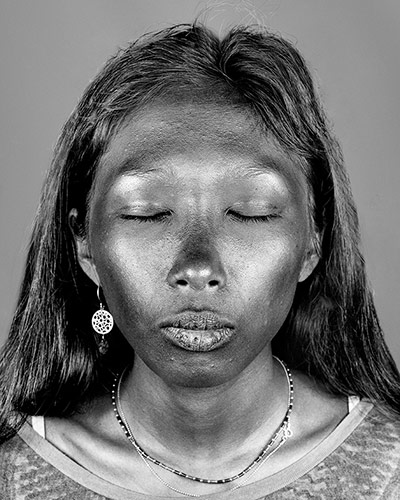
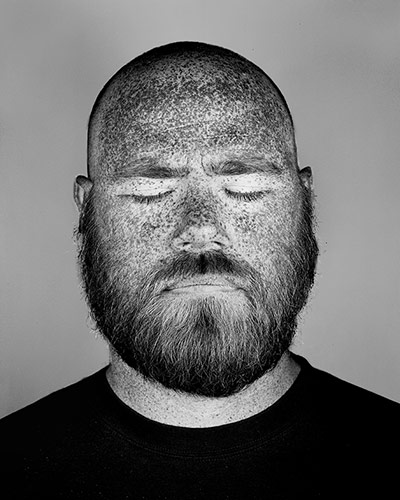
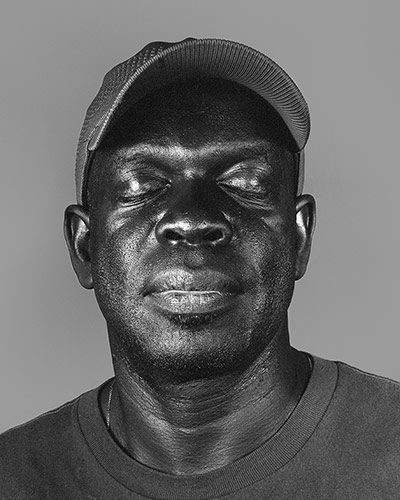
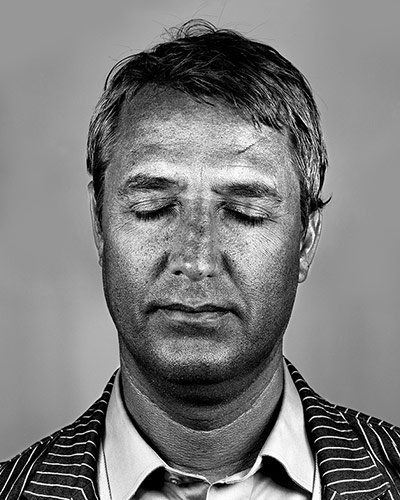
Inspired by these, she set up a makeshift studio at various locations on the streets of New York. Subjects, lured by the promise of a free portrait, sat with their eyes closed to replicate the medical photographs – even though Phillips used a regular large-format camera with a filter, instead of UV, that achieved the same effect. The closed eyes lend the portraits an intimacy, but also a certain distance, the latter enhanced by the artificiality of the white light bouncing off foreheads and cheekbones. → Photograph: Cara Phillips
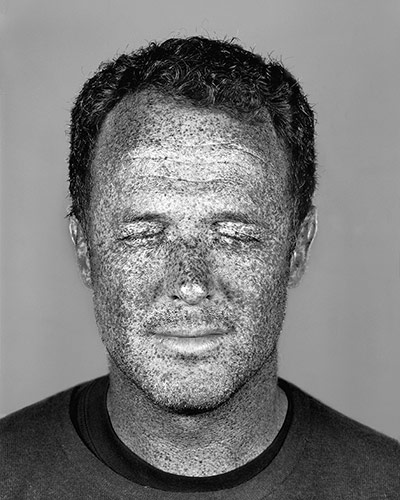
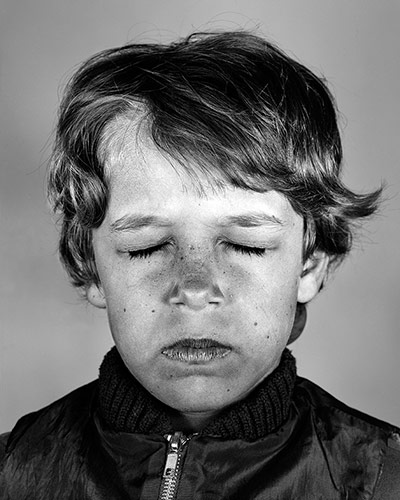
Some skins have noticeably less damage than others – usually the young, and the non-Caucasian. Others are so deeply mottled they appear camouflaged – even in black and white, freckly red-heads are easy to spot. Sitters with already dark or olive skin appeared several shades darker than they did in the flesh. By looking deep into the dermis, and peeping into the future, it's as if the camera is performing a magic trick. → Photograph: Cara Phillips
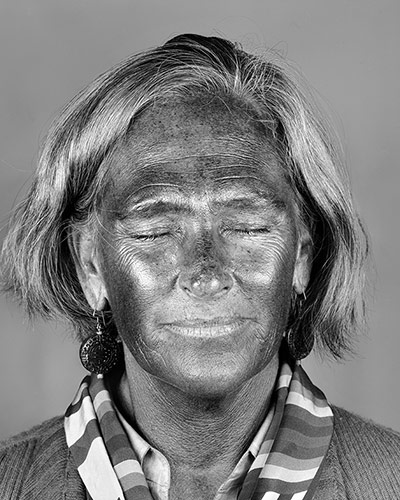
To anyone in thrall to blemish-free skin, these portraits are horrifying. But they are a refreshing antidote to the smooth, retouched faces we are used to seeing. And they might make you think twice before you spend too long in the sun. Photograph: Cara Phillips
Photograph: Cara Phillips
Photograph: Cara Phillips
Photograph: Cara Phillips
Photograph: Cara Phillips
Photograph: Cara Phillips
Photograph: Cara Phillips
Photograph: Cara Phillips
Photograph: Cara Phillips
Photograph: Cara Phillips
Photograph: Cara Phillips
Photograph: Cara Phillips