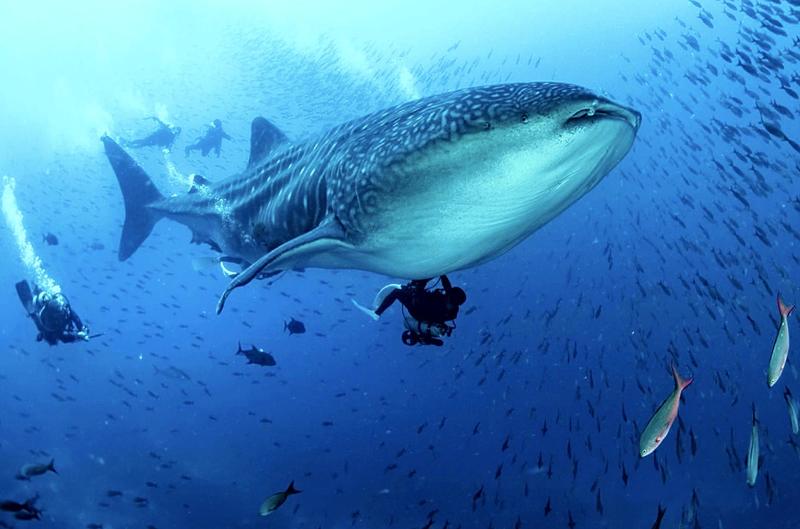
An international team including researchers from the Okinawa Prefecture-based Okinawa Churashima Foundation and Australia has for the first time successfully completed an ultrasound scan of a living whale shark's ovary.
According to the foundation, which operates the Okinawa Churaumi Aquarium in the prefecture, the achievement could lead to the possibility of artificially breeding the world's largest fish.
Whale sharks, which grow to over 10 meters in length, can be found in warm seas around the world.
Using an ultrasound device on the stomachs of whale sharks in seas off Ecuador in September, the team confirmed the presence of several follicles up to 8 centimeters long inside the ovaries of three females.
The species is on the International Union for Conservation of Nature's Red List of Threatened Species.
In recent years, it has been discovered that the fish delivers offspring after pups emerge from eggs inside its uterus. However, details of its reproductive process remain unknown.
Read more from The Japan News at https://japannews.yomiuri.co.jp/