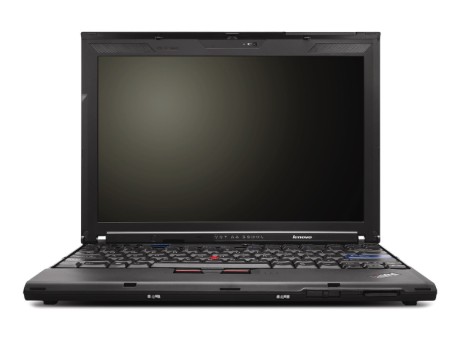
Does anyone still make laptops with 4:3 screens? I want to replace my five year old IBM ThinkPad X31 as both the processor and battery are showing their age. Lenovo claims to offer 12.1in standard laptops on its website but following the link reveals only widescreen models. I don't watch movies or play games but I do work on documents and spreadsheets in portrait format where I want more depth (or height) on the screen. To get the same screen area as the X31 with 16:10 format would need a 12.6in screen, and to get the same height, a 13.5in screen.
Jem Moore
I'm also still using an X31 ThinkPad and have the same problem. Unfortunately, 4:3 format screens have gone out of fashion and most ultramobile laptops now have 13.3in widescreens that are not as tall as the X31's 12.1in screen. Worse, the extra width means the widescreen versions take up more room in your bag.
If you decide to stick with a 12in widescreen, you will lose screen height, but not screen resolution. The WXGA widescreens on the ThinkPad X200 and Toshiba Portégé range typically have a resolution of 1280 x 800 pixels, which offers slightly more depth than the 1024 x 768 pixel XGA format used by the X31 and similar machines. On-screen text will be smaller, but screen quality has improved in the past five years, particularly with the move from TFT to LED panels. At around £1,100-£1,200, these machines are cheaper than the X31, and have twice the battery life, so is that a problem solved?
However, if you are willing to try one of the new ultrathin machines with Intel CULV (Consumer Ultra Low Voltage) chips and 13.3in widescreens, you can get a PC with even better battery life for about half the price. Examples include the Asus UL30, Acer Timeline and MSI X340, all of which I've looked at in Technophile, plus the Dell Inspiron Z and Acer's Travelmate-badged Timelines.
Ultrathin laptops usually have 16:9 widescreens with a resolution of 1366 x 768 so you will have the same vertical resolution and almost the same physical screen depth. The main point to watch is not to buy a machine with Core 2 Solo processor, but to go for a Core 2 Duo. The Wikipedia CULV page tells you which model numbers are which.
Backchat: Carl Brancher quibbled, correctly, about me mentioning "the move from TFT to LED panels" (above) because, he says, "I believe almost all displays are TFT-LCD: what's changed is the construction and backlighting methodologies."
Technically, many displays have changed from using very thin tubes (CCFL, for Cold Cathode Fluorescent Lamps) to LED backlighting, because light-emitting diodes use less power and don't dim as quickly. Companies, however, are selling LED screens rather than thin film transistor (TFT) liquid crystal display (LCD) screens to avoid having too many three-letter initialisms.