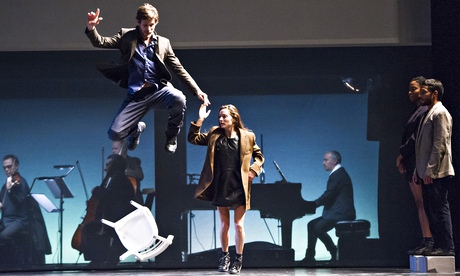
In the 28 years since Wim Vandekeybus created What the Body Does Not Remember, this bruisingly powerful dance work has become a kind of legend. It has become known as the work that pushed dance to new physical extremes, introducing a whole new vocabulary of barrelling combat rolls, high flung kicks, and bodies used as missiles.
These were, of course, the elements that got noticed in 1987. But seeing the work’s revival, I’m conscious of all the other qualities – the comedy, the rhythmic wit and the tightness of structure – that have not been so well remembered.
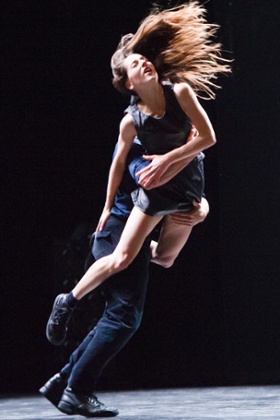
Vandekeybus’s idea for the piece was to examine the body in states of extreme pressure, to make choreography out of high tension and reflex response. The language he invented was certainly chaotic – sending the performers careening around the stage, ducking and diving and hurling bricks. Yet what’s equally striking now is the choreography’s formal logic. In one gorgeously adroit quartet, Vandekeybus has his dancers executing folksy little steps while passing around items of clothing at high speed; even the most serendipitous-looking games of tag or catch are highly patterned.
The work’s structural logic is enhanced, too, by the fact that its score (by Thierry de Mey and Peter Vermeersch) is played live on stage by the excellent Ictus Ensemble. The serrated intensity of strings, the deep texture of percussion add their own shape and lift to the choreography. And in the brief sections where Vandekeybus’s choreography does actually dip and flag, the music inserts its own drama. The ephemeral nature of dance, the fact that so much disappears from public view, is one of the art form’s frustrations. But, when a work comes back from the past, there’s a unique charm in seeing it with fresh eyes.
• 13 February, Gulbenkian theatre, Canterbury (01227 769 075), and touring.