Ukraine on Monday urged the European Union to support its plans to make the emergency paths for grain exports through the bloc permanent, with investment in at least five border terminals and a pipeline through which sunflower oil would flow.
Ukraine's agriculture minister Mykola Solsky told EU counterparts and the European Commission his country needed financial support to reduce its reliance on Black Sea exports that Russia had blocked and could hinder again.
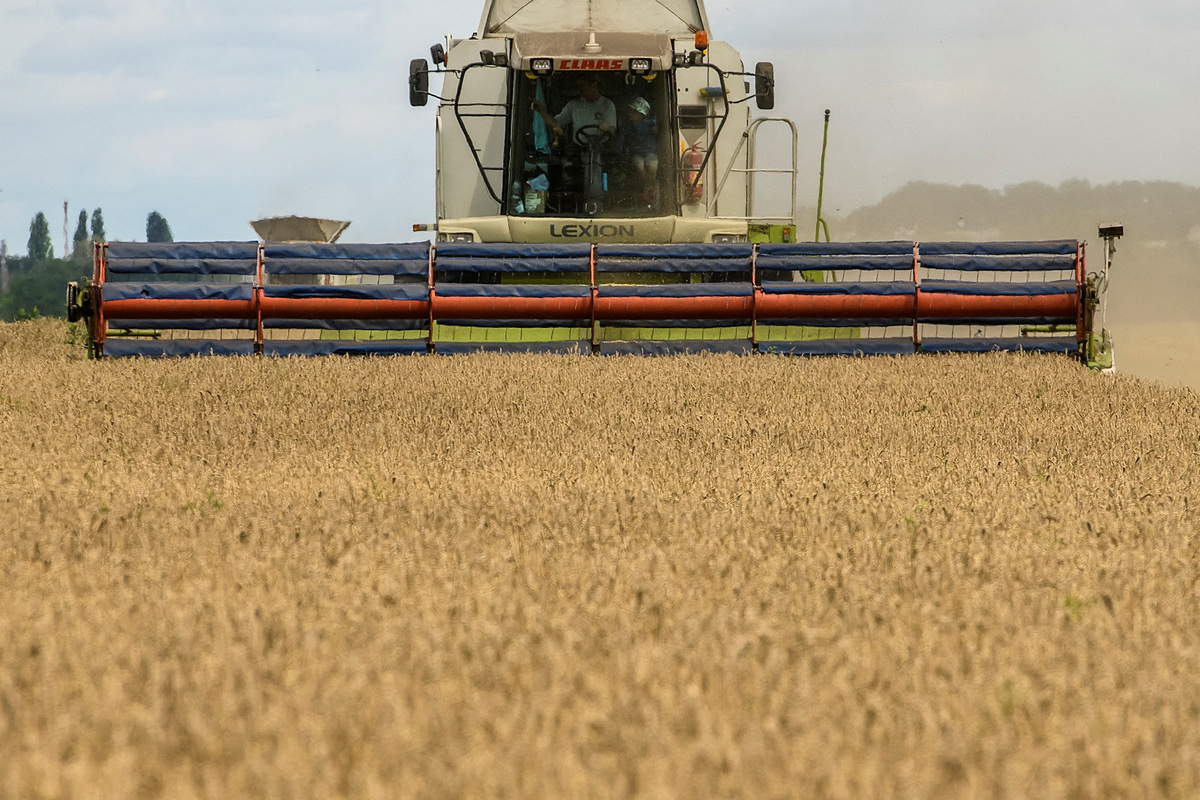
Its grain and sunflower seed exports have risen from 200,000 tonnes in the month after Russia's Feb. 24 invasion to 4.5 million tonnes in August, helped by a July deal to unblock ports, but most still following overland corridors through Europe.
"We think these corridors should become stable and permanent," Solsky told a news conference after a meeting in Brussels.
He said Ukraine needed help to increase its fleet of trucks, adding a rise to 16,000 from 12,000 now could allow 10-20 million tonnes of cereals to cross land borders per year.
Ukraine, one of the world's largest grain exporters, normally supplies around 45 million tonnes of grain to the global market per year.
Five border terminals should be built, costing $25-30 million each. The cost of a sunflower oil pipeline would depend on its route.
Solsky recognised shipping was cheaper, but for crops in western Ukraine the distance to Baltic ports was no further than to the Black Sea, where Ukraine would face an "unpredictable neighbour" even after the war.
"To have an alternative route is a must, routes through friendly democratic countries in order to continue business," he said.
Agriculture commissioner Janusz Wojciechowski said he would ask the EU executive to assess ways for the bloc to finance such initiatives.
Plummeting exports for the 2022-2023 season have driven up global food prices and prompted fears of shortages in Africa and the Middle East.
(Reporting by Philip Blenkinsop)