Much of Britain has been basking in temperatures closer to summer than winter and the fourth-warmest start to December since 1960 is set to continue, forecasters have said.
However, the mild weather is also bringing heavy rain, prompting the Met Office to issue severe-weather warnings for Friday in Scotland and much of the western UK on Saturday.
The balmy winter echoes the global trend with 2015 already declared as planet Earth’s warmest year on record. On Monday, Gavin Schmidt, the director of Nasa’s Goddard Institute for Space Studies, tweeted that this year would be a “scorcher” compared with previous years.
And the Met Office has predicted that next year the world would be even warmer still, forecasting the global average temperature for 2016 would be between 14.72C and 14.96C, compared with the average from 1961 to 1990 of 14C.
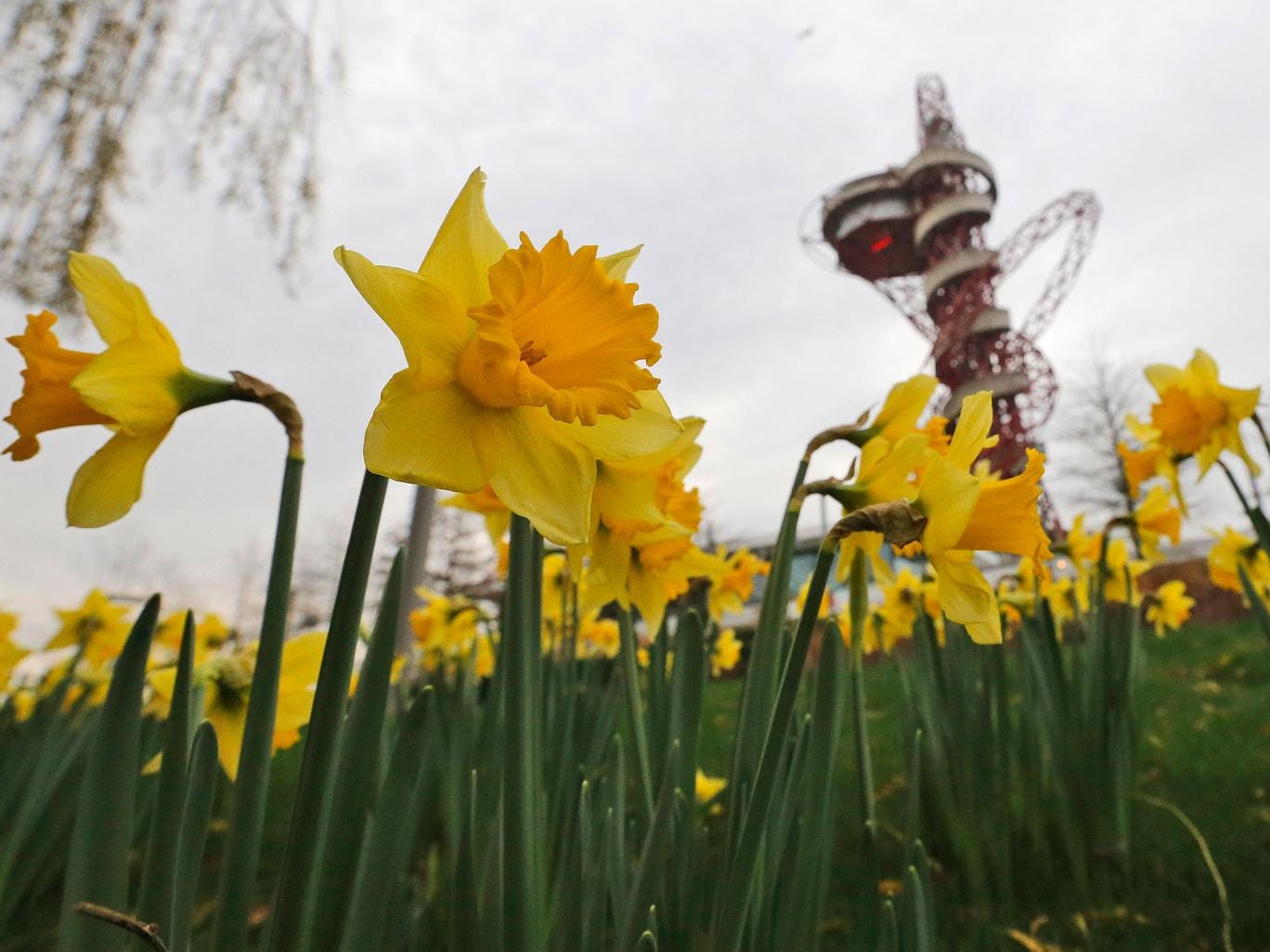
It was mid-April in 1802 when William Wordsworth “wandered lonely as a cloud” in the Lake District and was taken by “a host of dancing daffodils”, but the flower most associated with spring has already bloomed as far north as Cheshire this winter.
In London, temperatures hit 16C today – the average for June in the city – while much of the rest of the country saw 13C to 15C. It is expected to get even warmer.
“It is definitely staying like this towards the weekend and will be mild through Friday and on Saturday especially, with temperatures up to 15C or 16C,” a Met Office spokeswoman said.
The Met said up to 80mm (3in) of water could fall in the worst-affected areas of Western and Southern Scotland on Friday, with a chance of localised flooding. The warnings have been extended to cover much of North-west England and most of Wales tomorrow. However, the Met said there was only a “very low likelihood” of “renewed disruption from flooding” in some recently affected areas in Cumbria.
Saharan dust has also returned to the UK, carried on winds from the south. The tiny particles of red dust were expected to cause high levels of pollution across Southern and Central England. Officials said elderly people, asthma sufferers and others with breathing difficulties were most at risk.
Dr Sotiris Vardoulakis, the head of Public Health England’s Environmental Change Department, said: “While most people will not be affected by short-term peaks in ambient air pollution, some individuals, such as those with existing heart or lung conditions, may experience increased symptoms.
“On occasions where levels are high, adults and children with lung problems, and adults with heart problems, should reduce strenuous physical exertion, particularly outdoors, and particularly if they experience symptoms.
“People with asthma may find they need to use their reliever inhaler more often. Older people should also reduce physical exertion.”