The new office of NUS in London uses Philips LED lighting throughout, procured through the 'pay per lux' solution, whereby Philips offers light as a service and retains responsibility for the performance of the lighting.
NUS represents the voice of 7 million students in the UK, and 80% of them say they want their institutions to be doing more on sustainability. That's why working towards a low-carbon, circular economy is such an important part of what NUS does.
With behaviour change programs like Green Impact and Student Switch Off, and mass student engagement driven by our £5m Students' Green Fund, NUS is making sure students gain the skills and knowledge they need to thrive in our emerging low carbon economy.
We help students' unions to become hubs of sustainability at the heart of their wider communities, and we work to ensure that all graduates are part of the solution to our environmental challenges, not part of the problem. Because a more sustainable future is so important to students, it's crucial to society too – so we embed sustainability into all aspects of our operations, including our workplaces.
When NUS moved into a new office building in London last year, we were presented with a blank canvas. We felt passionate about capitalising on the opportunity to create one of the most sustainable office spaces in the country.
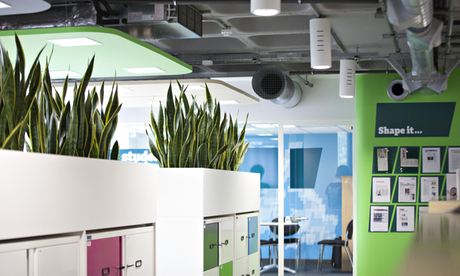
Some of the measures which we put into place are genuine innovations. Obviously, we were concerned about the amount of energy wastage which lighting can generate in an office building. That's why NUS worked with Philips to develop the pay-per-lux scheme, where saving energy creates financial benefits for both parties.
NUS doesn't own the lighting fixtures. We rent them from Philips, and pay a flat rate for our lighting. If we go over our expected energy usage, we get cash back from Philips. This creates a financial incentive for Philips to provide NUS' new office with the most energy-efficient service possible, while we're granted the stability of a predictable, fixed price over fifteen years.
Consumers usually pay a little up front, and get huge energy bills later. But we pay nothing now, and save money on energy. It's a radically new model. Too often, people think going green means higher costs and lower profits. This partnership will completely reverse that perception, and its success could mainstream a brand new way of procuring lighting.
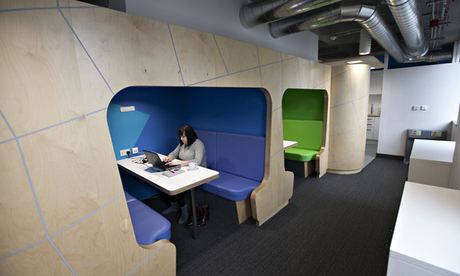
Our deal with Philips is part of a much wider retrofit at our London office, also including full cradle-to-cradle carpets, rainwater toilets, solar panels on the roof, a 28m² living wall, and heating and cooling from an air source heat pump. All of this has earned our building a BREEAM Excellent rating, demonstrating our dedication to a genuinely low-carbon economy.
These improvements reflect the level of demand for sustainable development we see from students. To take just one example, at the University of Manchester, economics students are rejecting the content of their courses, telling their lecturers that the narrow focus on linear, neo-liberal economic theory doesn't prepare them for the realities of the present day, or the economy which they want to create. There are more and more examples of students critically engaging with their syllabi, and asking themselves if it prepares them for the sustainable future they're working towards. It's exactly the sort of thing which we want to see more of.
From the work which students are driving across the country, to the innovations NUS is embedding into our own practices, we try to act as a beacon of sustainability to the wider education sector, as well as throughout the rest of society.
Students know that sustainable development is essential to their future prosperity, and NUS is proud to make it an integral part of how we promote and extend the rights of students across the UK.
Russell Warfield is sustainability communications coordinator for the UK National Union of Students
Content on this page is produced and controlled by Philips, supporter of the circular economy hub