The conferences are over and with only seven months to go before the election attention is focusing on the policy platforms that will differentiate the major political parties. For now there is a disproportionate clamour over the disruption that may or may not be caused by the UK Independence party (Ukip). But for the research community there is a larger issue at stake: the health of UK science.
On science, the coalition government has a mixed record. The severe cuts threatened in the summer of 2010, immediately after it took power, did not materialise thanks to vigorous arguments made in public and behind the scenes. Nevertheless, the value of the flat-cash settlement agreed for the research spending disbursed by the Department for Business, Innovation and Skills (BIS) has been steadily eroded by inflation over the past four years. That loss was exacerbated by deep cuts in capital spending and painful reductions in the R&D budgets of many other government departments.
The worst effects have been partly offset by sporadic injections of cash targeted at particular areas such as materials science, big data and synthetic biology. More encouragingly, the coalition recently outlined a commitment to over £1bn a year in capital expenditure on research infrastructure for the next five years (2016-2021) and launched a broad consultation exercise with major stakeholders and the public to canvas views on how that money should be invested.
In many ways this government has appeared to be one with which the research community could have an intelligent conversation – and that is a good thing. Cynics who doubt the truth of that statement need only look to Australia.
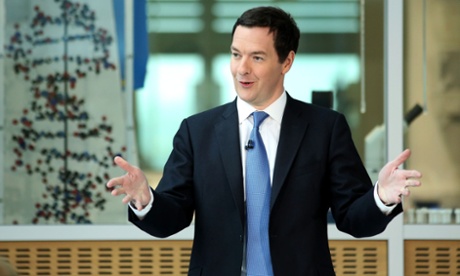
Nevertheless, the future remains shrouded in considerable uncertainty. Will the commitments to capital investment outlast next year’s election? That depends on the extent of cross-party support and the particular composition of the next administration. We have yet to hear detailed plans from any party. Even if the post-2015 government is Conservative-led, the ominous noises from chancellor George Osborne’s conference speech about wanting to find £25bn of cuts in public spending raise the question of where the axe will fall. One disturbing interpretation of the unexpected departure this summer of David Willetts, former minister for universities and science, is that the Treasury wanted less resistance from BIS on budget decisions.
The government’s Science and Innovation Strategy, which is scheduled to be announced alongside the 2014 Autumn statement, should offer a clearer indication of its intentions and an opportunity for discussion.
But preparations for the arguments that need to be had over the coming months about the future of UK science can begin now. To sharpen and frame the terms of that debate the Campaign for Science and Engineering (CaSE) has today published briefing documents that summarise the current state of UK science and engineering policy in three key areas: funding, education and the role of science in policy formulation.
CaSE will be using these briefings to engage directly with every political party with at least one MP, asking them to lay out their manifesto commitments. Provocatively, they list action points that form a coherent series of challenges for those who will be seeking the right to govern us. But the documents should also be read by anyone with an interest in understanding and participating in the arguments.
As the briefing on investment makes clear, the UK may have weathered a difficult time but only by absorbing a drop in the science budget in real terms from £12.7bn to £11.7bn. Coming on the back of an extended period during which Britain has under-invested, both publicly and privately, in comparison to its major international competitors, that direction of travel needs to be reversed if we are to avoid a serious decline in the size and quality of our research base. The quality of that research base is also critically dependent not just on funding but on ensuring that science education remains a priority in our schools and that the health of the sector is not compromised by knee-jerk approaches to immigration policy.
One area not covered is the reform of university funding that figured prominently early in the term of office of the present coalition but has since declined in visibility. The promised bill on higher education never materialised, meaning that parliament has been denied the opportunity to scrutinise the full ramifications of the seismic shift of university funding towards student fees. There are hard questions to be asked of the present loan scheme, which has ballooned in cost since it was pushed through parliament in 2010. At the time the loss on student loans – because they would only be partially repaid – was estimated to be 30%; that figure now stands at 45% and, despite changes in accounting procedures, remains an unquantified threat to the BIS budget.
BIS has already had to resort to emergency measures to rein in enthusiastic uptake of loans by students at the private institutions that were being encouraged to become new higher education providers. As the scheme matures it is projected that the outstanding loan balance will peak at £330bn in the mid-2040s. How a future government will cope with that prospect, especially if repayments by graduates continue to under-perform, is anyone’s guess, but it looks like a clear and present danger to the stability of BIS’s funding of research.
We should be under no illusion that spending on research or even the future of higher education will be centrefold items for party manifestos. But they are central to the future economic and cultural health of the country and need to be worked through seriously and publicly before we go to the polls next year.
Stephen_Curry is a professor of structural biology at Imperial College, vice-chair of Science is Vital and a director of CaSE


.png?w=600)