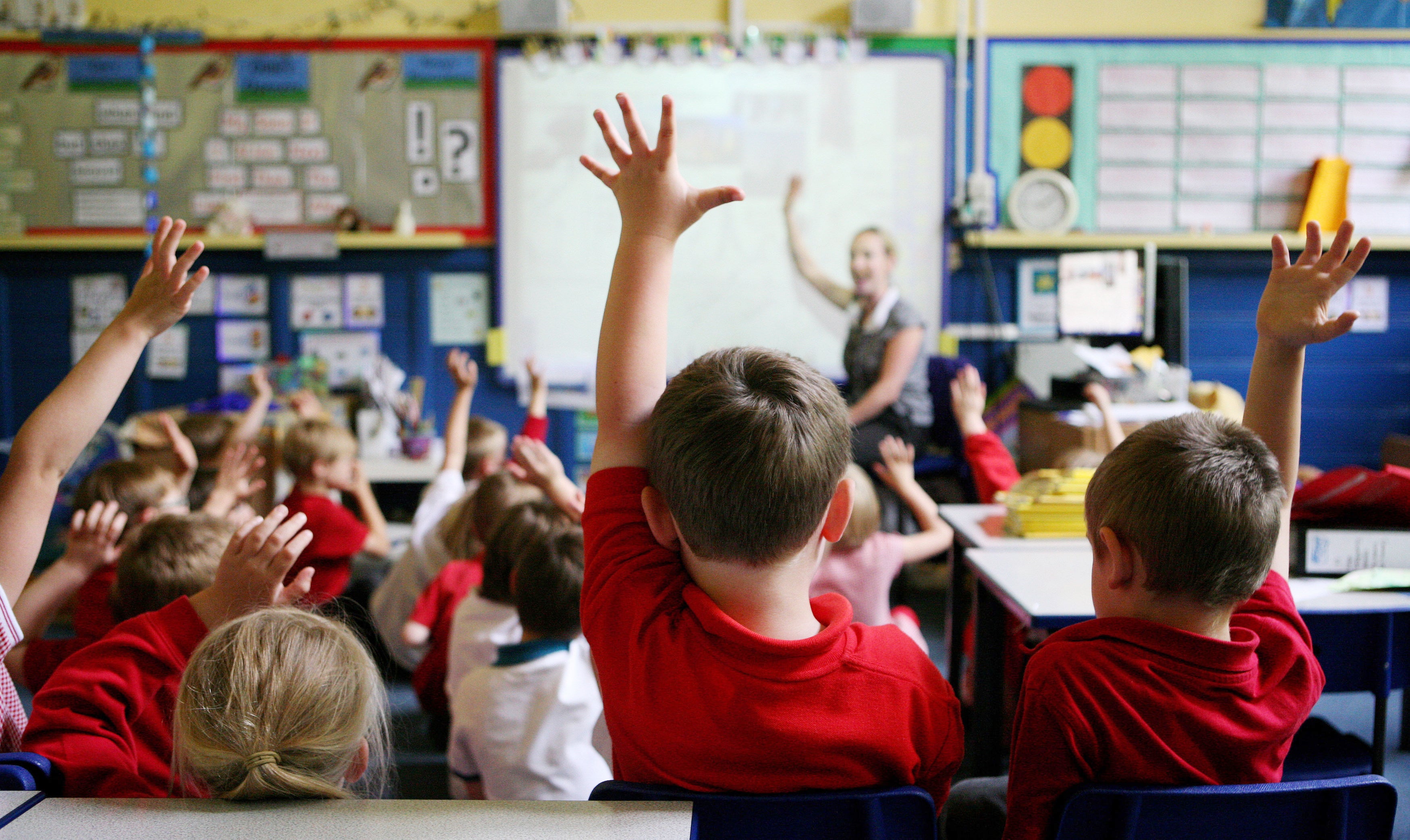
Britain's schools are facing a potential £288 million funding shortfall next year due to an anticipated decline in primary school pupil numbers, the public spending watchdog has warned.
The National Audit Office (NAO) criticised the Department for Education (DfE) for failing to adequately support schools in adapting to these demographic shifts.
This lack of preparedness jeopardises both the financial stability of educational institutions and the quality of teaching, according to Sir Geoffrey Clifton-Brown, chair of the Public Accounts Committee.
The warning comes as some primary schools are already being forced to merge or close their doors entirely due to dwindling pupil numbers.
With school funding directly tied to pupil numbers, the NAO projects a loss of £288 million by 2027, based on 56,300 fewer primary pupils compared to 2026.
Further significant cuts are anticipated, with an additional £410 million reduction in 2028 due to 80,200 fewer pupils, followed by another £334 million loss in 2029 from a projected 65,300 fewer children.
The DfE must do more to support small primary schools that are at risk of closure, Association of School and College Leaders (ASCL) deputy director of policy Julia Harnden said.
“The pressures on primary schools caused by the double whammy of inadequate per pupil funding and falling rolls has created a huge risk to the viability of many small primaries,” she said.
“There’s been no government strategy to mitigate that risk and there’s a real danger that more communities will lose schools which have been a feature of those communities for decades.
“The sector is working really hard to try to keep these schools open – cutting costs to the bone through measures such as mixed-aged classes. But there’s a point at which it’s not possible to employ enough staff to actually run a school and keep the doors open.”
Pupil numbers in primary schools have been falling since 2018/19, the NAO said, and the DfE has projected they will drop another 7 per cent by 2030.
Disadvantaged pupils could be disproportionately impacted by falling pupil numbers and funding.
Paul Whiteman, general secretary of school leaders’ union NAHT, said: “The decline in primary pupil numbers is hitting some schools hard – especially smaller ones that have less buffer to navigate fluctuating budgets. We have seen many schools already close – in particular in London, but in other higher cost of living areas too.
“That said, there are areas of the country where demand is higher than ever – driven by population changes as families move, or by high levels of house building.
“More could absolutely be done to balance these demands and ensure that primary school places are available in the areas they need to be – and to protect schools in areas with falling roles from closure.”
The DfE only started to specifically track the risk of not responding to changing demographics in 2024, the NAO said, and does not yet have a clear approach to supporting the sector in deciding when and how to respond.
The NAO is calling on the DfE to build its school estates strategy to help the education sector identify places that may not be needed and how it can manage this, and look at how declining pupil numbers may impact outcomes, particularly for disadvantaged pupils.
Falling rolls will require a “targeted response” from the DfE, local authorities, academy trust and individual schools, NAO head Gareth Davies said.
Sir Geoffrey said: “It is deeply concerning that, despite pupil numbers declining since 2018, DfE has been slow to respond to the challenge and has not assessed the implications for education quality, particularly for the most disadvantaged pupils.
“As pupil numbers are expected to continue to fall, DfE must make better use of its information and insights across the sector to support schools, clarify what a resilient and effective school estate looks like, and ensure children’s education is not compromised.”
Mobile phones to be banned in schools in England under government plans
Labour’s youth unemployment tsar hits out at ‘exam-obsessed’ British schools
Readers compare ‘stodgy’ UK school food with France and Spain
UK hosting countries for talks on Strait of Hormuz mission
UK households throw away 1.6bn pieces of plastic every week, survey reveals
UK and US begin human bird flu vaccine trial to fight evolving virus threat