Your article (Human rights groups feel chill as country after country clamps down on their work, 27 August) reports that one factor weakening the capacity of western democracies like the UK to support human rights NGOs abroad is our own anti-terrorist measures. Another factor is the wider hostility of Conservative ministers and the board of the Charity Commission towards campaigning by British charities since 2012.
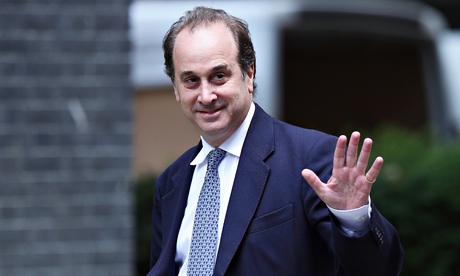
Oliver Letwin, Chris Grayling and George Osborne have all spoken in hostile or frosty terms about charity campaigning. The former minister for civil society, Brooks Newmark, told charities to “stick to their knitting”, a phrase minted in an interview by a member of the Charity Commission board, Prof Gwithian Prins. The chairman of the Charity Commission, William Shawcross, told the Women’s Institutes that “politicisation of charities” (not defined) was a key danger to the sector. The rules on use of judicial review have been tightened, and the lobbying bill as first introduced into parliament would have seriously curtailed charities’ political activity in generously defined periods before elections. The ambiguously announced possible review of the Charity Commission’s guidance on political activity hangs over the sector.
All this doesn’t go unnoticed overseas. The UK was until a few years ago seen as a beacon of sensible regulation of civil society, combining clear rules against party political involvement with full recognition of campaigning as a legitimate means of pursuing charitable objectives. This buttressed UK credibility in encouraging human rights groups elsewhere. Not now. Attending a recent international civil society gathering, I had the mortification of hearing the UK regulatory authorities referred to as “the knitting people”.
If the authorities want to be seen as defenders and promoters of human rights internationally, they should replace their cold, uncomprehending and at times repressive approach to civil society’s role in our democracy with a more welcoming, liberal one.
Andrew Purkis
London
• I want to thank Archie Bland for his article about the onslaught of criticism taking place against the UK’s charity sector (A message to Big Charity: stop grovelling and stand up for yourself, theguardian.com, 2 September). It’s vital that conversations take place that will make the sector more transparent in its actions – to beneficiaries, itself and its supporters – but I agree that the time has come for not only standing up for ourselves, but explaining why.
We shouldn’t only be talking in generic terms about the sector but focus on the changes we are making to those who benefit as a direct result. Like the 1,000 children in Guatemala who now have birth certificates thanks to every person who gave to our last two Christmas appeals. Children, who can now see a doctor, get a job, buy a house – have a future. Who are officially recognised as existing by their governments. Toybox wants to see a world with no street children. We operate in some of the most dangerous countries in the world, including Guatemala and El Salvador where children are trafficked, used for organ donation, domestic labour or simply abused and ignored.
This is what we should be talking about. Sadly this is lost when good charities are being misrepresented as thoughtless, self-serving and unscrupulous. I’m excited about the creation of the Charity Defense Council in the US and would love to see it make its way to the UK. I will be watching with interest.
Lynne Morris
CEO, Toybox