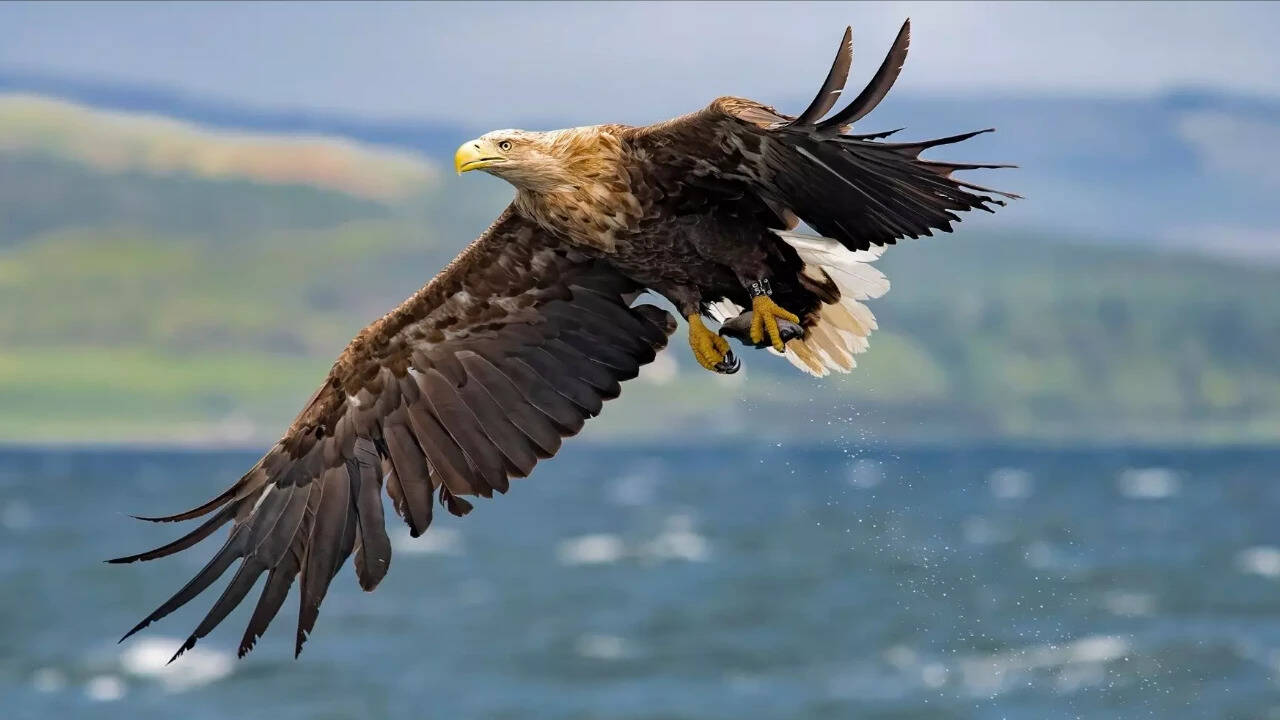
White-tailed eagles will be released across Exmoor National Park from this summer after the government gave approval for the next phase of a national reintroduction programme. Up to 20 birds will be set free over three years in what conservationists are calling a significant step forward for wildlife recovery in England.
The BBC, reported that Natural England approved the plans on Wednesday. The project will be led by Forestry England and the Roy Dennis Wildlife Foundation. Every bird released will carry a satellite tag so the project team can track its movements and monitor how it settles into the landscape.
White-tailed eagles are the largest bird of prey in the UK with a wingspan of up to 2.4 metres. They disappeared from Britain entirely by 1918 due to habitat loss and human persecution. Scotland began reintroducing them in 1975 and birds have since spread southward along the English coast after a separate release on the Isle of Wight seven years ago. Some of those birds had already been spotted over Exmoor before this new scheme was even announced.
Scottish farmers who have lived alongside the eagles for years are now warning their Exmoor counterparts to resist the plans. Ricky Rennie, a fourth-generation farmer near Minard in Argyll, told the BBC he lost an estimated two-thirds of his lambs to eagles in 2024 and has been losing up to £30,000 a year since 2018. He said farmers in Exmoor should fight the reintroduction "tooth and nail" because the birds would eventually put farms out of business.
The National Sheep Association said it wants a full impact assessment of white-tailed eagle reintroductions before any further releases take place. The NSA said that assessment should take into account farm viability and the mental health of farmers affected. Peter Delbridge, the association's chairman and a sixth-generation Exmoor farmer, said he did not want to reach a point where losses were happening but nothing could be done because the birds are legally protected.
A survey published this month by the NFU found 85 per cent of farmers and land managers in Cumbria, North Yorkshire and Durham opposed a proposed reintroduction in their region.
Natural England said the licence it approved supports a carefully planned reintroduction built on collaboration with local communities and land managers. The project team said it remained committed to working with farmers as the birds begin to establish themselves on Exmoor.