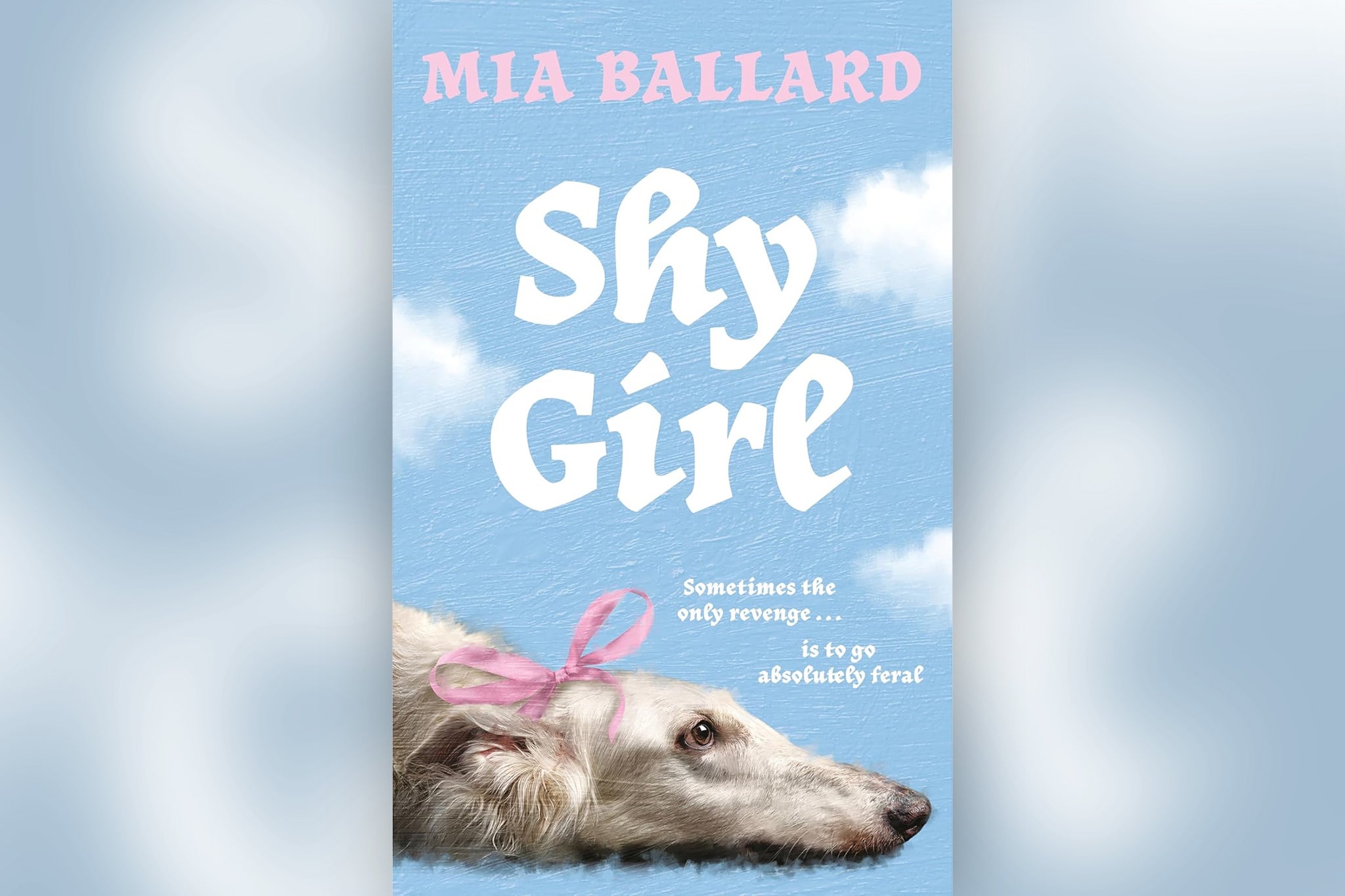
After the novel Shy Girl by Mia Ballard was pulled from publication by US publishing giant Hachette earlier this month amid widespread accusations the author had used artificial intelligence, concerns about how the publishing world deals with the rapid rise of AI are now mounting just as fast.
According to reports, as much as 78 per cent of the novel could have been AI generated, sparking a row in which Ballard blamed an unnamed editor, but renewed debate about AI as an unstoppable force across the arts.
According to a report in The Guardian, an editor at one of the “big five” publishing houses said a “cold shiver went down my spine” when the Shy Girl story broke. “It really is a case of ‘there but for the grace of God go I,’” they said.
"It's huge", says Peter Cox, managing director of literary agency Redhammer Management.
He told The Independent: "It's enormously economically attractive [to publishers], especially if you produce genre fiction. You don't have to deal with messy, difficult authors who miss their deadlines by three months. You can just instruct Chat GPT to produce 80,000 words of romantasy and there you go."
Mr Cox added that a number of songs in the iTunes at the moment have been created by AI.
"Why should publishing not do the same?" Cox said. "But I think that any publisher that actually jumps in and does that is going to face a major backlash from human authors.
"Many of us are too frightened to talk about it, but we all know that people are thinking about it. We've seen authorial income plummet by 50 per cent in the last five years or so. It is a threat there's no question about it."
The cancellation of Shy Girl now suggests these threats warrant increasing concern and that the use of AI in novel writing is becoming more common – and increasingly difficult to detect.
A spokesperson for the Society of Authors told The Independent the technology "is rapidly disrupting the UK’s £124.6bn creative sector, which supports more than 2.4 million jobs".
They said: "In 2026, the UK stands on the brink of losing an entire creative sector; one that brings not just jobs, money and global prestige, but also cultural currency, soft power and societal benefits, such as community cohesion, support for mental health and well-being, soft power and cultural heritage."
They added: "Our world-leading creative industries supercharge the UK’s national identity and global influence, connecting communities at home and abroad. The AI development race is opaque, unfettered and unregulated, and driven primarily by the profit motives of large corporations, despite some likely adverse impacts."
The organisation is now calling for government backing for new labelling that lets people know how work has been produced.
The use of AI in writing and other arts is often fiercely criticised by other writers and artists, not least because they fear the extent to which it will make them redundant. Last year Just over half (51%) of published novelists in the UK said they believed AI was likely to end up "entirely replacing their work as fiction writers", a University of Cambridge report found.
“This is the proof positive of what many of us have considered an issue, that this will happen, and now it has happened,” publishing industry consultant Thad McIlroy told The Times following the Shy Girl scandal.
Cox agreed, telling The Independent that the fate of the publishing industry remains "uncertain".
"Very cheap genre fiction produced by AI is attractive to some publishers, but the more sensible publishers will realise that readers relate to authors," he said
"Enlightened publishers will get behind their authors even more and strive to make a deeper connection between the brand of the author and the reader. But others won't, so we'll have to see how that goes."
There are also indications that the use of Large Language Models (LLMs) like Chat GPT, are leading to many more books being published, but crucially it's almost impossible to know beyond examining the numbers. In 2025 in the US, over 3.5 million books were self-published, a rise of 40 per cent from the 2.5 million in 2024, according to Bowker, which collects book industry data. Meanwhile traditional publishing houses put out around 642,000 books last year, according to The New York Times.
Using AI is a "slippery slope", Cox said, and can make potential authors lazier.
"Writing is hard in any case, especially fiction writing. The crucial thing it'll never do – and will discourage authors from moving in this direction – is voice. People connect to voice. Your authorial voice is everything. People spend their whole professional lives honing their voice to make it original and compelling.
"Chat GPT isn't going to do that. What you're going to do is produce increasingly superficial, meaningless sentences that sort of flow together, but actually don't communicate anything."
He added: "Let's not forget, writing is not an end unto itself. It's notation for human communication, like musical notation. It's that vital spark between one human and another and you can't simulate that with a machine, you just can't."
Some of Australia’s biggest news programmes go dark as ABC staff strike over pay
Arts snobbery row erupts as opera gets seven times more funding than brass band
Karl Turner ‘surprised and disappointed’ to have Labour whip suspended
DWP gives new deadline for benefit claimants to make crucial switch
Police investigating former SNP Holyrood candidate over alleged sexual offences
Princess Royal ‘fascinated by Gladiators’, original 90s TV show star says