Closing summary
That’s all from me for today. Thanks for reading and commenting. Here’s a summary of the latest news:
- The UK government threatened to harry EU fishing vessels with “rigorous enforcement processes” over a row with France. During a meeting with the vice-president of the European Commission, the Brexit minister, David Frost, said the UK would launch “dispute settlement proceedings” if several issues are not sorted within the next few days.
- Earlier, the environment secretary, George Eustice, had warned Paris that “two can play at that game” as he addressed the detention of a British trawler in a French port. “It’s always open to us to increase the enforcement we do on French vessels, to board more of them if that’s what they’re doing to our vessels, there are other administrative things we can require of vessels,” he said. And he implied that the French approach was due to the impending elections there.
- The government agreed to cut the cost of repeat prescriptions for hormone replacement therapy for those experiencing symptoms of the menopause after a campaign by a Labour MP. Carolyn Harris introduced a private members’ bill and withdrew it on Friday after the health minister, Maria Caulfield, said the government would amend the way the charges are levied – potentially saving affected women hundreds of pounds per year.
- There is no evidence that ministers or officials considered potential conflicts of interest before handing government contracts to a former No 10 adviser, Whitehall’s independent watchdog found. The National Audit Office report said two projects involving the disgraced financier Lex Greensill’s firm offered no material benefits to the NHS.
If you’d like to follow our live coverage of the pandemic, which is being run by my colleague Tom Ambrose, you can find that here:
Updated
Proposed changes to the drug-testing system at halfway houses have received the support of MPs, amid concerns over rising death numbers.
Approved premises (AP) are hostels that provide temporary accommodation for people who have been released from prison but are considered to present the highest risk to the community.
They also house a small number of people on bail as well as high-risk offenders serving community sentences.
MPs heard there are just more than 100 such sites in England and Wales, with a total of 2,300 beds, where the average stay is 12 weeks and people receive targeted support and rehabilitation. The Conservative MP Rob Butler, moving the approved premises (substance testing) bill, said:
Unfortunately, the number of deaths among approved premises residents has increased over recent years and many of those deaths are believed to be related to taking drugs.
The current drug-testing regime in approved premises can only test for four groups of drugs – opioids, cannabis, cocaine and amphetamines.
So, my bill will firstly extend the range of substances that can be tested for to cover all forms of psychoactive substance as well as prescription and pharmacy medicines, in addition to the existing drugs.
Alongside this, the bill also introduces urine testing rather than the currently used oral fluid testing.
There are relatively few drugs that can be detected reliably in oral fluid and that means the current testing regime is unable to identify much of the potential drug use amongst residents. As a result, it isn’t possible to tackle the problem.
Butler’s bill received an unopposed second reading and has government support, boosting its chances of becoming law.
The shadow justice minister Alex Cunningham said Labour supports “the principle” of the bill, and added:
If we are going to have any hope at all of breaking the cycle between offending and reoffending we need to take action, and we look forward to discussing the bill in committee.
Updated
UK threatens retaliation in fishing row with France
The UK’s Brexit minister, David Frost, and the vice-president of the European Commission, Maroš Šefčovič, have met in London to “assess the latest state of play in our talks about the future of the Northern Ireland protocol”, Downing Street says.
The week’s talks have been conducted in a constructive spirit. While there is some overlap between our positions on a subset of the issues, the gaps between us remain substantial.
As we have noted before, the EU’s proposals represent a welcome step forward but do not free up goods movements between Great Britain and Northern Ireland to the extent necessary for a durable solution. Nor do they yet engage with the changes needed in other areas, such as subsidy policy, VAT, and governance of the protocol, including the role of the court of justice.
Our position remains that substantial changes to the protocol will be needed if we are to find a sustainable solution that works in the best interests of Northern Ireland and supports the Belfast (Good Friday) agreement.
Lord Frost and the vice-president, and their teams, will meet again in Brussels next week.
Lord Frost also set out to the vice-president our concerns about the unjustified measures announced by France earlier this week to disrupt UK fisheries and wider trade, to threaten energy supplies, and to block further cooperation between the UK and the EU, for example on the Horizon research programme.
Lord Frost made clear that, if these actions were implemented as planned on 2 November, they would put the European Union in breach of the trade and cooperation agreement (TCA).
The government is accordingly considering the possibility, in those circumstances, of launching dispute settlement proceedings under the TCA, and of other practical responses, including implementing rigorous enforcement processes and checks on EU fishing activity in UK territorial waters, within the terms of the TCA.
Updated
When pictures of Rishi Sunak preparing for the budget were released this week, the intended optics of a man hard at work to improve the finances of a nation were somewhat undermined by his footwear. The chancellor, who has a bit of a reputation as a sharp dresser, wore white socks and a pair of £95 sliders from the Italian streetwear brand Palm Angels.
Sunak has since been mocked on social media, for what users deem as a play to appeal to young people.
The prime minister has spoken to the Chinese president Xi Jinping today, ahead of next week’s Cop26 summit, Downing Street says.
They discussed a range of issues, including action to address the climate crisis ahead of Cop26, global trade and economic cooperation, and security and human rights.
The prime minister acknowledged China’s new nationally determined contribution and welcomed their work on the Cop15 Biodiversity Summit, noting how critical protecting nature is to our overall climate objectives.
He emphasised the importance of all countries stepping up their ambition on climate change at Cop26 and taking concrete action to cut emissions and expedite the transition to renewable energy, including phasing out coal.
They also discussed wider international security issues, including the situation in Afghanistan. The leaders recognised that there were areas of disagreement and difficulty in the bilateral relationship. The prime minister raised the United Kingdom’s concerns about the erosion of democracy in Hong Kong and human rights in Xinjiang.
At the same time, they agreed to cooperate on areas of shared interest, such as developing clean and green technology and supporting the sustainable recovery of the global economy.
Updated
The Welsh first minister has criticised the UK government for removing all remaining countries from the travel “red list” as he warned that 2,000 cases of a new form of the Delta variant of coronavirus have been identified in Wales.
Mark Drakeford announced a package of new measures to avoid tighter restrictions as winter approaches. He said Wales had the highest rates of coronavirus in the UK, driven by high levels among younger people and transmission between family members.
He said recently discovered mistakes at a laboratory in England, which led to thousands being told their tests were negative, may have also contributed. The Office for National Statistics estimates as many as one in 40 people in Wales may have the virus, while there are 820 Covid-19 patients in hospital.
Updated
Extinction Rebellion activists have started protesting at Cop26, locking themselves to railings at Glasgow University, the BBC’s David Cowan reports.
First Extinction Rebellion protest as COP26 approaches - activists lock themselves to railings at Glasgow University. They say the Uni isn’t taking enough action to address its carbon footprint. pic.twitter.com/6EMSFPozZK
— David Cowan (@BBCDavidCowan) October 29, 2021
The UK government has resisted for nearly a year the release of documents that could shed light on whether the Conservative MP Owen Paterson promoted a healthcare firm that paid him to be a consultant, Rob Evans and David Pegg report.
For more than 11 months the Department of Health and Social Care (DHSC) has failed to respond to a freedom of information request seeking records of a meeting between a health minister, Paterson and the firm, Randox.
Paterson, a former cabinet minister, is facing a suspension of 30 days from the House of Commons after parliament’s sleaze watchdog found on Tuesday that he had broken the rules when he lobbied for Randox and a second client, the food manufacturing firm Lynn’s Country Foods, on different matters.
MPs are expected to vote next week on whether to enforce the suspension.
Read more on this story here:
On her campaign for Scottish independence, Sturgeon said:
There’s no status quo: the UK that people wanted to stay a part of in 2014 arguably does not exist any longer.
She also spoke about the importance of the Cop26 summit’s attempt to limit global heating to 1.5C.
It probably is the last chance the world has to reach an agreement that is specific enough to meet the Paris 1.5 degrees target. It’s a massive opportunity but I think there will be a real difficulty if that opportunity is not taken.
Discussing the future of the oil and gas industry, she said:
This has not been an easy thing for somebody in my position and in the political tradition I come from to say, but we have to ask ourselves whether new exploration for oil and gas is consistent with meeting the climate change imperatives.
Updated
Boris Johnson may be letting a “fragile male ego” control him during meetings with devolved governments, the Scottish first minister, Nicola Sturgeon has said.
She said he is taking a different approach to those of his predecessors to discussions with devolved administrations; delegating most of them to the communities secretary, Michael Gove.
She spoke to Vogue magazine ahead of the Cop26 summit in Glasgow. Asked about her working relationship with the prime minister, Sturgeon said:
He tends to delegate most of his interactions with the devolved governments to Michael Gove. That’s fine, Michael Gove and I work together well, but it’s a different approach to his predecessors.
Asked why she thought this was the case, she said:
Maybe it’s just a bit of a fragile male ego. He seems to have a disinclination to be, metaphorically speaking, in the same room as me. It’s odd.
Updated
Reflecting on the shadow health minister’s comments, the health secretary Sajid Javid pledged to act to help break the menopause taboo and give women greater support. He signalled his intention to cooperate with MPs of all parties. Javid said of Kendall:
I think every word she has said will resonate with millions of people across the country for exactly the reasons she has set out.
I think it’s powerful to hear from her about her personal experiences and I do hope, especially after this debate but going forward, that the whole house can cooperate and do much more to help with this.
Updated
The Labour MP Liz Kendall has spoken of her experience of dealing with the menopause, detailing the “terrifying sense of anxiety and panic” after the symptoms started, the exhaustion and aches, hair loss and night sweats, before finding information which could guide her to “getting the old me back”.
I had a real quandary about whether I was going to say anything today but I thought maybe if we here – in this place – with the power, influence and authority we have can’t speak out or are too nervous, what does that say?
We need to be leaders and champions.
She said MPs were “giving a voice” to the 13 million menopausal and perimenopausal women in the country “whose needs have been downplayed or ignored for too long”.
To be honest, I’m not really sure when the symptoms started but they had been building steadily over the last year.
The, quite frankly, terrifying sense of anxiety and panic that I had never, ever experienced before.
Feeling completely and utterly exhausted, sore and aching all over, wondering in the evening if I could make it up the stairs to go to bed – let alone do the exercise that’s always been such an important part of my life.
The itching, the hair loss, and just feeling downright low, and above all what I can only describe as the catastrophically bad sleep night after night after night – finally emerging in the morning drenched in sweat thinking: ‘How on earth am I going to make it through the day?’
And like so many women I had absolutely no idea what was going on.
Kendall said the “penny finally dropped” after a friend recommended her to visit a menopause website, adding:
This was something real, something really was happening, it had a name and there was something that I could do about it that might start gradually getting the old me back.
She explained she has had a “really good experience” with her GP and received her first HRT prescription last week, but acknowledged millions of other women are “nowhere near as lucky”.
Updated
Harris thanked the minister, and said:
Wonderful women, thank you. What’s happened today is only the beginning, I know, but we can do such great things together because that’s what it’s all about is looking after the women.
Speaking before she withdrew her bill, Harris added:
I’ve just been told that the Welsh government have also announced that they will be putting mandatory lessons for young people on the national curriculum and the Welsh government are also going to be delivering a pathway for menopausal women, so the revolution has made a big difference.
We’re keeping women wonderful.
Caulfield also announced the creation of a menopause task force which “will encourage faster action and join up the dots across the system in order to take a coherent approach to improving support for those experiencing the menopause”.
The minister asked Harris to be a co-chair of the taskforce. And she committed to looking into combining two hormone treatments into one prescription.
The government is committed to reducing the costs of prescriptions. It’s committed to introducing a menopause task force. And it’s committed to making the menopause a priority in the women’s health strategy.
Referring to earlier rhetoric from MPs of a “menopause revolution”, the minister said: “Up the revolution.”
Updated
Labour secure HRT prescription costs cut
The cost of repeat prescriptions for hormone replacement therapy for those experiencing symptoms of the menopause will be significantly reduced, the government has said.
Responding to Harris’s private members’ bill, the health minister Maria Caulfield said the government “cannot” exempt HRT from prescription charges entirely. But she said:
We have listened carefully to the arguments and as a result ... we will amend the regulations to reduce the costs and improve access to HRT. And we will do this by reducing the cost of repeatable prescriptions for HRT for women experiencing menopausal symptoms.
So, instead of paying for a repeat prescription every month or every three months, the prescriber can issue a batch of prescriptions for up to 12 months with one signature and one prescription charge.
What this will mean in real terms for women is, where it’s clinically appropriate, one prescription charge can be paid per year. So for example, if a woman currently takes two hormone treatments – oestrogen and progesterone – and receives a repeatable prescription every month, she would currently pay £18.70 each time. That’s a total of £224 every year.
Under the changed system she would pay just £18.70 each year. That’s a saving of £205.
Caulfield said the interval for prescriptions would be decided on “clinical grounds”.
Updated
Harris said the menopause has been a “dirty little secret” and that greater education and a public health campaign are needed.
Eleven years ago I had no idea what was happening to me and, if my inbox is anything to go by, I am not alone ... but it’s because it has been a taboo subject. It’s been a dirty little secret that women were ashamed of.
I’m not ashamed.
A public health campaign “would help enormously as so many women just don’t join the dots between their own health issues and the menopause”, Harris said. She added that 41% of medical schools are offering no mandatory menopause training, adding:
Thousands of GPs are qualifying and entering practice with no knowledge of how to diagnose menopause.
Women are presenting to the doctor and very often getting diagnosed with anxiety and depression. This happened to me ... I presented to my GP and believed that I was having a nervous breakdown and ended up on antidepressants for 11 years.
It was only when I spoke to friends and colleagues in this place and we shared those conversations you don’t normally have or I didn’t have until now, that I realised that what I was experiencing, very, very many other women were also experiencing it.
She said women are being prescribed anti-depressants, sleeping tablets for insomnia, or being sent for tests for early on-set dementia, when in some cases “HRT may well have been more suitable”.
Updated
Menopause support is “falling short and failing women”, the Labour MP Carolyn Harris has said, as she kicks off the second reading debate on a private members’ bill to increase awareness and remove NHS prescription charges for hormone replacement therapy (HRT) in England.
The Swansea East MP said her menopause (support and services) bill and the menopause “are not a political issue”.
Right now menopause support in this country and indeed around the world is falling short and failing women. GP training in medical schools, supporting workplaces, public health messaging and curriculum content in our schools all need addressing.
I urge the government to work with me to make HRT accessible to everyone regardless of financial constraints, to ensure women are diagnosed at their first appointment, and get the treatment they need, and to educate everyone so that those who experience symptoms get the support and understanding they need in every aspect of their lives.
I believe that today will be the start of putting right the historical injustice that women have experienced. But 2021 was the year that the menopause revolution was born.
Harris said cost should not be a barrier to accessing HRT and there are women “struggling to find almost £20 a month”, adding: “The menopause doesn’t discriminate so the cost to treat it shouldn’t either.”
Wealthier countries have been too slow to move unused vaccine doses to poorer countries, the former prime minister Gordon Brown has said.
The ex-Labour leader said it is “only the leaders of the G20” who can decide their unused vaccines should be “moved out as quickly as possible to save lives and to avoid waste”. He told BBC Radio 4’s Today programme:
The problem is we’re being too slow and we’re holding back when we know we’ve got these unused vaccines. We should be getting them out as quickly as possible.
There’s an urgency about saving lives and there’s also an urgency about preventing these vaccines passing their use-by date and I don’t think the British government has yet realised the urgency of the problem and of the need in the poorest countries.
There have been 245m cases of Covid, there are going to be 200m more if we don’t get the vaccines out there as quickly as possible.
London’s mayor, Sadiq Khan, has urged the government to make face coverings mandatory on public transport as the UK continues to average more than 40,000 confirmed Covid cases a day for more than a week.
Ministers have so far been resistant to bringing in so-called “plan B” measures, which would see the reintroduction of mandatory face coverings indoors along with guidance to work from home and the use of Covid passports.
Khan called for Londoners to get vaccinated against Covid-19 and the flu to protect the NHS this winter. He said the “deadly virus has not gone away and this winter we’re facing both flu and Covid”.
The worst thing we can do is to lower our guard, be complacent and underestimate the risk these viruses pose to all of us. The situation with Covid-19 in the capital is so finely balanced that it needs all of us to act together to protect ourselves, our loved ones, the things we enjoy and our NHS this winter.
That’s why I’m urging all eligible Londoners to have the booster vaccine and flu jab as soon as you are offered it, continue to wear a mask where you can and am calling on the government to put simple and effective steps, such as mandatory face coverings on public transport, in place to halt the spread of the virus now.
Updated
Eustice implied the French president, Emmanuel Macron, could be playing to the crowd ahead of elections. He said Boris Johnson could raise the fishing row with Macron at the G20 in Rome.
There are elections coming up in France, I’ve seen suggestions that might be a factor. But we have to deal with what we’re faced with here, which is France threatening us and actions that are completely disproportionate, are not acceptable, and would be a breach of the agreement that we have with them.
That’s why we’re going to be raising that with their ambassador, raising it with the (European) commission.
Bruno Bonnell, a member of the French parliament who is in the same party as Macron, argued that the row started over a lack of licences for France’s trawlers. But, also speaking on BBC Radio 4’s Today programme, Eustice responded: “That’s simply not true.”
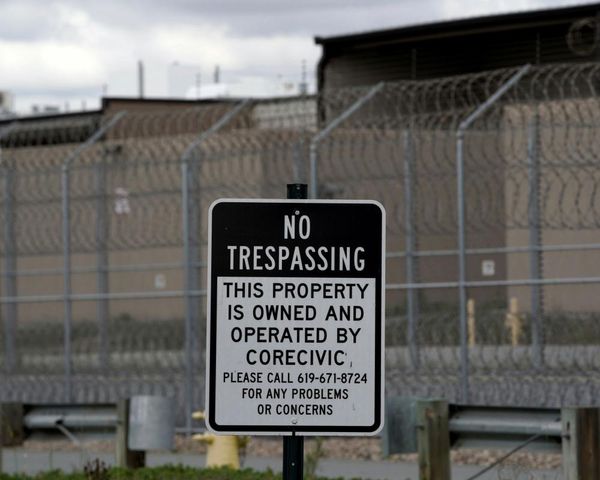
The environment secretary said the UK government is still trying to get to the bottom of exactly why a Scottish fishing vessel was detained by French authorities. The Cornelis Gert Jan was detained at Le Havre amid a dispute over post-Brexit fishing rights.
Speaking to the BBC’s Good Morning Scotland programme on Friday, Eustice said the scallop trawler was originally on a list of approved vessels but appeared to have been taken off. Nevertheless, he claimed, it was entitled to fish in the waters.
And Eustice accused France of deciding to “politicise” the process of checking vessels this week.
Updated
'Two can play that game', government warns Paris in ongoing fishing row
The environment secretary, George Eustice, has warned France the UK could retaliate if it goes ahead with threats in the fishing row, warning that “two can play at that game”. He has told Sky News the foreign secretary, Liz Truss, would challenge the French ambassador over what the nation intends to do next in the fishing row.
We don’t know what they’ll do, they said they wouldn’t introduce these measures until Tuesday probably at the earliest so we will see what they do. But, if they do bring these into place, well, two can play at that game and we reserve the ability to respond in a proportionate way.
Eustice accused France of “inflammatory language” and did not rule out blocking French vessels from landing their catches in the UK in retaliation. Asked about the claim by France’s Europe minister, Clément Beaune, that the only language Britain understands is “the language of force”, Eustice told BBC Breakfast:
That is completely inflammatory and is the wrong way to go about things. We will see what they do on Tuesday but we reserve the right to respond in a proportionate way.
It’s always open to us to increase the enforcement we do on French vessels, to board more of them if that’s what they’re doing to our vessels, there are other administrative things we can require of vessels.
Asked if the UK could block French vessels landing their catches in the UK, he said:
I’m not going to get into all the things we might do. If the French obviously do continue with this then yes we will take a proportionate response to that.
Updated
Richard Ratcliffe, who is on hunger strike outside the Foreign Office over the government’s continuing failure to secure the release of his wife, Nazanin Zaghari-Ratcliffe, from detention in Iran, is a “very, very brave man”, a former health secretary has said. Jeremy Hunt told Sky News:
I went and delivered some coffee to him, he’s allowed to have black coffee on his hunger strike but nothing with milk or sugar.
He has fought tirelessly for five-and-a-half years since Nazanin’s been detained, but the thing that is different about Richard is that he decided right from the outset to go public about his campaign.
What that’s meant is that the whole world has come to understand Iran’s hostage-taking and the way they are grabbing innocent people and using them as a pawn of diplomatic leverage.
Whatever the disputes are between countries, we should never make the lives of innocent families dependent on solving a diplomatic dispute.
The prime minister, who sacked Hunt when he entered No 10 in 2019, has been heavily criticised for his role in the affair while serving as foreign secretary.
In 2017, Johnson wrongly told MPs Zaghari-Ratcliffe had been “teaching people journalism” before being detained by Tehran. Her family and her employer both maintained this was untrue but, within days, Johnson’s erroneous statement was cited as proof she was engaged in “propaganda against the regime” during a previously unscheduled court hearing.
Updated
The prime minister has spoken to the Polish prime minister, Mateusz Morawiecki, this morning ahead of next week’s Cop26 summit, Downing Street says.
The prime minister looked forward to welcoming Prime Minister Morawiecki to Glasgow next week. He praised Poland’s shift away from reliance on fossil fuels towards renewable energy. He expressed his hope that further progress will be made on this and wider efforts on coal, cars, cash and trees.
The leaders discussed the UK-Poland relationship and agreed on its strength and importance in institutions like Nato. They resolved to further deepen cooperation across defence, security and wider foreign policy issues.
The prime minister updated Prime Minister Morawiecki on the latest discussions over the Northern Ireland protocol. He outlined the need to make urgent progress on this issue in order to protect the Belfast (Good Friday) agreement. He underlined his concerns about the role of the European court of justice in Northern Ireland and noted the debate in Poland about the role of the court too.
Updated
Tory ministers under fire over possible conflict of interest
There is no evidence that ministers or officials considered potential conflicts of interest before handing government contracts to a former No 10 adviser, Whitehall’s independent watchdog has found.
The National Audit Office report has said two projects involving the disgraced financier Lex Greensill’s firm offered no material benefits to the NHS. Greensill Capital ran an early payment scheme for pharmacies and a salary advance facility for employees of NHS trusts that did not receive the expected uptake.
Greensill had advised David Cameron’s government and later hired the former prime minister when he left office. Meg Hillier, chairwoman of the Commons public accounts committee, said:
This report provides further information on the role of Lex Greensill and Greensill Capital in providing government services. It raises yet more questions over the government’s ability to prevent conflicts of interest and the independence of advice it receives.
The consequences once again fall squarely on the taxpayer, with increasing risks to value for money and promised savings vanishing into thin air.
You can read more on that by my colleague Rajeev Syal here:
Elsewhere, ministers have been criticised for not going far enough to protect LGBTQ+ people in England and Wales after they announced plans to create a new criminal offence for so-called talking conversion therapies that still allow them under some circumstances.
Critics have stressed that the proposals would leave a loophole that would allow adults to consent, saying they are unconvinced that “anyone can consent to such an abusive practice”. My colleague Aubrey Allegretti has the full story:
And you can follow our global Covid coverage – led by my colleague Martin Belam – here:
Updated