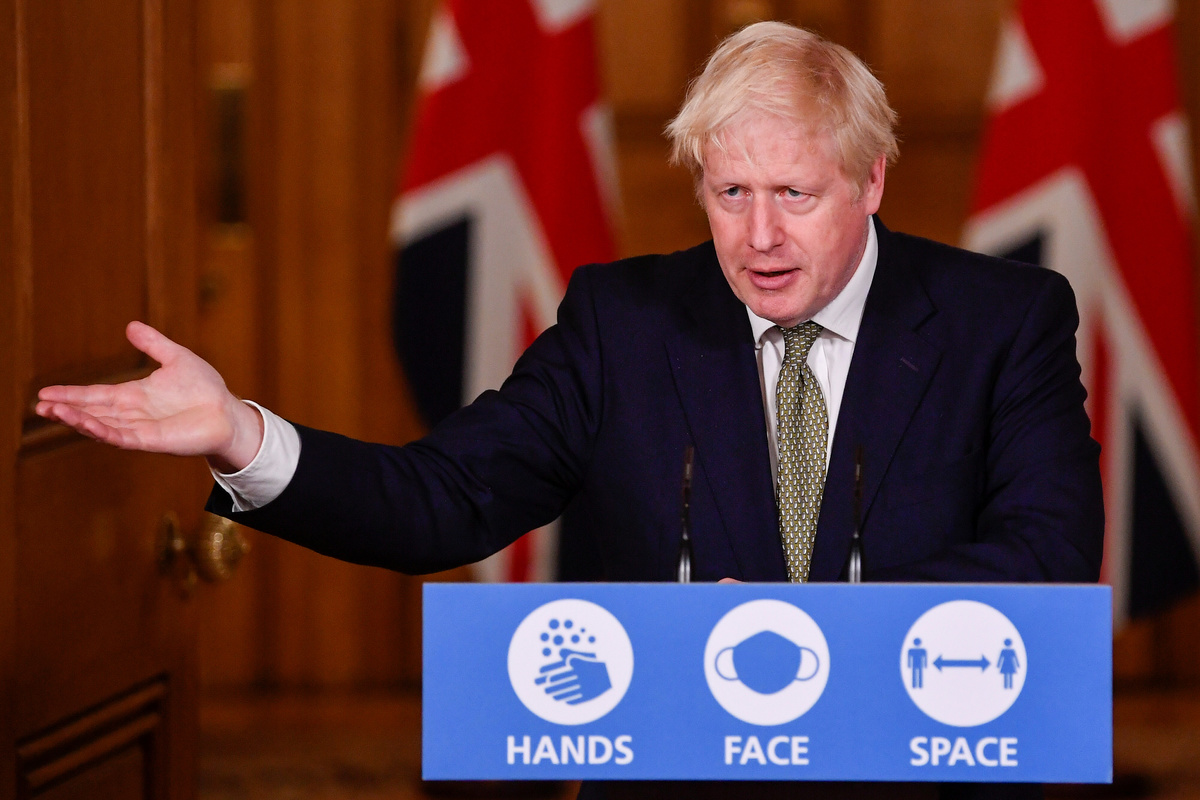
British Prime Minister Boris Johnson on Wednesday resisted a short lockdown for all of England but said he ruled nothing out in the face of calls to shut the country down for two weeks as a "circuit breaker" in order to save lives.
With cases rapidly rising, the British government opted this week for a three-tier system of local measures. The Liverpool area in the northwest became the first part of the country in the highest category, requiring bars, gyms and other businesses to shut, perhaps for months.
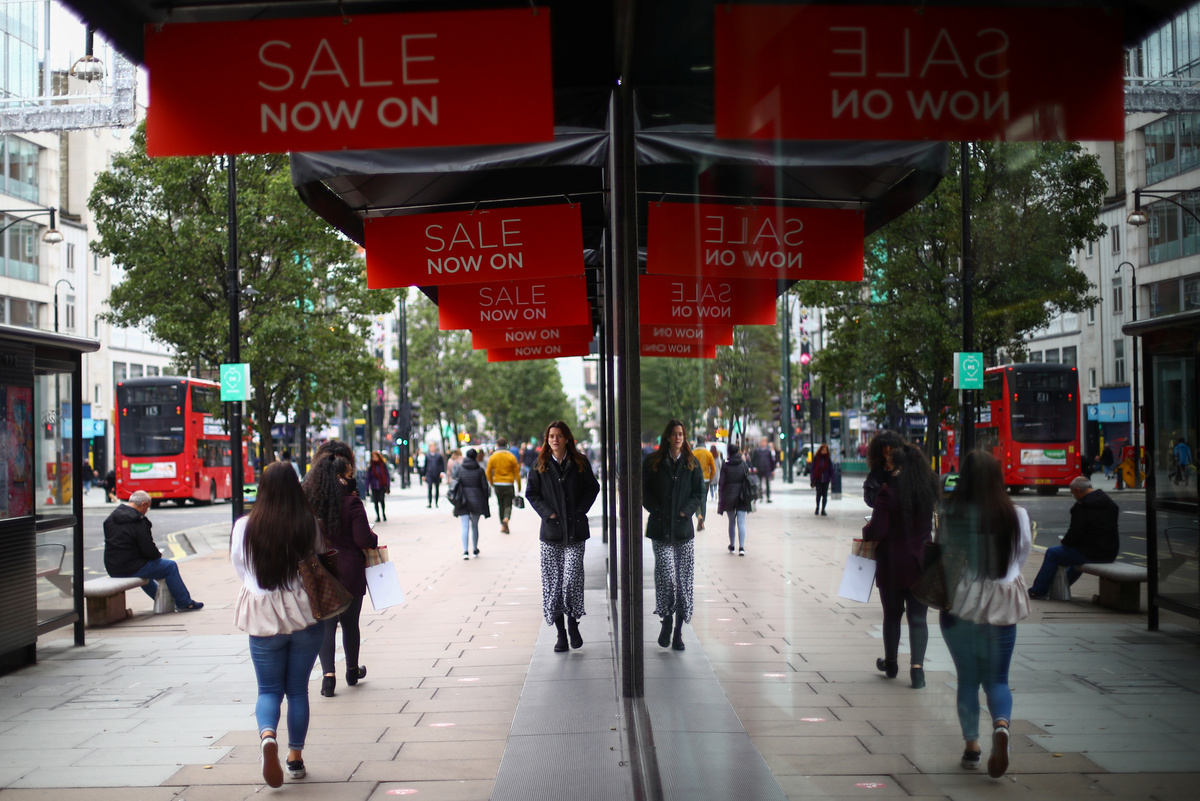
Johnson said he would stick to this localised approach, responding to opposition leader Keir Starmer's demand for a temporary national lockdown.
"The whole point is to seize this moment now to avoid the misery of another national lockdown," Johnson told parliament.
"We're going to do it - and I rule out nothing, of course, in combating the virus - but we are going to do it with the local, the regional, approach that can drive down and will drive down the virus if it is properly implemented."
Britain reported 19,724 new cases of COVID-19 on Wednesday, a rise of 2,490 from the day before, and a daily death toll of 137, compared to Tuesday's 143.
In a sign of the increasingly divided response to the rise in COVID cases, the devolved government in Wales said on Wednesday it planned to ban people living in areas with high infection rates in the rest of the United Kingdom from entering the country. [L8N2H54Z9]
"We are preparing to take this action to prevent people who live in areas where there are higher COVID infection rates across the UK from travelling to Wales and bringing the virus with them," Welsh First Minister Mark Drakeford said.
Johnson's spokesman had earlier rejected the need for a ban because residents in the highest tier of the English lockdown system were already advised not to travel outside their area.
The Welsh government said the ban, which it intends to bring into force on Friday at 1700 GMT, was needed because Johnson had not made the travel rules mandatory.
Northern Ireland, which like Wales and Scotland is outside Johnson's tier system, announced on Wednesday the toughest UK coronavirus measures since the pre-summer peak, shutting restaurants and suspending schools.
The British government's critics say a short, sharp nationwide lockdown could be more effective than local measures, and would spread the economic burden more fairly.
Labour Party leader Starmer called on Tuesday for a 2-3 week lockdown, supported on Wednesday by a study from some of Johnson's scientific advisers, which found such a move could save thousands of lives.
A snap poll by YouGov showed 68% would support a so-called 'circuit breaker' lockdown during an upcoming October school holiday, while 20% would oppose one.
"The optimal time for a break is always now," said the paper, co-authored by Graham Medley, a member of the government's Scientific Advisory Group for Emergencies, and Matt Keeling of the government's pandemic modelling subgroup.
"There are no good epidemiological reasons to delay the break."
(Reporting by William James, Alistair Smout, Elizabeth Piper, Michael Holden and Guy Faulconbridge; Editing by Estelle Shirbon, Peter Graff and Chizu Nomiyama)