
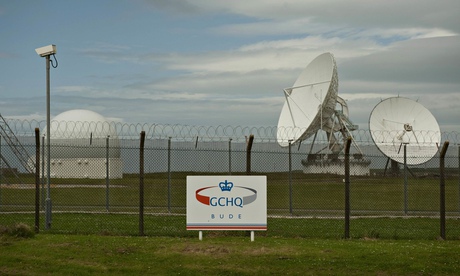
Britain’s legal regime governing mass surveillance of the internet by intelligence agencies does not violate human rights, a tribunal has ruled.
But the investigatory powers tribunal said (IPT) it had identified one area where it had concerns about whether there were adequate legal safeguards.
The tribunal will decide whether the human rights groups who brought the case have had their communications intercepted unlawfully in the past.
The judgment said: “We have left open for further argument the question as to whether prior hereto there has been such a breach.”
The case against the GCHQ monitoring agency at the IPT was prompted by revelations from the US whistleblower Edward Snowden, and was brought by Privacy International, Liberty, Amnesty International, the American Civil Liberties Union and a number of other overseas human rights groups.
The organisations claimed that their private communications may have been monitored under GCHQ’s electronic surveillance programme Tempora, whose existence was revealed by Snowden. They also argued that information obtained through the Prism and Upstream programmes of the US National Security Agency (NSA) may have been shared with British intelligence services, sidestepping protections provided by the UK legal system.
During the hearing, Matthew Ryder QC, for Liberty, alleged that the intelligence services were constructing “vast databases” out of accumulated interceptions of emails.
Ben Jaffey, for Privacy International, claimed that the Regulation of Investigatory Powers Act (Ripa) had stopped providing the significant safeguards it once guaranteed against interception of communications without an individual warrant.
“A statute which in 2000 afforded quite strong protection no longer affords such protection,” Jaffey said. The law had stayed the same, he added, but had lost its force because more and more internet traffic involved being routed through foreign websites and internet servers.
The legal challenge was the first of dozens of GCHQ-related claims to be examined in detail by the IPT, which hears complaints against British intelligence agencies and government bodies that carry out surveillance under Ripa.
Some of the most sensitive evidence about interceptions was heard in private sessions from which the rights groups were excluded.
In defence documents that were released, the government’s most senior security official, Charles Farr, explained how searches on Google, Facebook, Twitter and YouTube, as well as emails to or from non-British citizens abroad, could be monitored legally by the security services without obtaining an individual warrant because they were deemed to be “external communications”.
Farr said he could “neither confirm or deny” the existence of Tempora, although he did acknowledge that Prism exists “because it has been expressly avowed by the executive branch of the US government”. Much of the tribunal’s deliberations therefore proceeded on the basis of agreed hypothetical facts, such as the assumption that Tempora exists.
Most IPT hearings are conducted behind closed doors. Since the tribunal was established 14 years ago, no complaint against the intelligence services has ever been upheld. There is no right of appeal against the court’s decisions, although the European court of human rights in Strasbourg has signalled that it will consider appeals from the IPT on the presumption that claimants have exhausted all domestic avenues.












