UK fighter jets were scrambled to intercept a Russian plane after it came “unnecessarily close” to Britain’s flagship carrier in the Arctic Circle.
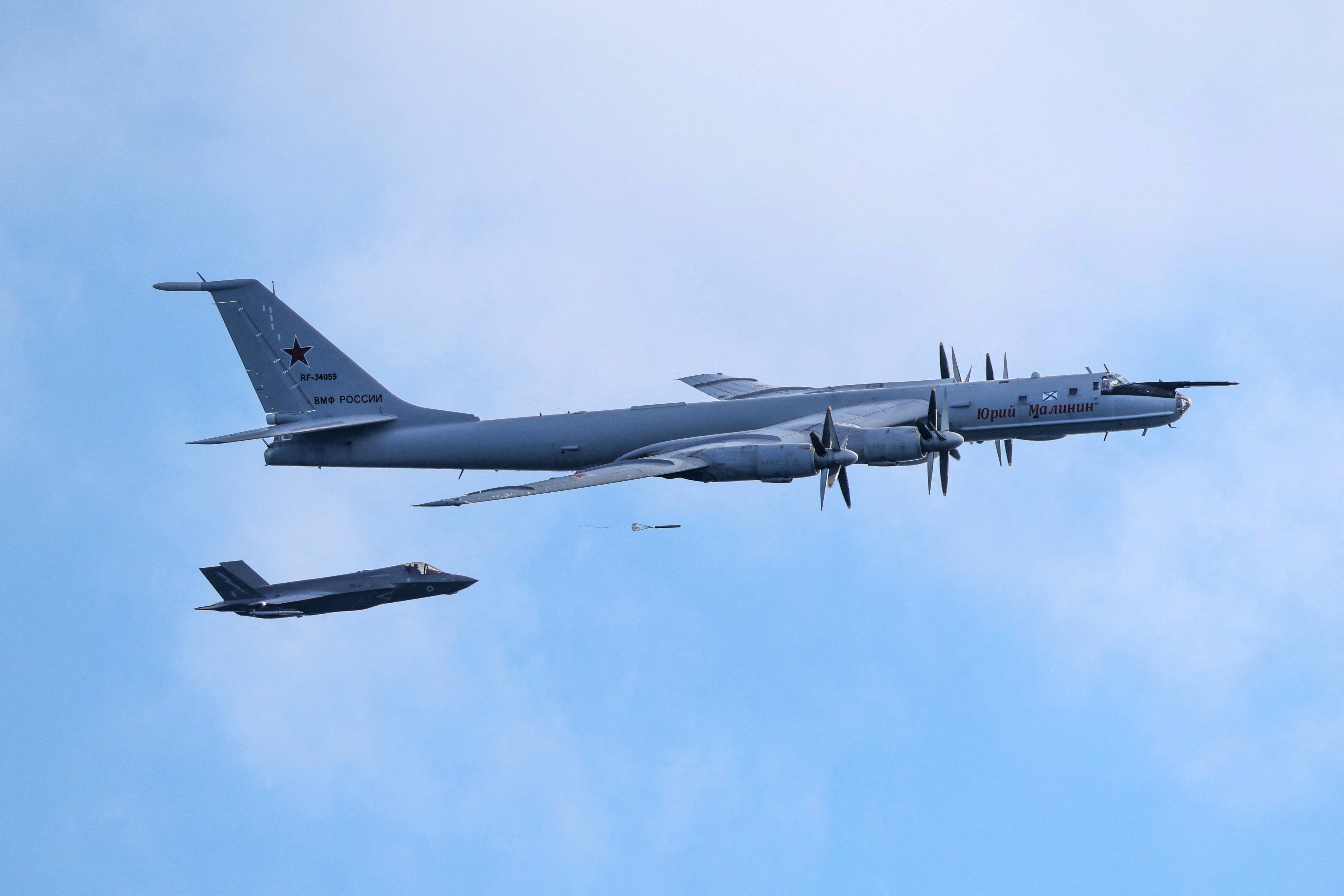
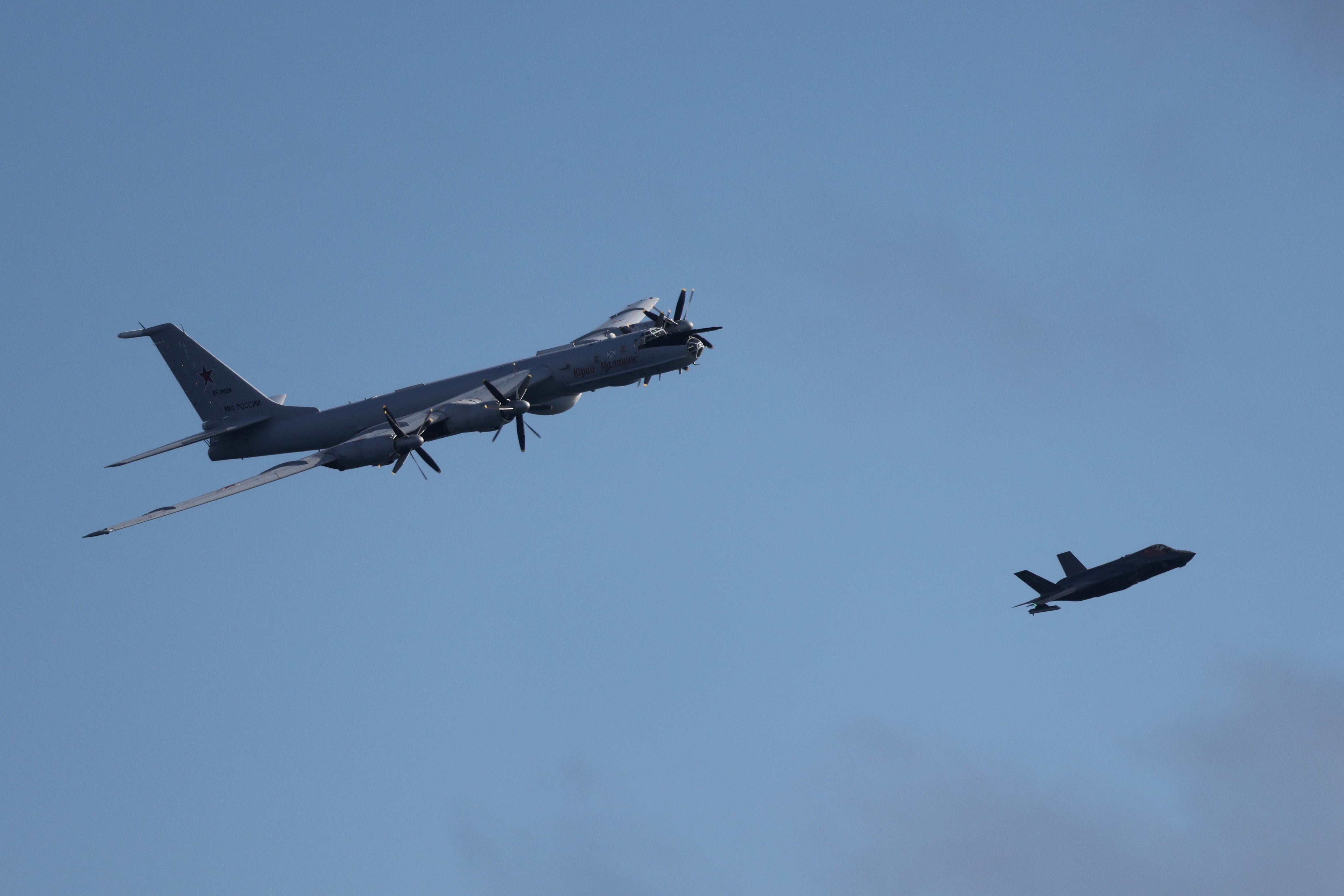
A Russian ‘Bear F’ aircraft “repeatedly approached” the HMS Prince of Wales aircraft carrier, the Ministry of Defence revealed, before dropping a “large number” of tracking devices into the water nearby.
The MoD blasted the activity of the Russian maritime patrol aircraft as “unsafe and unprofessional”. It was intercepted and escorted by two RAF F-35 jets until it left the area, it added.
“While operating in the Norwegian Sea on Operation Firecrest, the UK’s carrier strike group was repeatedly approached by a Russian ‘Bear-F’ maritime patrol aircraft,” An MoD spokesperson said.
“The Bear-F passed at low altitude and unnecessarily close to HMS Prince of Wales and dropped a large number of sonobuoys in close proximity to the carrier.
“This activity was unsafe and unprofessional. The Russian aircraft was intercepted and escorted by two UK F-35 jets from HMS Prince of Wales until it left the area.”
It is not the first time sonobuoys have been dropped near a UK carrier strike group, but it was said to be a particularly large number and dropped especially close.
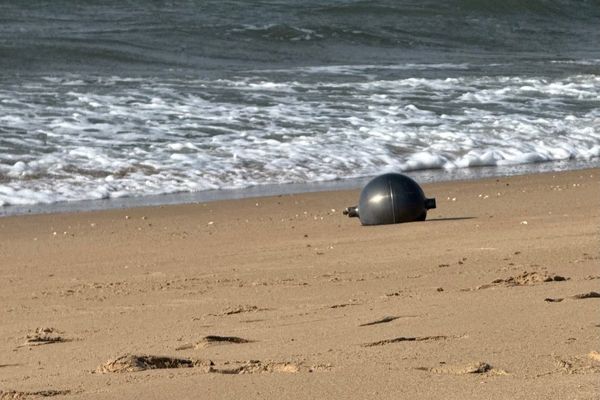
Sonobuoys are commonly used as undersea surveillance, which detect, track and deter submarines and other underwater vessels.
HMS Prince of Wales is the largest warship in the Royal Navy, and has led the carrier strike group in its operation in the North Atlantic and High North since it was launched earlier this year.
The group is currently deployed off Iceland under Nato command, with 1,500 British personnel on board.
The group consists of HMS Prince of Wales, Type 45 destroyer HMS Duncan, F-35 jets, Merlin and Wildcat helicopters, and is supported by RFA Tidespring.
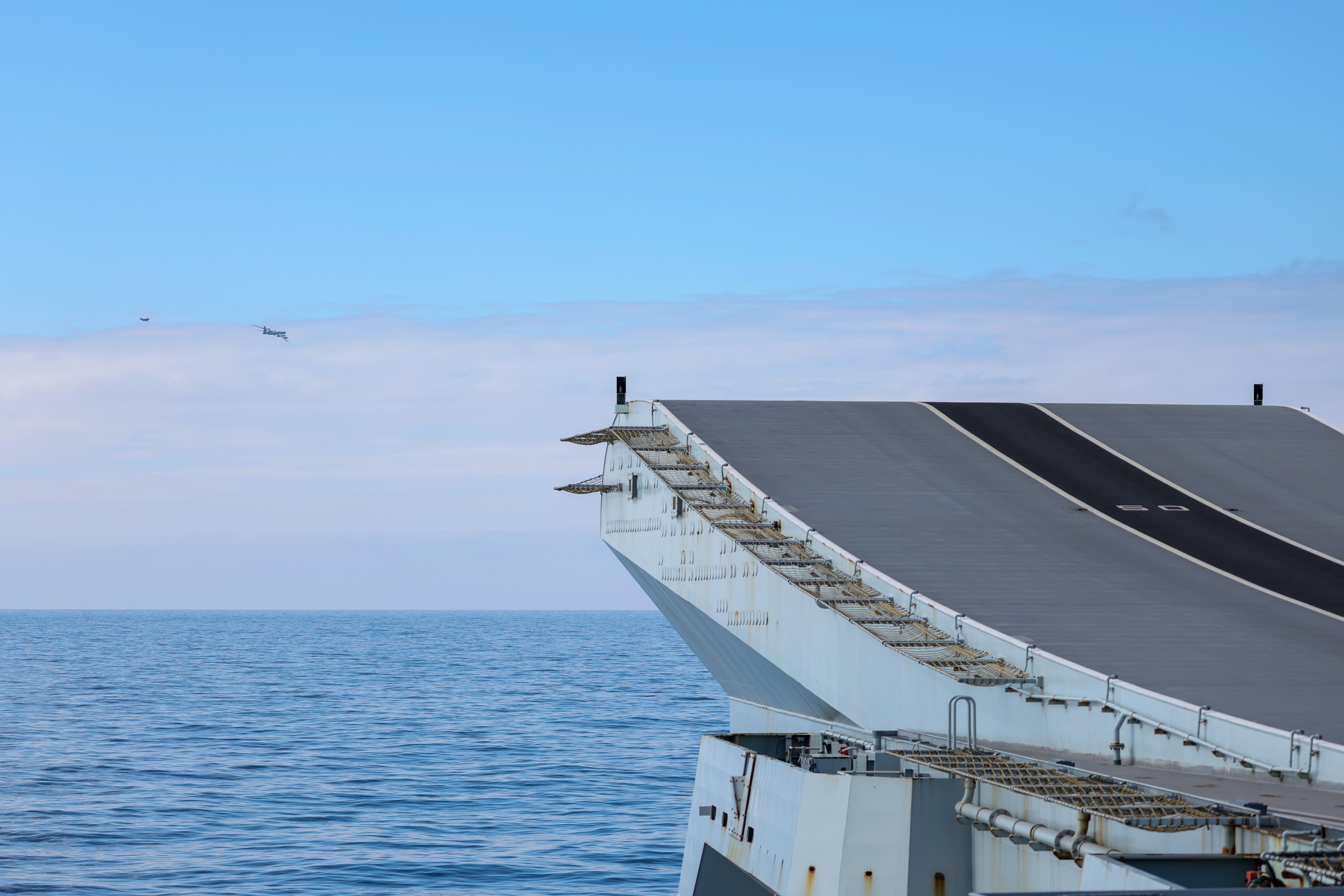
The British forces attempted to contact the Russian plane on international frequencies, but it did not respond.
Two F-35 jets then flew from the Prince of Wales to escort the Bear-F away from the carrier strike group.
Defence secretary Dan Jarvis visited UK forces on board the flagship HMS Prince of Wales over the weekend.
He told Channel 4 News: “We should be clear-eyed about the fact that the threat from Russia exists in every domain, under the water, on the water, on the land, in the sky, in space and in cyberspace as well.”
Mr Jarvis said “some of what the Americans have said in recent times is absolutely right”, and “Europe does need to step up”.
He also insisted that Andy Burnham, who is all but guaranteed to be the next prime minister, “understands the importance of defending our nation” and will make sure “we’ve got the resources we need to keep the country safe”.
The Conservatives said the “totally unjustified” encounter “underlines once again that the threat from Russia is real”.
“Russia’s provocative actions are totally unjustified, and we back our brave service personnel in facing them down,” James Cartlidge, the shadow defence secretary, said.
“But this underlines once again that the threat from Russia is real, and why Labour must set out exactly how they are going to fund their shambolic defence investment plan.
“Only by prioritising defence spending over a bigger welfare state can the government hope to deliver the funding our forces need.
“That’s why we’ve repeatedly offered to support the government, and work together in the national interest, to take the tough decisions necessary to cut welfare and back our armed forces with the resources needed to keep us safe.”