The government is presenting its decision to deploy around 240 troops to Mali and a number of other west African countries as a model for the future. It will be "intervention light", it hopes.
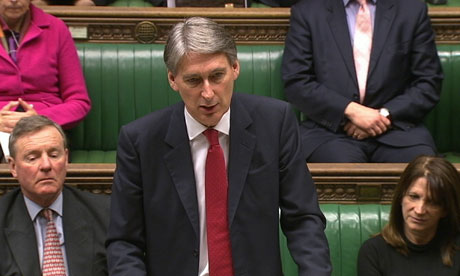
The defence secretary, Philip Hammond, told the Commons on Tuesday Britain would devote more resources to "upstream capacity" – helping weak states look after themselves, rather than sending heavily armed ground troops.
The contribution will not include combat troops, say ministers. The government has agreed to deploy 200 soldiers to train forces in anglophone west African countries, including Nigeria and Sierra Leone, and 40 military advisers to assist the Malian army.
Ministers say they have learned the lessons of Afghanistan and are aware of the dangers of mission creep. The Mali operation should be compared with Somalia, they say, where a limited number of European, including UK, troops have been training and advising local forces.
Hammond told MPs Britain was coming to the aid of France, and Anglo-French military co-operation was an "important part of British strategy for the future".
Brigadier Benjamin Barry, senior fellow at the International Institute for Strategic Studies, said: "Mali is a classic example of a failed state, a clear security challenge." Training local forces and police was a good thing, he added, though he raised concern over what would happen next.
Barry referred to the threat of guerilla warfare and a continuing insurgency after French-led forces had retaken urban areas from Islamist extremists and their allies. A key factor was the behaviour of Malian forces, he said.
Several analysts and commentators have warned that countering insurgents in such large, ungoverned, spaces could last a very long time. Sir Malcolm Rifkind, the former Conservative foreign and defence secretary has warned of asymmetric warfare in the region lasting "many years" unless there is a political settlement. Military chiefs say the same thing, as they did over Libya, and have, for many frustrating years, over Afghanistan.
Britain, for the moment, is limiting its logistical help to two large C-17 transport planes and a Sentinel surveillance aircraft, along with around 70 RAF crew and troops to service and protect them. The planes will be deployed for at least three months.
Britain cannot deploy drones because they are needed in Afghanistan. According to US reports, the Pentagon is considering deploying unarmed Predator drones to neighbouring Niger or Burkina Faso to replace the more vulnerable PC-12 turboprop spy planes.
More British troops may be deployed to protect those advisers and trainers already committed. The operation involves huge risks. One concerned, and sceptical, senior Whitehall official commented: "It's a No 10 show." Where will it end? "Who knows?" he replied.