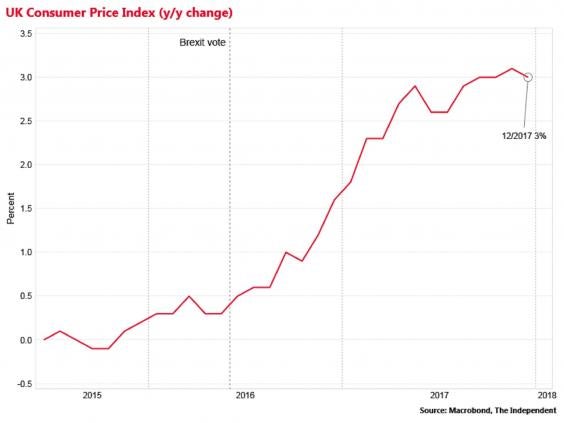
A drop in the UK’s inflation rate in December suggests the post-Brexit hit to living standards may finally be easing.
The Office for National Statistics reported on Tuesday that consumer price inflation was 3 per cent in the month, down from the 3.1 per cent in November.
It was the first fall in the rate since June.
Core inflation – which strips out volatile fuel and food costs – was 2.5 per cent in the month, down from 2.7 per cent previously.
Inflation rose sharply in the wake of the June 2016 Brexit vote due to the record slump in sterling on the night of the referendum, which fed through to higher import costs.
The squeeze on the cost of living curbed disposable income growth and helped deliver a slowdown in the wider economy in 2017.
But the trade-weighted value of the pound is up almost 5 per cent since last August and many analysts expect inflation to have peaked at around 3 per cent.
Peak price rises?
“The fall-back in CPI inflation marks the beginning of what we expect will be a sustained downward trend over the course of this year,” said Paul Hollingsworth of Capital Economics.
However, the ONS was cautious about saying the inflation hit has definitely peaked.
“It remains too early to say whether today’s slight fall is the start of any longer-term reduction in the rate of inflation,” said James Tucker of the ONS.
The ONS reported that the largest downward contribution to the inflation rate in December came from air fares. Though they rose at a similar pace to last year air tickets accounted for a smaller share of the average UK inflation basket and so pushed down the recorded rate.
The Bank of England’s Monetary Policy Committee (MPC) raised interest rates in November from 0.25 per cent to 0.5 per cent, the first rate rise in a decade, in order to stop inflation getting out of hand over the coming years and to bring it back down to the Bank's official 2 per cent target, but markets are pricing in only around two further rate rises over the next two years.
“The continued weakness of underlying price pressures means that the MPC has little need to rush the next rate hike,” said Samuel Tombs of Pantheon.
Separately, the ONS reported that average UK house prices rose by 5.1 per cent in the year to November, slowing from a 5.4 per cent growth rate in October and down from a rate of around 8 per cent at the time of the 2016 Brexit vote.