UK inflation eased in November on the back of the biggest monthly drop in petrol prices in almost three years.
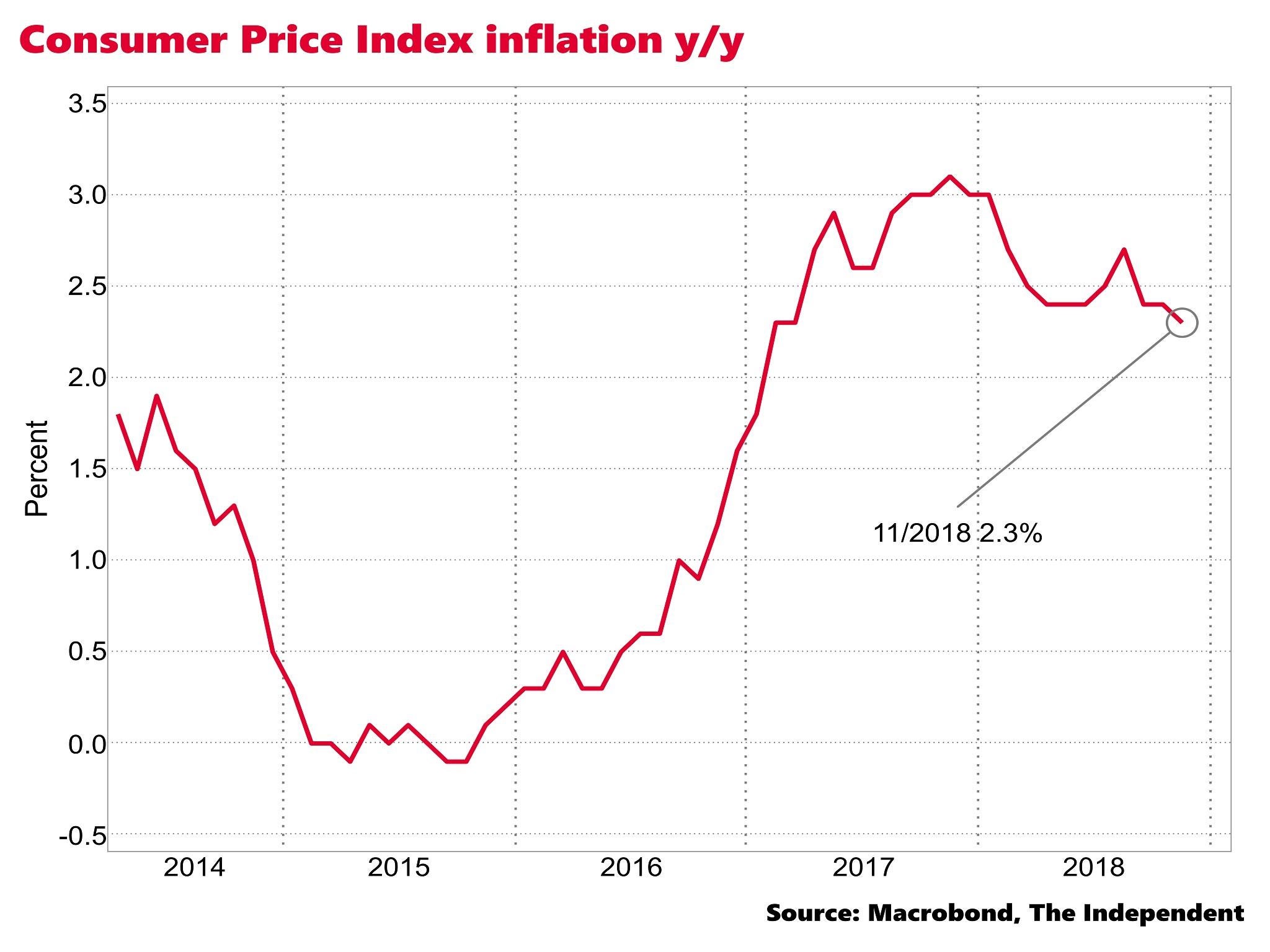
The Office for National Statistics (ONS) reported on Wednesday that UK consumer prices were up 2.3 per cent year-on-year in the month, down from the 2.4 per cent rate in October and the lowest since March 2017.
The ONS said petrol prices fell by 2.6 pence per litre in November, reflecting the recent drop in the global oil price.
The price of a barrel of Brent crude has slumped from $86 (£68) in October to just $56 this month.
Volatile UK video game prices were also down in November.
However, this was partially offset by upward pressure on the price index from a sharp rise in tobacco prices, due to the timing of October Budget’s duty hike.
Annual Consumer Price Index inflation peaked at 3.1 per cent in November 2017, driven up sharply by the drop in sterling in the wake of the 2016 Brexit vote which pushed up import prices.
Inflation has been easing gradually over the course of 2018, but the Bank of England’s Monetary Policy Committee (MPC) nevertheless increased interest rates in August to 0.75 per cent citing concerns of building underlying price pressure in the UK economy.
“CPI inflation still looks set to be below the 2 per cent target [of the Bank of England] right from the start of 2019 and to average just 1.8 per cent over the course of the year,” said Samuel Tombs of Pantheon.
“Modestly below-target inflation, however, won’t stop the MPC from hiking bank rate next year, as the committee believes that interest rates still are well below neutral levels and that no spare capacity exists.”
Average UK wages rose at an annual rate of 3.3 per cent in October, the fastest in a decade.
Lowest since March 2017
However, this was still well below the rates seen before the 2008-09 financial crisis.
The ONS reported on Wednesday that core inflation, which strips out volatile energy and food prices, was 1.8 per cent in November, down from 1.9 per cent in October.
In its worst case no-deal Brexit scenario published last month, the Bank of England envisaged inflation spiking to 5 per cent, while the country suffers a devastating recession.
“If there is a no-deal UK exit from the EU next March, the inflation outlook will be clouded by a number of factors – most notably what happens to sterling, how well the economy holds up and what tariffs come into effect,” said Howard Archer of the EY Item Club.
The ONS separately reported that annual average UK house price growth in October eased to 2.7 per cent, down from 3 per cent in September and the weakest expansion since July 2013.
In London house prices declined by 1.7 per cent year-on-year.