The appetite of UK households for new mortgage borrowing and consumer credit appears to be slackening, new data shows.
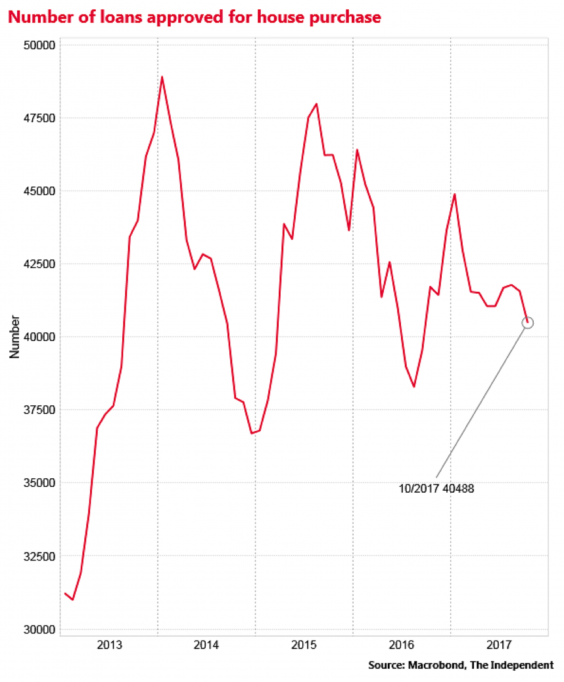
The UK Finance trade association reported on Friday that banks approved 40,488 mortgages for house purchase last month, the lowest monthly total since September 2016.
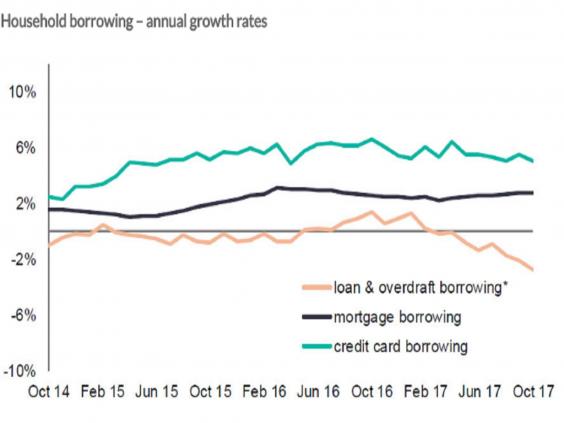
The group also reported that the annual rate of credit card borrowing dipped to 5.1 per cent, down from 5.5 per cent in September.
The growth rate of personal loan and overdraft borrowing fell further into negative territory, hitting minus 2.7 per cent, down from minus 2.2 per cent previously.
Samuel Tombs of Pantheon said the latest mortgage approvals fall "appears to be just the start of a bigger downturn" for the housing market.
"The Chancellor’s decision to cut stamp duty for first-time buyers [in the Budget] won’t do much to counter this downturn, primarily because it will push up prices," he said.
Lowest in more than a year
However, the consumer borrowing data is likely to please the Bank of England, which has become increasingly concerned about an increase in risky lending by UK banks.
The Bank's more comprehensive data on UK household borrowing will come out later this month.
Its last report showed that consumer credit was still growing at an annual rate of just below 10 per cent in September.
The Bank raised interest rates for the first time in a decade earlier this month, to curb domestic inflationary pressures.
Slowing down?
"It remains to be seen whether the Bank of England’s interest rate hike will have a marked dampening impact on consumer borrowing," said Howard Archer of the EY Item Club.
"While the increase was just 25 basis points and interest rates are still at historically very low levels, a number of consumers could be vulnerable given high borrowing levels. There may also be a psychological impact on potential borrowers given that it was the first interest rate hike since 2007."
UK economic growth since the 2016 Brexit vote has largely been sustained by household consumption, which has itself been propped up by consumer borrowing.
The latest UK Finance data also showed that there was a net outflow of £1.5bn from people's cash ISA deposits in October, the largest fall on records going back to 2010.
GDP growth in the third quarter of 2017 was confirmed by the Office for National Statistics this week at 0.4 per cent, with household spending, again, driving activity.