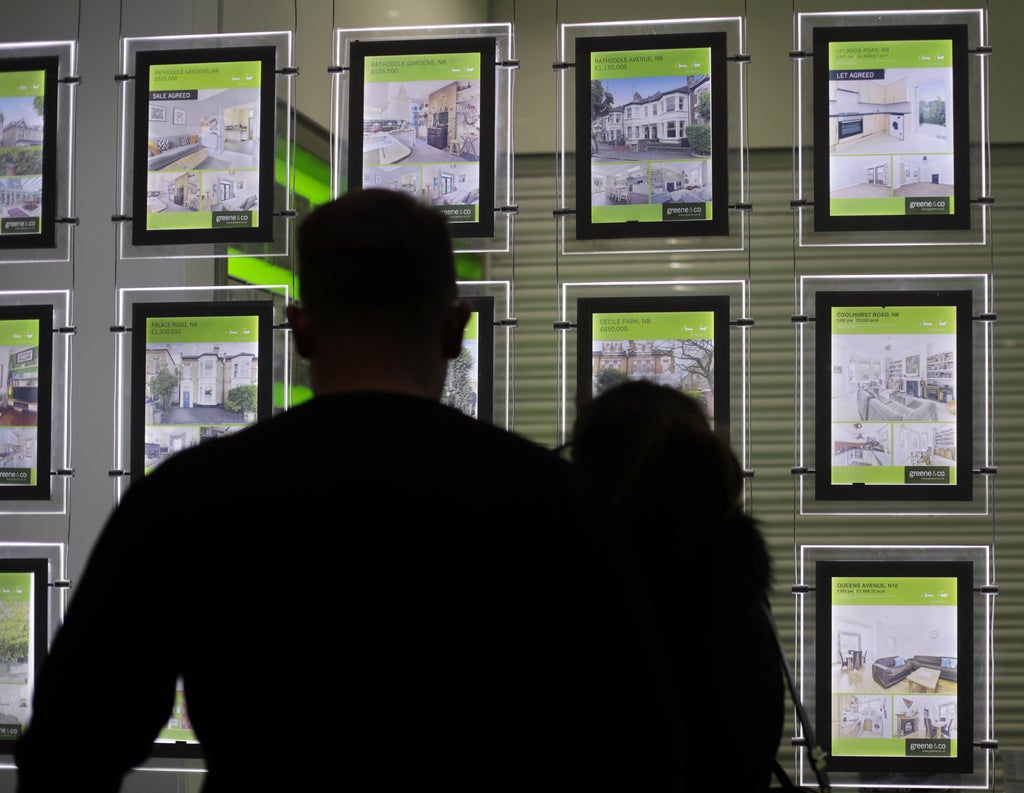
The average UK house price hit a record high in January, but experts have warned of a sharp slowdown in the market this year as living costs rise.
House prices jumped 9.7 per cent, or £24,500, in a year – taking the average to £276,759. Values rose 0.3 per cent in January after 1.1 per cent monthly increases in November and December, Halifax said.
The lender saw transaction numbers beginning to return to normal after an exceptionally busy 2021. Meanwhile, house price rises continue to outstrip earnings growth, with affordability now at historically low levels. Younger generations still face “significant barriers to homeownership” as deposit requirements remain challenging, said Russell Galley, Halifax managing director.
“This situation is expected to become more acute in the short term as household budgets face even greater pressure from an increase in the cost of living, and rises in interest rates begin to feed through to mortgage rates,” he said. “While the limited supply of new housing stock to the market will continue to provide some support to house prices, it remains likely that the rate of house price growth will slow considerably over the next year.”
TV presenter Kirstie Allsopp has sparked controversy by claiming that young people are unwilling to make sacrifices such as cancelling Netflix subscriptions to save for a deposit. She told The Sunday Times she bought her first house at 21 with help from her family.
“When I bought my first property, going abroad, [and] the easyJet, coffee, gym, Netflix lifestyle didn’t exist. I don’t want to belittle those people who can’t do it. But there are loads of people who can do it and don’t,” she said.
In the past 12 months, house price growth was strongest in Wales, which saw a 13.9 per cent jump. Prices in Northern Ireland were up 10.2 per cent on average while Scotland recorded 10.2 per cent growth.
Average prices remained highest in London, at £530,832 but it recorded the lowest price growth over the year to the end of January, at 4.5 per cent. In England, the northwest was the strongest performing region, with average sold prices up by 12 per cent.
Martin Beck, chief economic adviser to the EY Item Club, said the January slowdown “may be a sign of things to come”. He said: “this year won’t see a boost to prices from the stamp duty holiday which ran through much of 2021. To the extent the tax holiday brought forward purchases, its after-effects may drag on housing market activity in the near term.”
“Moreover,” he added, “the EY Item Club thinks the Bank of England will add to recent rises in interest rates by raising rates twice more this year, pushing up mortgage rates. And the rising cost of living faced by households from higher inflation and tax rises mean it’s likely that fewer people will be able to afford to borrow the necessary amount they need to buy at higher mortgage rates”.
Mr Beck said that while house price growth is likely to “cool” this year, the Item Club doesn’t expect prices to fall. “The pile of unplanned savings built up by households during the pandemic will go some way to offsetting the income squeeze.”