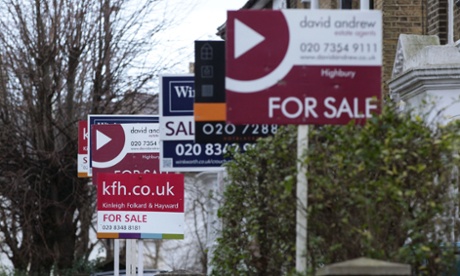
House prices were back in line with expectations in February, falling 0.3% after an unexpected spike of 1.9% in January, according to the Halifax.
The fall, which contributed to an overall quarterly rise of 2.6%, means that the average house price in England and Wales is now £192,372.
Annual price growth eased off a bit, from 8.5% in January to 8.3%, and is well below last July’s peak of 10.2%.
Martin Ellis, housing economist at the Halifax, put the quarterly price rise – generally considered a safer indication of house price movement than the monthly figures – down to a combination of higher earnings, a fall in mortgage rates and stamp duty changes.
“The supply of both new and secondhand homes available for sale remains low; another factor that is likely to be supporting house prices,” he said. “Supply remains tight despite housebuilding in England increasing for the second consecutive year in 2014 and a recent rise in the number of properties coming on to the market.”
The average property has risen in price by £12,000 over the past year but increases in 2015 are likely to be far more modest, according to Howard Archer, chief economist at IHS Global Insight.
“We suspect that housing market activity is now gradually turning around after losing appreciable momentum from the early-2014 peak levels, and we see activity it picking up modestly as 2015 progresses,” he said. “ Consequently, we expect house prices to rise around 5% in 2015.”
While many commentators concur with Archer’s view about modest growth this year, mortgage lenders warned today that the first-time buyer market could go into decline in 2016 if the government fails to replace its help-to-buy mortgage guarantee scheme.
The scheme, which offers banks and building societies a government guarantee on mortgages of up to 95% loan to value (LTV) on existing properties, was launched in late 2013 as part of a series of measures to kickstart the housing market. But it is scheduled to end in 2016.
The Intermediary Mortgage Lenders Association (IMLA), which represents firms that market their products through brokers and advisers, said 65% of its members believed competition would fall unless a permanent indemnity scheme was brought in to replace help-to-buy 2.