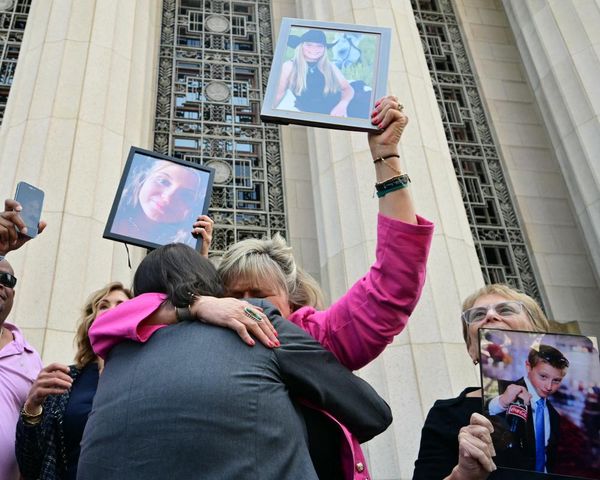
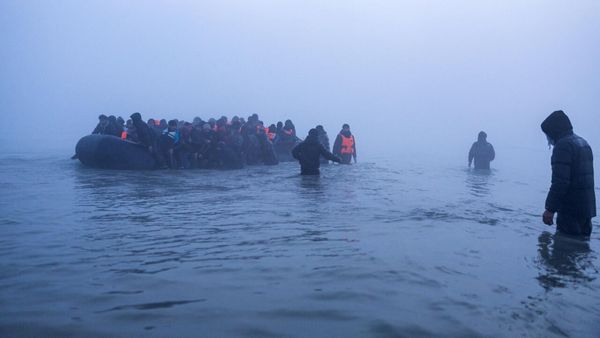
Hundreds of refugee children are to be brought from Calais to Britain in the next three weeks but one in four councils in England, including Theresa May’s own, says they cannot take responsibility for them.
As the French clearance operation got under way at the Calais refugee camp, the home secretary told MPs that 800 children claiming family links with Britain have been interviewed by Home Office officials in the camp in the past week.
Amber Rudd said that almost 200 children have been brought to Britain in recent days, including 60 girls under the Dubs amendment, which is designed to protect vulnerable child refugees across Europe. But 38 councils out of 156 in England have so far refused to take part in resettling those who have arrived.
A total of 1,918 Calais camp residents, including 300 children, packed their bags and passed through the official registration centre on Monday, the French interior ministry said. A fleet of 46 buses started to take them to regions all over France, except Paris and Corsica, leaving an estimated 8,000 remaining in the camp waiting to be processed.
Read the full story from my colleagues Alan Travis, Lisa O’Carroll and Caroline Davies.
Lisa has been speaking to some of the people in the camp today:
Habib Ahmadzai, 23, from Afghanistan

Habib is a business management graduate from Logar in Afghanistan, a town still under control of the Taliban.
He is close to tears as he tells of his ordeal and his frustrations at trying to be with family in the UK – from trying to jump on lorries to getting beaten up by smugglers – which he says has cost him $13,000 (£10,600). At 23, he is five years too old to be taken in under the Dublin regulation.
“I am six months here in the camp. My whole family, my brothers and sisters are living in the UK, and my nephews. I have no one in my country. So what I have to do, I have to join my family. But they say ‘no, no’ you are not a teenager. You should go back to your country.
“They said I should apply for asylum. I am allowed to apply for asylum in France but I don’t want, I want to rejoin my family in UK. My brother, sisters, sisters-in-law have been there for 20 years.
“I am an educated person. How can I live here?,” he asks pointing to the camp. “[The Taliban] said ‘you are not muslim, you are working for government officials’,” he says to explain why he fled his country.
“Officials say I have no reason to be here. But why would I be here? I have a problem. [You have to ask] why am I here in this jungle place.”
He says he does not want to be cleared from the site but will reluctantly board the bus when his time comes.
“I am not happy. I am not happy with what happened with me. My family are like a few hundred kilometres from me and now I have to go a thousand kilometres back.
“I think it’s UK and France double standards. They look after the children. And I understand, they are helpless. But I am helpless too.”
He said the challenges in the camp were a symptom of war and injustice that the west has had a part in.
“There are 10,000 individuals in there, 10,000 minds in there. Each one of them has a story, has their individual problem, each one has their reason to be there. Some of them are crazy, sometimes there are fights. But you have to ask, what made them like that. No one wants to be in the jungle, no one.”
Referring to the squalor of the camp, the lack access to cooking facilities, to privacy, to education, he said: “This is a violation of human rights. The UK and France are responsible for this. This is an injustice.”
He spent $13,000 to get to France to be within what he thought was a whisker of his family, but now the devastation is writ large on his face as he heads to join the queues for the buses. “I understand they want to help children and take them to the UK. but I am a human too. I am human too,” he says, almost in tears.
Majit Nurzei, from Afghanistan

Majit Nurzei can be heard long before he is seen. As he emerges from the first tent in the processing centre, it’s as if all his dreams have come true. He’s on his way to Pays de la Loire and a fresh start in France along with nine friends from the same village in Laghman province in eastern Afghanistan.
He leads the merry band of friends through the hangar to the next queue, cheering and banging his drum.
He sticks out his tongue to show off a long gash where the tip should have been. It was cut off by Daesh, he says. They also broke his fingers and his nose because he helped the “enemy” government.
How did he get here?
“Walking, pay smugglers. It took six months to come to Calais,” he says. “I love France,” he says in anticipation of a successful asylum application.
He and his friends are dismissive of the UK. “UK finished, UK no good,” says Akrium. “Too much headache. They do not give us a chance. They have children but not to adult people.”
They are heading in one bus and full of excitement about their new life. “Is it good there?” they ask of a region of France they have never heard of.
It wasn’t until they got to the hangar after hours of queueing that they knew where they were going. Like many they asked to be kept together. The French officials who were handed out the colour-coded wristbands were obliging anyone who wanted to be kept together with their friends. They were shown a large map of the regions of France and asked which one they wanted to go to.
By lunchtime, there were off to a new life and the first proper bed for months. “Goodbye Jungle,” they chant as they are shepherded into their last tent before they board the bus.
Mimi Gebreh Howit, 29 and Tigst Lakew, 29 from Eritrea

Mimi and Tigst have been in the camp for three months and through broken English they explain they “had no choice”.
“I am not happy to be in this camp and I am not happy to leave because I don’t know what will happen now. The camp will close and I don’t know where it is moving to,” says Mimi.
Mimi left Eritrea because of religious persecution, while Tigst left because of unidentified “political” reasons. They both want to go to Canada, where they have relatives. Family is all they dream of.
They look way beyond their years and have had a tough life. When they pose for a photograph and they are asked to smile, Mimi says: “I’m not smiling, because I am not happy. I would be happy if I could go home, but I can’t.”
Her mother and father divorced when she was six years old, with the family split between Ethiopia and Eritrea. Her mother and her sister went to Addis Abiba. She and her brother remained with their father in Eritrea. But, when she was 16, her father left to seek out a better life. He made it to Libya but they have not heard from him since. “We do not know if he is alive,” says Mimi.
Updated
The demolition of the camp in Calais should be postponed until all children in it are found somewhere safe to stay, the charity Save the Children has said. Its chief executive Kevin Watkins said:
It is extremely welcome to see vulnerable children who have been trapped in Calais reaching safe haven in the UK over the last week. But, as night falls in Calais tonight, we are deeply concerned for the fate of hundreds of children who remain and who do not know where they will sleep tonight and have no information on what tomorrow will bring.
It is unacceptable that the French operation to demolish the camp, which has been planned for weeks, now risks putting vulnerable children at greater risk.
Following claims that some of the children brought into the UK from Calais in recent days are older than 18, the Labour MP for Newcastle Central, Chi Onwurah, has been expressing her outrage at a poster she says was put up in Parliament:
Upset someone in Parliament thought it funny to display this in the communal kitchen over the weekend. #refugeeswelcome pic.twitter.com/UJzTKy4we3
— chi onwurah (@ChiOnwurah) October 24, 2016
To be clear my researcher went to make cup of tea & saw it sellotaped above sink, kitchen shared by ~15 MPs & their staff. Not acceptable https://t.co/lXNyPu7L1s
— chi onwurah (@ChiOnwurah) October 24, 2016
Updated
The final tally from today’s clearance operation counts 1,918 people relocated to acceptance centres throughout France on 46 buses.
The prefecture of the northern French region of Pas de Calais, who has just posted the numbers, says they are “content” but that there is much work to do to relocate the remaining 8,000 people in the camp.
Separately, he told the Guardian that 600 of the estimated 1,300 in the camp have been registered and moved to the state-run secure container site in the camp. “We are content, but we have much to do. We have to continue,” said a spokesman.
Amber Rudd's statement: key points
The Home Secretary won plaudits from some MPs who have been some of her harshest critics over the handling of child refugees.
Throughout the debate, Rudd stressed time and again that the green benches were all on the same side, and saved her sternest critiques for some on her own side who probed the ages of some of the child refugees brought to the UK.
Protecting their identities was crucial to keep them safe from traffickers who might track them down to extort cash or exploit them further, she insisted, as well as defending experience social workers who were determining the refugees ages.
Rudd has been criticised in previous debates on the issue for a lack of transparency, but with delicate negotiations with the French now agreed, she was more forthright in her criticism of her counterparts, insisting it was the French government that were responsible for the delay in bringing over children without ties to the UK, who qualify under the Dubs Amendment, rather than the EU’s Dublin Agreement on family reunification.
Here are some of the key points from her statement and questions:
-
Britain will not accept any new children who arrive in Calais after the camp has been cleared, with authorities determined to avoid a ‘pull factor’ to the French town.
It is important we do not encourage more children to head to Calais, risking their lives in the hands of traffickers.
- 200 children have been brought to Britain from the camp since early October, including more than 60 girls, and several hundred more will arrive over the next three weeks.
- Children likely to be granted refugee status, at high risk of sexual exploitation, and those aged 12 or under will be prioritised.
- Councils have volunteered to take children in, although further places will need to identified as more arrive in the coming weeks
Last week the Guardian reported that France’s Alain Juppe, on course to win the centre-right’s presidential ticket, will seek to overturn the UK-France border treaty which puts the UK border at Calais, not Dover. Rudd said clearing the camp was therefore in the UK national interest.
The rise in the number of people have led some in France to question the Le Touquet agreement. By clearing the camp, we can help secure the future of the juxtaposed controls as well as playing our part to help those most in need in Calais.
Rudd is talking again about assessing the age of child refugees, saying the best way to do that is via experienced social workers. Most of them are teenagers and young boys, Rudd says. The proper safeguarding checks are always done, she adds.
Amber Rudd says "several hundred" more Calais children will arrive in Britain over the next three weeks in addition to the 200 already here
— Alan Travis (@alantravis40) October 24, 2016
Home Office staff have interviewed 800 people in the camp, but not all will come to the UK, she says. The UK will end up taking around half of the children who were in the camp on the day of demolition.
That’s all from Amber Rudd in the House of Commons today, I’ll post a summary shortly.
Updated
Luciana Berger, the Labour MP, says social workers managing the children have told her of a “bureaucratic shambles” with wrong names and addresses given out and the wrong forms submitted.
Rudd says that it is unfortunate but the government does not always have the information it needs. One of the reasons some Dublin children have not been brought over is that it is hard to determine where close family members are living in the UK.
This can be a complicated process. It is not always the case that contacts we have been given are straight-forward to follow-up.
Updated
Rudd is asked about children who are older than 17, and says there are extensive checks on the ground under difficult circumstances. Critics, she says, need to bear with us.
She stresses they have to be protected, despite some right-wing media criticism that the Home Office is covering their faces and erecting screens as they arrive.
Some of these young people, particularly young women, are claimed by smugglers or traffickers to owe them money. They may come after them. We have to keep their identities secret.
The Labour MP Stella Creasy says she has details of 49 children under the age of 13 who charities told her were not able to register at the warehouse. She offers to share the details with Rudd. Three are under the age of 11, she says. Creasy also asks for assurances that children will not be put in detention centres.
Rudd says she is surprised. “We are making sure children are looked after in a proper way that you would expect from a compassionate nation,” she says.
We have 36 staff on the ground, Rudd says, and they are trying to find the youngest children.
There is no ‘them and us’ feeling on the ground; we all have the same aims, we want to get the youngest children out, there is nothing but good will and good intent on this side.
Updated

Keith Vaz, the former chair of the home affairs select committee who resigned in a tabloid scandal over the summer, praises Cooper’s election to chair the committee, saying she will do an excellent job.
Vaz says the responsibility for the state of the camp lies with France. “I don’t believe we in this country would have allowed the development of the camp in this way,” he says.
The problem is going to be displaced to the hook of Holland and to Denmark, can she assure the House that our small ports and airports will get the security back-up they need?
Rudd says this is a French problem, but it is in British interests. She says they are alive to the dangers of displacement and ports will be supported.
Updated
Peter Bone, the Conservative backbench MP, asks for a written statement from the Home Office each month to ensure young women brought over are properly protected, and not exploited by traffickers in the UK.
Rudd says she understands the risk, and promises her department will update him.
Yvette Cooper, the former shadow home secretary, thanks Rudd for her commitment to taking more children.
Cooper says the risks of trafficking and disappearance of children are a concern, and asks for the French government to ensure children, especially girls and young women, have appropriate social workers and youth volunteers to look after them in the container camps. Help Refugees, a charity in Calais, have raised concerns about this.
Rudd says the French government has pledged to maintain a secure area of the camp for children and minors. She says she will make sure she contacts the French about the safety issue.
Rudd said lessons had been learned from the closure of the Sangatte camp in 2002, because other camps had been allowed to spring up since.
Part of our funding commitment to the French is based on securing the camp as it is, once it has been closed. We want to make sure no future camp is erected there.
Rudd said she believes that will go some way to deterring people from making dangerous journeys to the UK.
Tory MP John Redwood asks about the arrests of traffickers, and Rudd says much more can be done in that regard, and it is one of the reason the UK wants to preserve the Le Touquet border agreement with France.
The home secretary also pays tribute to volunteer groups, and says officials will need their help to gain the trust of those in the camp they are trying to help.
Updated
Diane Abbott, the shadow home secretary, is speaking now. She says the situation in Calais represents “everything that is wrong about Europe’s response to the crisis”.

Abbott says the cooperation was too slow, and left people “at the mercy of people-smugglers and criminal gangs”, and that volunteers were the ones providing basic support and services.
She says the Home Office has accelerated the process in recent weeks but the response was too slow. “We should have made it clear to the French that the camp should not have been demolished until all the children were safe,” she said.
Abbott says the furore in the media over the age of the children was unacceptable, and were suggesting the children should be treated like “cattle having their teeth tested”.
Rudd says that her points are important, and says she does not need reminding of the scale of misery.
Protecting children has always been at the forefront, she says. Over the next three weeks the UK will bring over several hundred more children.
Updated
Hinting at her disapproval of tabloid front pages that showed pictures of children arriving from Calais, Rudd said it was important that the identities of those arriving “were not compromised”.
It’s crucial local authorities can manage the numbers coming here. It’s clear there is capacity to take the children from Calais as well as to meet our other commitments.
Rudd says there will be a need to identify further places for the children in the long-term.
She also announces £56m of funding to ensure the clearance operation is “full and lasting”.
Updated
Rudd says UK officials have now interviewed 800 children, but the French government had previously requested that the UK did not transfer children without family links to Britain, which explains why campaigners had been frustrated at the delay.
This was due to their concerns that it would encourage more children to come to Calais. That’s why we focussed our efforts on Greece and Italy, where we have 50 cases in progress.
More children will arrive in the coming days and weeks, Rudd says. Three guiding principles will apply: prioritising those likely be granted asylum, the under-12s and those at a high risk of sexual exploitation.
Rudd says it is important more children are not encouraged to come to Calais.
She says the UK would *only* consider those present in the camp before the start of the clearance today.
Updated
Amber Rudd says nearly 200 children, including 60 girls, transferred to UK
The home secretary says the clearance of the camp is in the national interests of both Britain and France. She says it is an important step in ending the crisis, protecting the UK border and making sure people in the camp are safe.
Officials have been working with French counterparts to make sure children are protected, Rudd said. There is also good progress in transferring children to the UK who have close family links to the UK, she said.
We have transferred almost 200 children, 60 girls at high risk of sexual exploitation, Rudd says.
This government has sought every opportunity to expedite the process to bring children to the UK.
My officials were only given access to the camp to interview children in the last week and we have only recently received agreement from the French government that we can bring Dubs Amendment children to the UK.
Rudd says it had not been possible to do so before, without French agreement.
Updated
The home secretary, Amber Rudd, is about to give a statement to the House of Commons about unaccompanied children from the Calais camp coming to the UK.
My colleague Jessica Elgot will be here to tell us what Rudd says – and what she means.
Updated

Vanessa Redgrave has called on the government to give more money to councils to support refugee children arriving in the UK.
The actor, who was joined by her daughter Joely Richardson, was speaking at an event organised by Citizens UK to welcome the arrival of the first children under the Dubs amendment.
The 79-year-old said that while there was “huge momentum” to support the refugees, money was needed to help local authorities cope.
London councils have announced they will take in more than 100 unaccompanied children under the Dubs amendment.
Redgrave joined about 200 campaigners, many wearing Paddington Bear masks, outside the Home Office in London to celebrate the arrival of the refugees. She said she was “very worried” about those left in Calais, where demolition of the refugee camp began on Monday.
Updated
Ten girls from Ethiopia and Eritrea who have been brought to the UK under the Dubs amendment have been found homes in Hertfordshire, the Welwyn Hatfield Times reports.
Placements with foster carers across the county were found within a couple of hours of the girls arriving in the early hours of Sunday morning.
Labour leader Jeremy Corbyn has put out a video statement calling on ministers to honour the Dubs amendment.
“It must happen - and it must happen now,” he says. “Give those children a place of safety.”
I urge the Government to fulfil the Dubs amendment and urgently bring vulnerable children to the UK, as Calais camp is being closed #DubsNow pic.twitter.com/KFBwCoieLx
— Jeremy Corbyn MP (@jeremycorbyn) October 24, 2016
Updated
Number of departures reaches 1,600 people
About 1,600 people have now left the camp in Calais today on 40 buses, BBC News reporter Simon Jones says.
That is considerably fewer than the 3,000 people who had been expected to be transported from the camp on Monday.
Prefecture says 1,600 people have left Calais on 40 buses.
— Simon Jones (@SimonJonesNews) October 24, 2016
Operations appear to be winding down for the day. pic.twitter.com/AtFT5G1hZQ
It’s not always easy to see the bright side in situations as dire as this, but my colleague Lisa O’Carroll has spotted this gem at the camp.
Someone with a sense of humor in Calais pic.twitter.com/0acGU9GhDw
— lisa o'carroll (@lisaocarroll) October 24, 2016
One 16-year-old Eritrean, Daniel, spoke to Associated Press before heading to the registration centre in Calais with his cousin - also an unaccompanied minor.
“I’m not happy because it’s finished, ‘the jungle’. I want to go to the UK,” he says.
In Calais for eight months, Daniel says he has tried daily to jump on trucks heading to Britain, like others in the camp. “I don’t want France,” he insists.

Updated
More from Devon, where dozens of unaccompanied children from Calais have been taken.
Councillor James McInnes, Devon county council’s cabinet member with responsibility for children, described the situation as “very fluid”.
“We are told the turnaround of the children could be 72 hours but we are seeing already a very fluid situation,” he told the BBC. This is definitely a temporary facility that is in the heart of Devon that is been paid for by the Home Office. The county council is taking on its responsibility for the safeguarding of children that are presented in Devon.”
Geoffrey Cox QC, MP for Torridge and West Devon, welcomed their arrival:
“I strongly believe that this country must respond compassionately to the plight of children caught up in the dangerous situation that has been allowed to develop in Calais. It is right that the county council has agreed to help and I have been assured by ministers that the council will receive all the financial and logistical support necessary to ensure that the services they need will be provided to these vulnerable young people while they wait to join their families already in the UK or to take up a permanent placement in the national transfer scheme.”
Updated

Nearly 50 unaccompanied children 'stuck in Calais camp'
The charity help refugees have sent an update reporting that 49 children aged under 13 have been forced to remain in the Calais camp for another night after the Home Office was stopped from registering youngsters. Their statement says:
Our team on the ground have informed us that The Home Office have not been allowed to register children today. As such, the most vulnerable group, the under 13’s (who would qualify under the Alf Dubs amendment) are being forced to remain in the Calais camp itself amidst all the confusion and chaos.
Our latest census shows there are 49 unaccompanied children in the Calais camp who are 13 years old or under. All are eligible under the Dubs amendment for resettlement in the UK. There are also many unaccompanied girls remaining in camp who are eligible to come to the UK but who were not registered over the weekend.
The shipping containers on site in the Calais camp were emptied of residents at 7am this morning, on the understanding that unaccompanied minors would be housed there until they were properly processed (either sent to the UK under Dubs or family reunification, or suitable accommodation was found for them in France).
However, the minors already living in the containers were also asked to vacate this morning. Some of the children are being asked to go to the warehouse for registration to queue up to then be sent back to the containers. Others are being told registration has stopped for the day.
This chaotic set up is extremely distressing and confusing for the lone minors, the youngest of which is 8 years old (according to our last census). The younger children are struggling to understand where they are supposed to go, and how they are supposed to get there.
Up to a thousand children are expected to be housed in the shipping containers and at present it appears there is nothing in the way of youth workers or social workers to be responsible for, and help calm these young people and children.
Updated
In case you were wondering how long people have been waiting to get into processing centres and on to buses away from Calais, this tweet by Michael Bochenek will enlighten you:
These men from Sudan have been in line since 8am and are now reaching the gate at the warehouse front. #Calais pic.twitter.com/fOGr4Qbqsz
— Michael Bochenek (@MichaelBochenek) October 24, 2016
Geoffrey Cox QC, MP for Torridge and West Devon, has welcomed the arrival of the refugees in Devon. The Press Association is carrying his comments:
I strongly believe that this country must respond compassionately to the plight of children caught up in the dangerous situation that has been allowed to develop in Calais.
It is right that the county council has agreed to help and I have been assured by ministers that the council will receive all the financial and logistical support necessary to ensure that the services they need will be provided to these vulnerable young people while they wait to join their families already in the UK or to take up a permanent placement in the National Transfer Scheme.
For many of those facing eviction from the Calais camp today, this will not be the first time they’ve been forcibly moved on. Among them are hundreds of Oromo Ethiopians, who accuse the government in their home country of seizing their land in exchange for paltry compensation, then selling it off to foreign firms.
The Thomson Reuters Foundation, the charitable arm of Thomson Reuters that covers humanitarian news, women’s rights, trafficking, corruption and climate change, has the story (which I’ve edited slightly for length):
“When we went to demonstrations they killed many people, they arrested many people, they put in jail many people. So we had to escape from the country,” said Solan, a 26-year-old from Addis Ababa.
The former science student left Ethiopia in 2014 after his family was forcibly evicted from the land they had lived on for generations, he told the Thomson Reuters Foundation. Now Solan and hundreds of his fellow Oromo in the Jungle face eviction once again.
Most migrants in the camp have made their way to Calais because they want to reach Britain, and make regular attempts to sneak aboard trucks or trains bound for the UK.
Groups like the Oromo say they have a particular reason for doing so. They are worried France won’t grant them asylum because it doesn’t recognise them as persecuted, based on the experience of others who have been rejected.
The U.N. refugee agency UNHCR said everyone in the Calais camp would be offered the chance to be transferred to a reception centre where they could apply for asylum. “There will be no blanket decisions for certain nationalities,” spokeswoman Laura Padoan said.
French asylum chief Pascal Brice recently visited the Jungle and offered reassurances to the migrants and refugees, including the Oromo group, said Solan. Brice was not available for comment when the Thomson Reuters Foundation contacted his office on Monday.
“If they accept us we want to stay here (in France),” said Solan, who did not want to give his full name. “We are not searching for a better country, we are here (in Calais) because England accepts Oromo people.”
Solan has been moving back and forth between Calais and a makeshift migrant camp in Paris for the past year, he said. In that time many other Oromo have come and gone from Calais - some as young as 12 or as old as 65. Many lose hope of reaching Britain and instead go to the Netherlands or Germany, he said.
“I am asking for everybody to stay with us, to support us, to save our children, to save our home, to save our story, to save our land,” he said.
Tim Farron, leader of the Liberal Democrats, has pre-empted the Commons statement by the home secretary, Amber Rudd, with his own statement demanding she make clear how many children Britain will take from the camp.
It is unbelievable that the day before demolition is due to take place, our Government still can’t tell us how many children we will take and when they will arrive.
The Home Secretary must clarify this in her statement to Parliament today and take this opportunity to rebuild Britain’s reputation as a compassionate and caring country.
The UK Government has a moral responsibility to ensure that all vulnerable children are either transferred to the UK or moved to places of safety before camp clearance starts.
Youth charities scathing over treatment of children
Youth charities working in Calais amid the eviction have been scathing about the failure to safeguard children earlier, Lisa O’Carroll reports. There are an estimated 1,000 in the camp, and reports that just a few hundred were registered and bussed away by lunchtime.
Some voiced concerns that French authorities did not give the unaccompanied children sufficient support with many expected to make the mile long journey from the camp to the processing centre on their own.
Michael McHugh, a volunteer who has worked in the camp for seven months with Refugee Youth Service, stood at the gates of the container camp fielding questions from disoriented teenagers. He said:
There’s has been a very rapid attempt by the French and UK governments to do their homework on the back of the bus. They seem to be moving the kids because of the demolition and fixing the timetable and scale operation around that and not the children.
The question should be ‘when can we demolish the site’ and the answer should be ‘once we have the children cleared’ - not the other way round.
There’s a rush and France has fixed the deadline and everything is slotted round that. I am so worried for these children. They trust us adults here and yet we don’t have the answers. What is going to happen to them.

McHugh, who spoke to the Guardian in between trying to find someone to accompany 13-year-old boy from Eritrea to the processing centre, was sat shivering on a sand ridge when a phone call came through to say there was pushing an shoving in the children’s queue.
He and his colleagues decided it was unsafe to send the boy, who was wearing a badge with a line struck through an icon of a camera to try and stop him being photographed getting on or off buses.
Inside the processing centre there were four queues - adults, families, the vulnerable and disabled, and children. The queue for children seemed least organised, moving slowly with pushing and shoving at points.
Adults, on the other hand, were being processed swiftly, shown a map of French regions and asked where they would like to go. They were registered with one wrist band and then given a second to indicate what region they would go to.
Major Nurzei came through the other end cheering and banging a traditional drum loudly. He was thrilled to be going to Normandy with eight friends from the same town.
Nine men from same village in Afghanistan. Guy with drum had his tongue cut off and fingers broken by Daesh, he said pic.twitter.com/dF0wQb0ySM
— lisa o'carroll (@lisaocarroll) October 24, 2016
Sticking out his tongue he explained Daesh had cut the tip of his tongue and broken his fingers. He was very happy to start a new life. And he was definitely staying in France. “England is finished,” he said. “We don’t want to go to the UK anymore.”
Another of his group said: “UK is no good, too much of a headache. They don’t give us a chance. I like France. The UK take the children but they don’t want the adults, but we can’t go back to our country.”
French officials have been at pains to insist that the eviction operation was proceeding, as interior minister Bernard Cazeneuve put it, “in a calm and orderly manner.”
These pictures show the latest scenes from the queues waiting to enter processing centres.


Calais evictees 'distressed by lack of information'
Carmen Fishwick has been speaking to charity workers on the ground in Calais. Volunteers working closely with the camp’s registration process warn that a lack of information in the camp is causing psychological distress, as fears over the safety of refugees grows, she writes.
Charity worker Tina Brocklebank, of L’Auberge des Migrants, part of the umbrella organisationHelp Refugees, is working in the registration area. She says that considerable number of people, wary of registering with authorities, have already left the camp.
My friend just got to Paris, but now he is worried he shouldn’t have gone. He knows he can’t come back to Calais now. He will stay with another friend now on the streets under a bridge in Paris. It was an impossible decision for him, people just don’t have enough information
Despite the clear-out beginning in a peaceful fashion, charity workers report that there is mounting confusion and anxiety in camp with refugees uncertain about what is going to happen. Brocklebank added:
I have so many friends calling me for information, asking what is happening. They are asking me if they’re going to detention centres. People fear they won’t be able to leave the accommodation being provided by the authorities. There are a lot of reservations.

Another 20 children, all male, who had come from the camp in Calais arrived in Devon on Monday, the region’s county council said.
A temporary Home Office facility has been set up to help with the number of at-risk youngsters being transferred from the ramshackle site.
Up to 70 young people can be housed in emergency accommodation secured in the area, the council said on Sunday.
Home Secretary Amber Rudd will make a statement on unaccompanied children in Calais in the House of Commons at about 430pm.
There will also be questions in the House of Lords at 230pm. We’ll bring them to you as they happen.
We mentioned earlier that the transfer of Calais children to Britain has been “temporarily paused” at the request of French authorities due to the camp clearance.
The charity Safe Passage UK tweets:
We are taking our children to another entrance to avoid this #Calais pic.twitter.com/JRFLgd4lRY
— Safe Passage UK (@safepassageuk) October 24, 2016
900 migrants depart Calais
The number of migrants who have left the Calais camp today continues to rise, according to BBC News producer Piers Scholfield:
Now up to 900 departed on 23 buses. #Calais
— Piers Scholfield (@inglesi) October 24, 2016
#Calais prefect says 60 buses should leave today. Would be approx 2,500 people if they continue at the same rate.
— Piers Scholfield (@inglesi) October 24, 2016
Angelique Chrisafis has tweeted this picture from Calais:
#calais afghans waiting 4 bus to pays de loire, had board game of how to get to UK, would apply for asylum in France pic.twitter.com/xVR0OY6M8v
— Angelique Chrisafis (@achrisafis) October 24, 2016
The Tory MP for Dover, Charlie Elphicke, fears a surge of migrants will try to cross the Channel after the Calais camp is finally closed.
A vocal opponent of the sprawling site, he says border security must now be stepped up: “People will be more desperate than ever to see if they can break into Britain.”
He welcomed the creation of an immigration “gold command” in Kent: “It shows that the authorities are taking the risk seriously and I hope the dismantling of the ‘jungle’ continues to go off peacefully as it has so far.”
Elphicke’s constituency could become the first calling point for migrants seeking to enter the UK following calls last week from French presidential hopeful Alain Juppe for the border to be moved back to the British side of the Channel.
“Whatever happens, we need to be prepared for every eventuality and we need to take control. That means we need to invest in the Dover controls, intelligence, security on the English channel, as well as better roads to Dover,” the MP said. “It is in the interests of Dover and Calais that Britain and France work together to end the Calais migrant magnet.”
Updated
Home affairs editor Alan Travis is also monitoring events from London today:
Home Office say the transfer of Calais children to Britain has been 'temporarily paused' at French request due to camp clearance
— Alan Travis (@alantravis40) October 24, 2016
Angelique Chrisafis is also inside the processing centre hangar. She reports that for some people the choice of destination is more or less arbitrary.
#calais a lone Sudanese man who doesn't know France picks Normandy on a map, gets blue wristband, waits for bus
— Angelique Chrisafis (@achrisafis) October 24, 2016
Updated
We’ve just been given access to the hangar where migrants are being asked to queue up for their place on a bus and hopefully a fresh start on life, Lisa O’Carroll reports.
While it is quite intense it is orderly. Migrants are shown a map of the regions of France and asked to say where they want to go. This man is happy with Normandy.
The port of Calais, the closest point between Britain and continental Europe, has for more than 15 years been a magnet for refugees and migrants who want to start a new life in this country.
Here is a potted history of some major episodes in the development of the migrant camps around the city.
- In 1999, the Red Cross opens the Sangatte camp near Calais port for migrants sleeping rough in and around the northern French city. Under pressure from Britain, which sees it as having a “pull” effect on migration, the camp is closed in 2002. Hundreds of mainly Afghan migrants then set up camp east of Calais, on a patch of scrubland next to a road travelled by lorries heading for Calais port. The migrants call it “the Jungle”.
- In September 2009, the Jungle is demolished for the first time on the orders of then president Nicolas Sarkozy, following a mass police raid in which scores of people are arrested.
- In early 2015, a new settlement - labelled the “New Jungle” - sprouts up near a state-run day centre for migrants established at the site. The camp later becomes simply known as the Jungle.
- From mid-2015 on, migrants attempting to board lorries or enter the Channel Tunnel frequently clash with police around the camp, which mushrooms in size as asylum-seekers pour into Europe in unprecedented numbers. That November, France’s top administrative court rapped the government over conditions in the camp, describing them as “inhuman”.
- In January 2016, the port of Calais is shut for more than three hours after dozens of migrants occupy a moored Britain-bound ferry. A month later, around 20 people are arrested in Calais at a banned rally by supporters of Germany’s xenophobic Pegida movement.
- The southern half of the Jungle camp is demolished in late February 2016 and early March, sparking protests. Iranian migrants protesting at the destruction of their shacks sew their mouths shut. The evicted migrants moved to the northern part of the camp.
- On 26 September, President Francois Hollande says the Jungle will be demolished by the end of the year and that the migrants - estimated to number around 6,000 - will be moved to shelters around the country.
- On October 21 the interior ministry confirms the operation to tear down the camp will start on Monday, 24 October (today). Migrants began evacuating early in the morning, with the first bus carrying about 50 Sudanese leaving the Jungle at about 08:45 am (0645 GMT).
600 people bussed away from Calais camp by 11.30am
By 11:30, 600 refugees & migrants had left by bus to places including burgundy, north eastern France, western France #calais
— Angelique Chrisafis (@achrisafis) October 24, 2016
Updated
Our reporters have arrived back at the processing queues and say that all is now calm in the area. We will keep an eye on the situation.
The Press Association has filed a few lines on the unrest among people waiting to be processed and transferred away from Calais. Details of what is happening are still very patchy, but according to this PA update from just after 11am:
Dozens of riot police marched in to control the queue, as people started to push and shove at the front just before midday.
While a few punches were thrown in scuffles, most of the crowd waited patiently inside the barriers which police then spread out to give them more space.
Police have formed a barrier to prevent people queuing from behind from joining the fray until the situation becomes less volatile.
Our video team has taken the footage from the tweet below and republished it the right way round.
Updated
Scuffles reported as police surround queueing evictees
Refugee Info Bus, a charity working with migrants at the Calais camp, reports that tensions are rising in the registration queues. The organisation has tweeted video, unfortunately on its side, that seems to show scuffles breaking out between evictees and French police.
Lack of #info & #organisation leading to panic. #unnaccompaniedminors caught up in this. pic.twitter.com/mLEG8Z7DJu
— Refugee Info Bus (@RefugeeInfoBus) October 24, 2016
People have been kettled outside the registration warehouse. #police and #CRS surrounding them. pic.twitter.com/fCjVnexSfP
— Refugee Info Bus (@RefugeeInfoBus) October 24, 2016
People are being kettled in the registration area, meaning tensions are rising. pic.twitter.com/FoLVSQA1OY
— Refugee Info Bus (@RefugeeInfoBus) October 24, 2016
Confusion and people being turned away from queues as they try to register to leave the #calaisjungle pic.twitter.com/PkVdunAsQw
— Refugee Info Bus (@RefugeeInfoBus) October 24, 2016
Updated
A charity working to help people living in the Calais camp has just reported that the registration line for unaccompanied children has been closed. I’ve asked our reporters on the ground if they are able to find out any more details.
The registration line for children has just been closed. #Unaccompaniedchildren have been told to "come back tomorrow". 👧🏾👦🏿
— Refugee Info Bus (@RefugeeInfoBus) October 24, 2016
This tweet, from a second group working with people in the camp, shows some of the tear gas canisters fired during unrest there in recent days.
An assortment of some of the #teargas canisters fired throughout the #calaisjungle the past days #acab #policeviolence pic.twitter.com/pLnJ136Z59
— Calais Solidarity (@calaisolidarity) October 24, 2016
Demonstrations against the closure of the Calais camp and the treatment of the people there are planned in several French towns and cities today and later this week.
Rallies are slated to start at about 6pm local time today in Brest, Chateaubriant, Nantes, Paris, Rennes and Toulouse. Tomorrow there will be a demonstration in Dijon and on Friday protesters will gather in Saint-Brevin-les-Pins.
Read more at squat.net.
Pain? Fever? Cough? Written beside shack where Syrians had been living in #Calais camp pic.twitter.com/6093WDAqCS
— Angelique Chrisafis (@achrisafis) October 24, 2016
Cynics on social media have been commenting on the apparent lack of any visible minors pictured boarding buses or navigating their way through the Calais camp evacuation. This tweet from my colleague Lisa O’Carroll suggests why:
Kids been given these badges to stop photos been taken getting in or off the buses. This is a 13 year old boy pic.twitter.com/ycISGrQMRu
— lisa o'carroll (@lisaocarroll) October 24, 2016
However, it has not stopped her from tweeting this unidentifiable photo of a youngster being chaperoned towards processing centres ahead of their evacuation from the camp.
Some of the first children - these two look like seven years old - taken to the processing centre. pic.twitter.com/HQzWJWEzdQ
— lisa o'carroll (@lisaocarroll) October 24, 2016
'My wife prays we can be together one day'
Among people remaining in the camp, adults with family in the UK were concerned if they would ever be able to be together again, Angelique Chrisafis reports.
Tafsu, 48, a carpenter who had fled violence in Eritrea had a wife and two children in London. He said he hadn’t seen his 16 year-old son for nine years. He had never met his 9-year-old daughter. When he last saw his wife, in Sudan, she was pregnant.
“I don’t know what the future holds. I want to explain my case but I can’t get heard. The children here are beginning to be heard. What about us, people with children, separated from our sons and daughters?”
He was weighing up what to do. Trying to stow away to England had proved impossible, he said. He was considering whether to join the queue of people leaving on buses to reception centres around France, to be processed in France and hope to join his family at a later point. ‘My wife just prays we can be together one day.’

Updated
The controversy over the UK’s work - or lack thereof - to process and resettle refugees is the important subtext to today’s evacuation of the Calais migrant camp. Shadow home secretary Diane Abbott said:
The treatment of the refugees in Calais is disgraceful. The refugees should have been processed and checked before any dispersal and destruction of the camp.
It seems certain that people who have a right to refugee status, or asylum, in either France or in this country, will be denied. Children will now be even more vulnerable to people traffickers, or worse.
The British government has failed in its duties, foot-dragging through the whole process. It should be protecting people who have a right to come here, not colluding in this process.
Migrants get color coded wrist bands before heading up to warehouse at least a mile away t be processed. pic.twitter.com/KMLtI50Mm8
— lisa o'carroll (@lisaocarroll) October 24, 2016
We have just published an opinion piece by a panel of four writers giving their verdict on the evacuation of the Calais camp. The most poignant comes from Hassan Akkad, a Syrian who fled his country in 2012 and spent two months living rough in Calais before arriving in Britain.
I spent two months in Calais before I arrived in the UK, and now I have come back, as a volunteer and a documentary-maker. No one should have to live like this. Now the autumn is here it is raining frequently and there are no proper shelters, so it’s a mud bath. But if they are going to demolish this place there needs to be another option for people.
There are about 10,000 people living in Calais right now. No one knows what is going to happen to them when the camp closes. These are people who have already fled their homes, and now they are living with uncertainty again.
It is thought that about 1,000 of the people in “the jungle” are children. I would say 25% of people here have already claimed asylum in France, but have not been given anywhere to go. The rest still want to go to the UK. So if the government tries to bus them to other parts of France and detention centres, they won’t want to go.
I think some people will set up smaller camps, like in Dunkirk. But this will make it harder for charities to help them. People hate “the jungle”; no one could call it home – but closing it will just make things worse.
Updated
Angelique Chrisafis has sent a fresh dispatch from Calais, where she has been spending the morning watching the evacuation.
Inside the camp, as scores of men left carrying bags of blankets, some still stood by tents working out what to do in the next few days. Aid groups estimated that around 2,000 people had left the camp of their own accord in recent weeks and that squats would spring up in the Calais area as some refugees and people still hoped there was a way to make it to Britain.
Awad, 31, a Sudanese refugee, was waiting to be processed and get on one of the first buses to a reception centre in France. He said: ‘I love the uk but the uk doesn’t want refugees.’
He felt learning French might be hard but he was relieved to be claiming asylum in France and leaving the Calais camp after six months there. ‘I feel good about leaving the jungle. I don’t know what will happen or where I will be sent today. But if I can choose I might choose the south. I’ve heard it’s warmer there.’
All he had seen of France were the views from trains as he travelled up from Italy months before. ‘I hope to start a new life that is better than Calais,’ he said.


Updated
Our first news wrap of the morning has been published. Here’s a flavour:
Queues of people dragging their few possessions in donated holdalls had begun forming in the dark pre-dawn outside a warehouse where processing was taking place.
As the gates opened people surged towards the warehouse, with no idea where they were to be transported to, but having been warned they must leave the camp or risk arrest and deportation.
The clear-out operation began in a peaceful and orderly fashion, in contrast to scenes at the weekend when there were violent clashes, with camp residents throwing stones at French riot police who retaliated with teargas.
Police vans and fire engines were positioned on the perimeter of the camp as those being processed were herded into the warehouse before being put on one of the white buses taking them to centres across France.

Updated
Are you in Calais or affected by events in the camp?
Share your eyewitness accounts, photos or videos direct with our journalists by clicking on the ‘Contribute’ button in the live blog.
You can also fill in our form or contact us on WhatsApp on +447867825056.
The evacuation of the Calais camp is continuing apace, according to my colleague Lisa O’Carroll, who is at the scene. She has just sent this tweet:
Ten buses have already left processing centre. People queuing since 5am. Migrants being taken to Paris, Lyons and Marseilles I was told pic.twitter.com/ubeccJj72K
— lisa o'carroll (@lisaocarroll) October 24, 2016
Home Office 'committed to safeguarding Calais children'
The Home Office has responded to fears that hundreds of children could be lost in the chaos of the Calais camp demolition today. As the Guardian reported last night, campaigners have warned that children who are undocumented and have not made it to the UK by Monday morning will be swept up in the “herding” of adult migrants onto coaches to be bussed elsewhere in France.
Robert Goodwill, the immigration minister, said:
We are absolutely committed to safeguarding and protecting children in Calais and have already transferred a considerable number of unaccompanied minors to the UK so far this year.
We are working closely with our French partners and the immediate priority is to ensure those who remain in the camp are provided with secure accommodation during the clearance operation. UK officials will continue to identify those eligible to come to Britain.
Our focus is, and will continue to be, transferring all eligible minors to the UK as soon as possible and ensuring they arrive safely. This must be done through an agreed and proper process and with the agreement of the French.

In the past week, about 200 children have been brought to safety in the UK, approximately 15% of the total number in the Calais camp, according to a Citizens UK estimate. Another 24 refugee children from Calais arrived in Britain on Sunday afternoon. They follow 54 unaccompanied minors, mostly girls from Eritrea, who were the first to be brought to the UK on Saturday night under the Dubs amendment, the government pledge to help unaccompanied children announced to parliament in the summer.
Updated
These two short Twitter videos from a French photographer covering the Calais camp evacuation show that the queueing for reprocessing seems to be taking place in an orderly fashion.
Le hangar par où les #Migrants transiteront avant leur évacuation de la #Jungle de #Calais pic.twitter.com/yhkEAk7GAr
— Jonathan RT France (@Jonathan_RTfr) October 24, 2016
Top départ de l'évacuation de la #Jungle de #Calais pic.twitter.com/qyztV3v90l
— Jonathan RT France (@Jonathan_RTfr) October 24, 2016
As previous posts have indicated, there is a significant constituency among camp residents who are happy to leave. Aziz, 27, from Darfur, Sudan, who has spent the last four months sleeping rough, told PA:
I don’t like this place at all because I want to go to a city area. I’m feeling not worried, not happy at all. I never laugh, I never cry. Just nothing, but I want to go from this place.
Aziz said he would claim asylum in France and is hoping to go to the west of the country. Speaking of his home, he said:
In Sudan there is insecurity, there is war, there is a terrible situation, discrimination ... it is not possible to stay.
Children are at risk from traffickers - Yvette Cooper
Speaking on BBC Radio 4’s Today programme the chief executive of the port of Calais, Jean-Marc Puissesseau, said he was “very, very happy” that the camp was finally being cleared, Peter Walker reports.
“For two years we have been living in constant stress, with a lot of attacks on the highways to try to slow down the traffic for the migrants to get into the lorries,” he said. “Really, it’s a big day – we are very happy.”
But Puissesseau also argued that Calais needed “months and months” of a heavy police presence to stop a new camp forming, or else “it’s a waste of time what we are doing today”.
Yvette Cooper, the Labour MP who chairs the home affairs select committee, told the programme she welcomed the clearance but said the UK and France should have done more work to assist young refugees in the camp.
“There are still hundreds of children and teenagers stuck in the camp and the French authorities have not put in place proper alternatives of places for the children to go that are safe. That’s why it’s right Britain should be doing its bit as well.”
She added: “There has to be a plan between both France and Britain to help the children and teenagers right now. I really worry that Britain left this far, far too late to do its bit in terms of helping the children and teenagers. But the French authorities have also continually failed to provide that support.”
Cooper warned that without proper plans in place, young camp residents could be placed at risk: “That’s what’s really worrying. Once the clearances start, we know that there is a significant risk that many of those children and young people disappear. That is what happened last time when part of the camp was closed without a plan for the children and teenagers.
“And the consequence is they slip into the arms of the smuggler gangs, the traffickers. Just at the point at which they might have been able to be reunited with their family, then they are lost.”
My Guardian colleague Lisa O’Carroll has been talking to some of the people getting ready to leave Calais for resettlement elsewhere in France. She says the atmosphere among them is a mixture of relief, resignation and, in some cases, cheer.
Habib, a business graduate from Afghanistan, said that all his family were in the UK, and that “human rights were violated” in the Calais camp. He told Lisa:
I am an educated person, why would I want to be in this camp? But I am. All my family are in the UK. Under the Dublin agreement children can go and join their family but I can’t. That is injustice. Children I understand are helpless, but I am helpless too. My family are just a few hundred kilometres away and now I am being taken hundreds of kilometres in the other direction.
Habib pointed to a scar on his wrist which he said was broken by people smugglers because he had asked for a drink of water, and he described how he had been beaten by the police when he tried to jump on a lorry.
Most of those volunteering to leave appear to be from Sudan, Eritrea and Afghanistan. Many of them seemed glad to be leaving. A group of Sudanese wandering to the processing centre at dawn cheered loudly “goodbye jungle”.
Two Sudanese took their place in the queue with their bicycles. Ahmed, 26, had been in the camp for seven months while Assam from Darfur had been there for six. “The jungle [is] no good, [it’s] dirty, there are fights,” said Assam.
Ahmed, 16, from Somalia, said: “[In] the jungle you feel like an animal.”
Bilal from Afghanistan, an English teacher who fled the Taliban, said the camp was “bad, bad”
Updated
First coach is headed for Burgundy
The first coach load of Calais camp evacuees left at about 8.45am (6.45am GMT), taking around 50 Sudanese to the Burgundy region of east central France, Agence France-Presse reports.
Abbas, 25, from Sudan, who was bundled up in a woolly hat and coat against the cold, told the agency: “I feel very happy, I’ve had enough of the Jungle. There are a lot of people who don’t want to leave. There might be problems later. That’s why I came out first.”
Bashir, 25, also from Sudan, began queueing at 4:00 am (0200 GMT), four hours before the hangar serving as a bus station opened. “Anywhere in France would be better than the Jungle”, he said.
However, hours before the evacuation began some migrants were still clinging to hopes of a new life across the Channel. Karhazi, a young Afghan, one of many of camp residents with contacts in Britain, said: “They’ll have to force us to leave. We want to go to Britain.”
A Syrian man named Sam who spent 13 months in the Jungle told AFP he had fled the camp at the weekend to another site about 12 kilometres (seven miles) away where he said “dozens” of migrants were hiding out to avoid being moved.
French authorities have said those who agree to be moved can apply for asylum in France.
Calais camp will return, says charity boss
Camps housing migrants around Calais are likely to re-emerge, despite today’s demolition of the structures currently in place, the British founder of a Calais refugee crisis charity has told the Press Association.
Clare Moseley, founder of Care4Calais, who has drawn parallels between the treatment of migrants in France with that of persecuted Jews in Nazi Germany, said:
I think people will still come. With refugees, deterrents don’t matter because a refugee by definition is fleeing something. In February, they demolished over half of the camp and yet here we, are seven months later, with a camp bigger than it’s ever been.
[Migrants] don’t have a lot of options or a lot of information. A lot of them are just kids. Even those who are 19, 20, 21 years old, they are still very young.
We’ve a lot from Afghanistan, which is fragmented and is a society that has completely broken down. The people from there don’t trust anybody and the children have behavioural problems because they are so accustomed to violence and to losing family and friends.
They are not coming here because they have a choice, they are coming here because they have no choice. A lot of the kids in particular don’t know what to do. When you ask them, they look at you blankly.


Here’s another shot of that first bus leaving the camp.
Premiers départs de la #Jungle de #Calais pour les migrants mineurs pic.twitter.com/uqQkN3qN2l
— Jonathan RT France (@Jonathan_RTfr) October 24, 2016
Angelique Chrisafis has spoken to a Sudanese refugee who has spent three months living rough in Calais but now hopes to claim asylum in France and start a new life in the country.
Yusef, 35, a pharmacist who had fled violence in Sudan, was dragging a donated suitcase of blankets to join hundreds queuing in the cold to be bussed to reception centres across France. Once inside the French hangar, he would be shown a map of France, given a choice of two places and put on a bus.
“I have no idea where I’ll go. I will close my eyes and put my finger on the map,’ he said. But he was optimistic. “I want to integrate, start a new life, contribute. I trust France to keep me safe. People misunderstand us. We don’t have economic problems, we’re fleeing violence and dictatorship.”
Yusef wanted to apply for asylum in France and start learning French straight away. “All I know about France is that they make good perfume and that Paris is called the city of love. Now I’m beginning a journey of love.”
He said three months living in the Calais camp had been “tough and miserable”. He added: “Now we’ve got to start feeling hope.”
Once he had thought he would make it to England. “But that dream died here,” he said. “That bridge is closed.”
First bus leaves the camp
Chrisje Sterk, a Dutch journalist, has posted this footage that she says shows the first of the buses leaving the camp to ferry migrants to new locations in France.
De eerste bus is vertrokken #calais #calaisjungle pic.twitter.com/Kj08ZoEoEU
— Chrisje (@ChrisjeSterk) October 24, 2016
Updated
“I just want my mum”
One young resident of the camp, Aaron, 16, said he was afraid that crossing the Channel was his best hope of finding his mother. The pair had fled Eritrea months earlier but had been split from her as they trekked through the desert.
Aaron had gone on alone to Libya and then to Italy by boat, knowing only that his mother hoped to get them both to England. He told Guardian Paris correspondent Angelique Chrisafis:
I have to get to England. That’s where my mother was going and it’s my only hope of finding her. At night I have such bad nightmares. I just want to find my mum.
Updated
By all accounts the camp remains calm and orderly this morning. No sign of riot police or any demolitions yet. People are queuing patiently.
Migrants waiting to get into the hangar. pic.twitter.com/cJFufpjzb4
— Simon Jones (@SimonJonesNews) October 24, 2016
Calais this morning pic.twitter.com/bIa102nEun
— Dan Hewitt (@danhewittsky) October 24, 2016
Very calm in Calais as hundreds of migrants volunteer to leave. Sudanese and Eritrean mostly in queue for processing center so far
— lisa o'carroll (@lisaocarroll) October 24, 2016
Updated
A line of buses outside the camp.
La fila di autobus pronti a caricare i migranti #Calais pic.twitter.com/zrV8G702FD
— Stefano Montefiori (@Stef_Montefiori) October 24, 2016
Here’s another reporter hammering home the fact that there do seem to be an awful lot of media at the camp.
Presumably the next big headache for Calais authorities is evacuating the 10,000 journalists pic.twitter.com/QnxnP1jFPO
— Alex Campbell (@CouncilReporter) October 24, 2016


Mohamed, 23, from Eritrea is very happy to leave the camp.
As he walks up to queue at processsing center he tells me: “The camp is dirty and dangerous”.
He has been here for three months and has tried to get asylum in France before, he says.
“My fingerprints were taken in Italy and where ever you go in Europe after that they say you have to go back to the Italy under the Dublin regulation,” he says.
“Now they say for the first time the fingerprints don’t matter and we can start applying for asylum again. I am happy, “ he says.
He has been told the buses will go all over France including Marseilles, Lyons and Paris.
The queuing continues ...
Hundreds of migrants, many of them Sudanese queuing in the dark to be taken Calais camp. Almost outnumbered by media pic.twitter.com/JATZshOb1y
— lisa o'carroll (@lisaocarroll) October 24, 2016
Ismail, 25, from Sudan, happy to go to clearance queue. He travelled via Libya and Italy. Wants asylum in France pic.twitter.com/pZ2Qk7i4nq
— lisa o'carroll (@lisaocarroll) October 24, 2016
'Better to die in my own country'
Two Afghan men who had spent several months in the squalid Calais camp, and years travelling, had now decided to go home to Jalalabad. They were awake before dawn and carrying the few possessions they had to register at the vast hanger. France has temporarily increased the aid to people wanting to make the journey home to their countries. Muhammad, 26, said: “I’ve tried. I’ve taken so many risks trying to get on the back of lorries. Better to die in my own country than here under a truck.”
Guardian reporter Lisa O’Carroll is on the ground in the camp. She has sent us this dispatch:
Good morning from the Calais camp where it is dark, dry and peaceful.
Despite reports of tension, an orderly queue of several hundred migrants has already formed a quarter of a mile from the camp to be taken to accommodation centers around France.
Today is the first of three days of clearance during which the authorities wish to relocate up to 10,000 people to specialist accommodation centres for formal registration and processing by the French and British authorities.
Most in the queue appear to be Sudanese. Two I spoke to said they wanted to stay in France and apply for asylum.
Mohamed, from Darfur, left his country 24 months ago, taking a treacherous journey with people smuggled through Libya and on, by boat, to Italy.
He spent 10 months in Holland but was refused asylum there. “They told me the colour of my skin was not from Sudan. I want to stay in France,” he said.
He has spent the last three months in the Calais camp. “It is dangerous, too many people, I am happy today to leave,” he said.
Ismail, 25, also from Sudan, also says he is happy to be in the queue. “Where do you want to go? France or the UK?”. “France, France, I want to stay here.”
The French hope to clear 3,000 adults and children from the camp today with 60 buses taking them to unidentified centres across France.
Migrants have been asked to volunteer and from 8am will be invited to join one of four queues - adult, family, child, or vulnerable and disabled.
They will be given colored wrist bands and once a bus load has amassed will be whisked away.
The French are hoping to have buses moving every 15 minutes.
Scenes in the dark here outside the camp were slightly shambolic with the queue initially dwarfed by TV crews doing live broadcasts without talking to the men gathering behind.

Mark Townsend writes in the Observer that as the toxic symbol of Europe’s migrant crisis is demolished, the personal tragedies continue for the thousands involved.
Inside the camp itself, the countdown to clearance has prompted panic. On Saturday charities were frantically handing out secondhand suitcases to families, disseminating advice on what to do when the dreaded columns of the Compagnies Républicaines de Sécurité – the riot police – converge on the camp.
Some are not prepared to find out. “A few boys left yesterday, they asked if I wanted to go,” said Abdul Shahnawaz, 16, from Musa Qala, Helmand province, Afghanistan, who has lived in the camp since March. Did they say where? “That way,” said Abdul, pointing towards Belgium.
Read his full analysis here:
“Can’t someone help me find my mum?”
On the eve of the operation raze the camp, young residents were beset by fear and anxiety about their future.
Paris correspondent Angelique Chrisafis spoke to Aaron, 16, from Eritrea, who arrived in Calais in June after a perilous journey fleeing conflict. He became separated from his mother along the way, and hopes to reunite with her in Britain.
Read the full story here:
'They have no idea where in France they will be sent'
1/Before dawn in #calais hundreds of mainly Sudanese men with donated rucksacks stand in line waiting to be put on buses across France
— Angelique Chrisafis (@achrisafis) October 24, 2016
2/They have no idea where in France they will be sent. They will be shown a map & given a choice of 2 regions #Calais
— Angelique Chrisafis (@achrisafis) October 24, 2016
An ITV reporter on the scene says the first buses have arrived to move people out of the camp.
First buses have arrived in #Calais to take away thousands of migrants and refugees from the #Jungle camp @GMB pic.twitter.com/SwUbkqy6pO
— Nick Dixon (@NickDixonITV) October 24, 2016
Our Paris correspondent Angelique Chrisafis is in the Calais camp watching events unfold and has sent this report:
By 6am in Calais, refugees and migrants had begun to line up with rucksacks on the road outside the hangar where buses would later take them to processing accommodation centres across France.
Some others, who didn’t want to stay in France and who had given up hope of getting to England, were chancing it on their own - some going to Germany or to Italy. Ehsan, 20, from Afghanistan, had been trying to stow away on trucks to Kent six nights a week for four months.
He was now going by train back to Italy where he had been fingerprinted upon arrival in Europe. ‘Nobody knows what the future holds,’ he said. ‘I just want to be safe and to one day find work.’
Refugees and migrants arrive at official meeting points
Backing up what we have seen from Twitter, AFP now reports that people have started arriving at official meeting points set by French authorities as part of the full evacuation of the Calais camp.
Men and women carrying suitcases and bundles of possessions gathered in front of a warehouse which is serving as the main headquarters of the operation in which some 6,000 to 8,000 migrants will be moved to reception centres across the country.
A queue of around 60 people already stretched in front of the closed doors of the operational headquarters, under the glow of streetlights.
Dozens of riot police vehicles and other trucks carrying equipment had earlier set off in the direction of the operation centre, an AFP correspondent saw.”
Updated
As dawn breaks there seems to be more reporters than refugees outside the processing centre.
Morning in Calais; a few dozen migrants wait to be processed, surrounded by camera crews. A depressing sight. pic.twitter.com/NjywPgWicK
— Jonny Dymond (@JonnyDymond) October 24, 2016
Pre dawn in the Calais Jungle - going to be a long day pic.twitter.com/PSQThPA4YA
— Peter Allen (@peterallenparis) October 24, 2016
Bonjour à tous, il est bientôt 7h à #Calais. Pour le moment, il y a plus de journalistes que de migrants attendant les bus pour les CAO pic.twitter.com/nWQuvlfO2Z
— Axel Roux (@AxlRx) October 24, 2016
Updated
A reminder of the sheer scale of the camp, which has been a temporary home to about 8,000 people.

Police are reportedly due to move into the camp in one hour.
Our corresp @cntrentF24 at #Calais says several hundred migrants already queing to leave camp. Police due to move in in an hour.
— Stuart Norval (@StuartNorval) October 24, 2016
More images are coming out of refugees and migrants queuing to enter the processing area.
Calais pic.twitter.com/zPoh8ukjZu
— Frank Renout (@FrankRenout) October 24, 2016
Preparing to go. pic.twitter.com/6boWqUt4dD
— Simon Jones (@SimonJonesNews) October 24, 2016
This is what the warehouse looked like yesterday:
Adults, families, vulnerable & unaccompanied children will queue up here. #calais pic.twitter.com/pz2h0wizit
— Paraic O'Brien (@paraicobrien) October 23, 2016
Story of the Calais refugee camp
Christmas Day 2001
Eurotunnel, which said it was stopping 200 refugees each night from smuggling themselves into Britain, is stormed by 500 people who break through security barriers but fail to reach England.
December 2002
Sangatte refugee camp – opened in 1999 by the Red Cross in a warehouse to shelter 600 people who had been sleeping rough around the port – is closed after the UK agreed to give temporary work permits to accept 1,250 Kurds and Afghans, while France gave residency to 400.
April 2009
French police arrest 190 at one of the small, outdoor camps that have sprung up since 2002 and the site is bulldozed.
September 2009
A raid is staged to bulldoze another camp and 276 are arrested.
July 2014
French police again raid a “jungle” camp. Those arrested are briefly detained.
October 2014
Riot police use teargas to disperse 350 refugees trying to climb aboard trucks at Calais port.
January 2015
France opens a centre at Calais to shelter 50 women and children. Around 1,000 are now sleeping rough at the new “jungle” on wasteland outside Calais. A second camp springs up in Dunkirk, further east.
June 2015
Calais council estimates 3,000 are encamped around the town - 600 of them unaccompanied children. By November the total is 6,000.
March 2016
David Cameron announces £17m is to be given to France to help deal with the migrants, including building a 1km long wall.
April 2016
A call for Britain to take in some 3,000 refugee children is rejected by MPs.
May 2016
A new Immigration Act – the seventh in eight years – includes the “Dubs amendment” saying the UK will give sanctuary to unaccompanied children from Europe. To date, no children have been admitted to the UK under Dubs.
September 2016
Lorry drivers and local traders are joined by the mayor of Calais in a protest calling for the closure of the “jungle”.
October 2016
21 children who have relatives in the UK arrive, to uproar from anti-immigration campaigners who dispute their age.
The operation is being covered by hundreds of journalists.
700 journalists in #Calais to witness the destruction of the refugee and migrant camp
— Angelique Chrisafis (@achrisafis) October 24, 2016
Refugees and migrants wait to be processed
The sun is yet to come up in Calais, but some are already packed and queuing.
Migrants from Calais jungle already waiting to be processed. pic.twitter.com/vjGHxp4xVp
— Simon Jones (@SimonJonesNews) October 24, 2016
Queues already forming outside Calais hangar where migrants must register. pic.twitter.com/3IJgoD24FF
— Simon Jones (@SimonJonesNews) October 24, 2016
Updated
Unrest flares ahead of evictions
The Press Association reports that ahead of the looming eviction, violence in the camp flared, with tear gas released by police on Saturday and Sunday evenings amid clashes involving small rocks being thrown.

Camp residents reportedly shouted and jeered as a convoy of police vans drove past the edge of the camp as darkness fell on Sunday.

Updated
Fears children could be lost in 'total chaos'
Alexandra Topping, Lisa O’Carroll and Angelique Chrisafis write that French and British authorities are racing to process hundreds of children in the Calais refugee camp amid fears that vulnerable minors could be lost in the “total chaos” of the site’s planned demolition.
Read the full story here:
French police prepare to clear site
Police are preparing to move into the camp and start demolition and the Guardian is going to be following events as they unfold.
The authorities plan to separate residents of the camp into groups. Those with families ties to the UK will be sent to Britain, along with at least 1,000 children. The rest will be moved to a hangar, from which they will be bussed to towns in regional France and given the opportunity to claim asylum.
Clearing the camp is expected to take a week.
The French interior ministry has said it “does not want to use force but if there are migrants who refuse to leave, or NGOs who cause trouble, the police might be forced to intervene”.
Updated