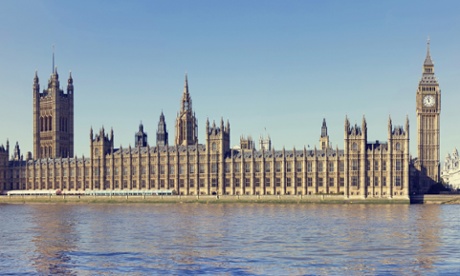
Elections are coming.
In 200 days Britain heads to the polls. With less than seven months to election day, now is a good time to take a step back and look at the state of the race. Over the past month the political agenda has primarily rotated around three events: party conferences, byelections in Clacton and Heywood & Middleton, and the Scottish independence referendum.
A lot of words have been spent analysing the electoral impact and significance of these events. Here is a look at three key trends that emerge more clearly when you cut through the noise, and look at the polls.
1. The gap between Labour and Conservatives remains fundamentally unchanged
Following the Conservative party conference, general wisdom was that David Cameron had won conference season. This claim was backed by a spike in a couple of polls released in the immediate aftermath of conference. Yet, when looking at trends across polls over the past month, the Conservative lead appears to be an outlier. The gap between the Conservatives and Labour has fundamentally remained unchanged over the past month.
Not for the first time, a YouGov poll which looked different to other surveys received disproportionate coverage compared to most other figures. These, on the contrary, mostly recorded relatively similar patterns.
2. Ukip is the only UK-wide party to have gained any noticeable support over the past month
The trend across polls shows that over the past four weeks, support for Nigel Farage’s party has gone up, in average, by two points. Ukip is now on record highs with most pollsters. While in terms of constituencies this may translate into less than 10 seats, polling in Conservative-Labour marginals shows that Ukip’s growing presence is likely to swing several Conservative-held seats Ed Miliband’s way. This, for example, is the case in eight of the 11 constituencies most recently polled by Lord Ashcroft.
My poll of 11 Con-Lab marginals, at a glance: pic.twitter.com/ZXDV0xYeem
— Lord Ashcroft (@LordAshcroft) October 16, 2014
3. The SNP factor may prove to be decisive in 2015
Unfortunately there isn’t regular polling in Scotland when it comes to Westminster voting intentions. And, two relatively recent polls, from Survation and Panelbase, show a diverging picture.
In a poll released right after the independence referendum, Survation had Labour on 39%, SNP on 35%, Conservatives on 18%, Lib Dems on 3% and Ukip on 2%. While the Panelbase poll, released earlier this month, has SNP 34%, Labour 32%, Conservatives 18%, Ukip 6% and Lib Dems on 5% - with a uniform swing, these numbers would see Labour on 34 MPs (losing seven seats), SNP with 18 MPs (+12), Lib Dems 4 (-7) and Conservatives, with 3 MPs, gaining two seats.
Using the same method, the Survation poll would see Labour only losing one seat from 2010, and the SNP would gain eight (all from the Lib Dems).
In 2010, Labour won 42% in Scotland (and 41 seats), the Lib Dems 18.9% (11 seats), SNP 19.9% (6), and the Conservatives 16.7%, which produced one single seat.
Based on both sets of polling figures, the Lib Dems are set to lose the majority of the seats they currently hold - primarily to the SNP, but may well lose a couple of constituencies to the Conservatives too.
The Labour-SNP calculations are a bit more complicated.
On paper, Labour holds a comfortable buffer in most of its seats. In none of the seats Labour won in 2010, where the SNP came second, was the gap less than 10 points. In only three seats was the gap less than 20-points. In other words, there aren’t many Labour-SNP marginal seats. Even the 12-point swing implied in the Panelbase poll would only see seven of Labour’s seats vulnerable (on a uniform swing) to the SNP. Yet, anything just above that figure - say, a 15-point swing - and suddenly the number of vulnerable seats is nearer to 20. And, that is without considering the more realitic scenario of differential swings - in more than a handful of these constituencies, the Lib Dem 2010 support was above 15%: where these voters cast their ballot next year, may mean the SNP would require a smaller direct swing from Labour to make a race competitive.
The challenge from an analytical point of view is that there is a lack of polls from Scotland making any constituency-level number crunching extremely difficult. For now, it is worth noting that support for the SNP has grown and the party is likely to make significant gains next year. Most of these will probably come from the Liberal Democrats, but there is the possibility of Labour losing enough seats in Scotland for the result to be decisive to both Miliband’s electoral fortunes and to the SNP’s influence on the formation of a government, or coalition, come May next year.
Leila Haddou contributed research to this article.