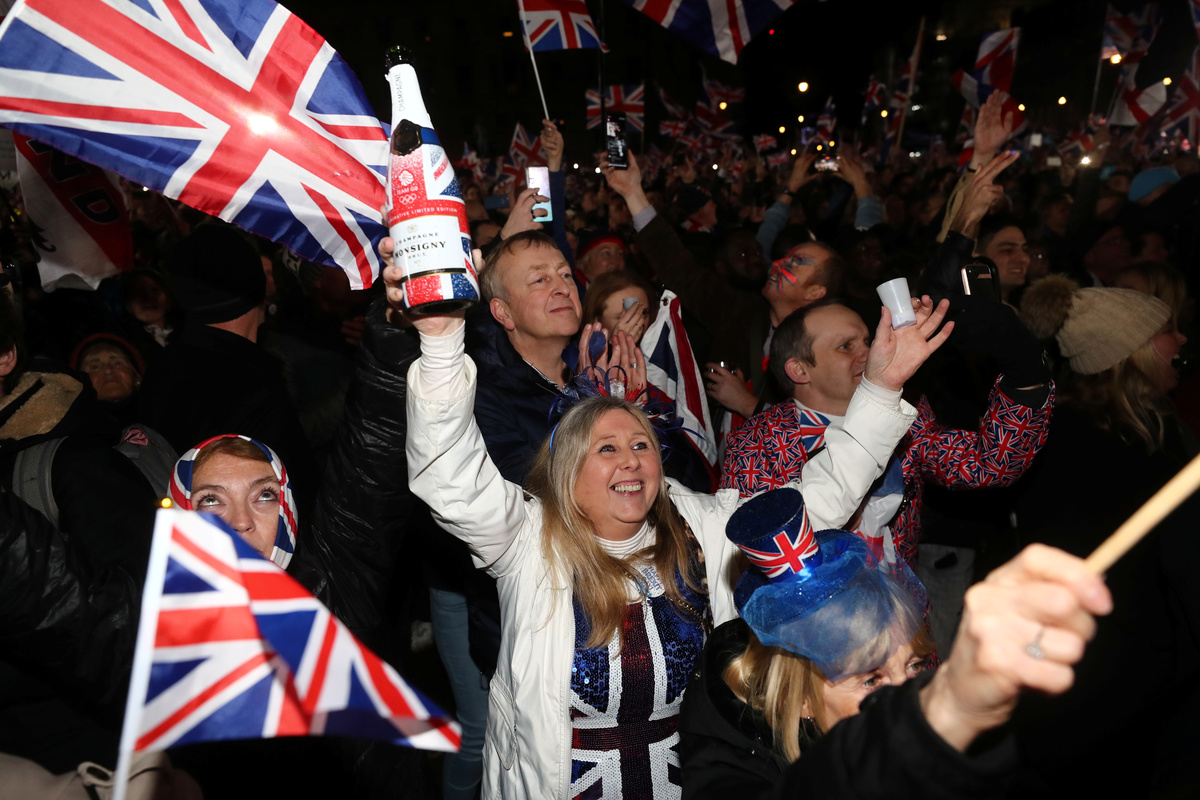
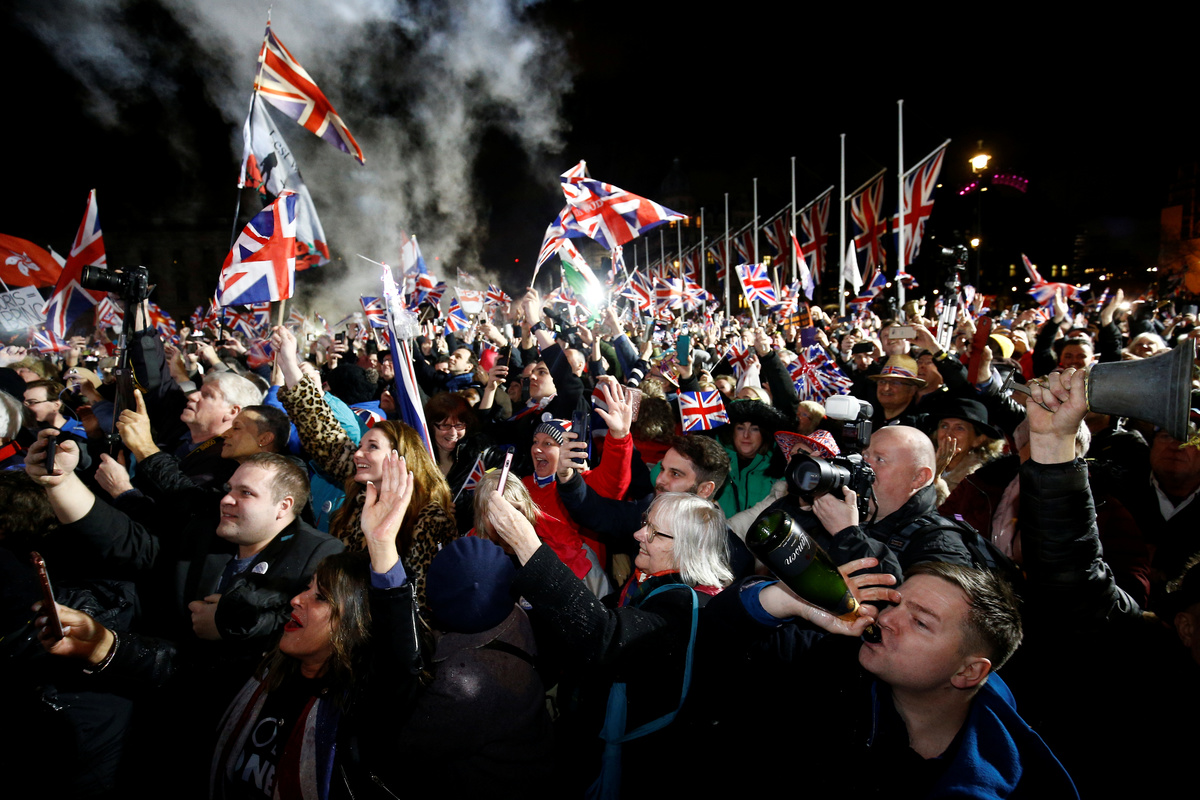
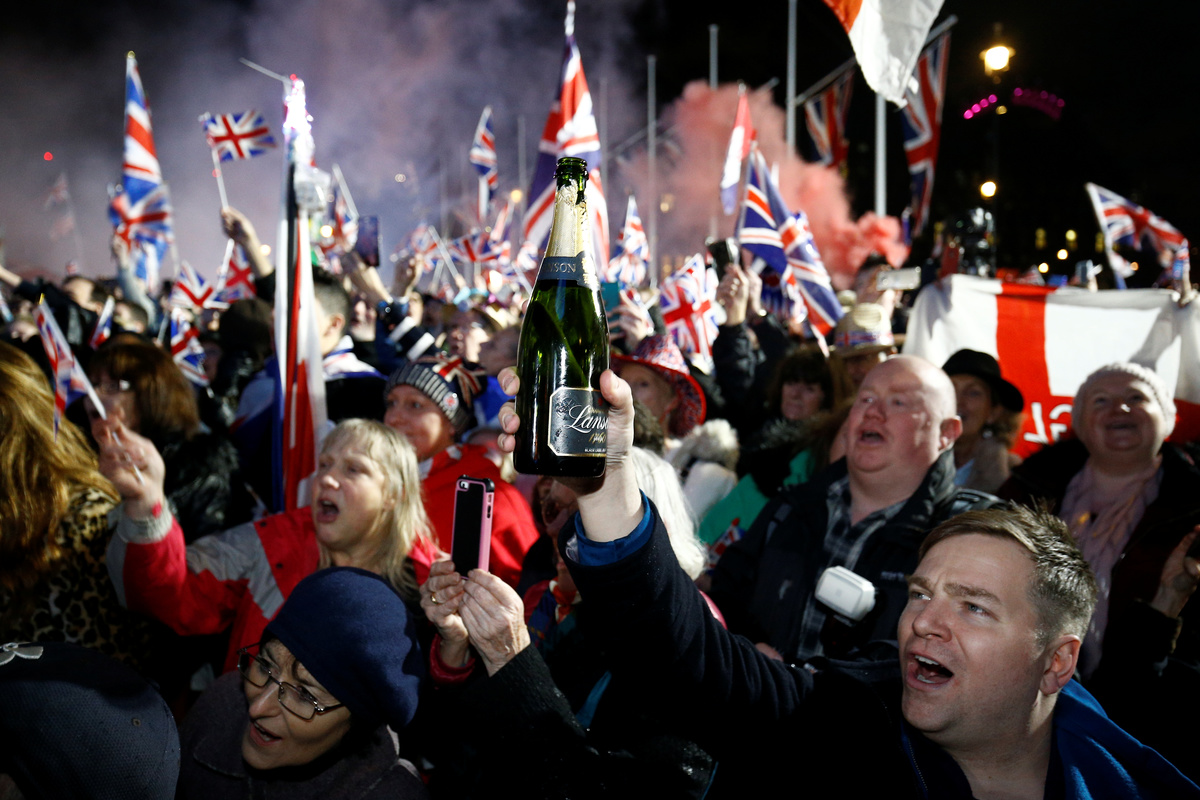
The United Kingdom finally cast off from the European Union on Friday for an uncertain future, with Brexiteers claiming victory and popping champagne corks for an "independence day" they said marked a new era for the country.
In its biggest shift since losing its global empire, the United Kingdom slipped away at 2300 GMT, turning its back after 47 years on the post-World War Two project that sought to build the ruined nations of Europe into a global power.
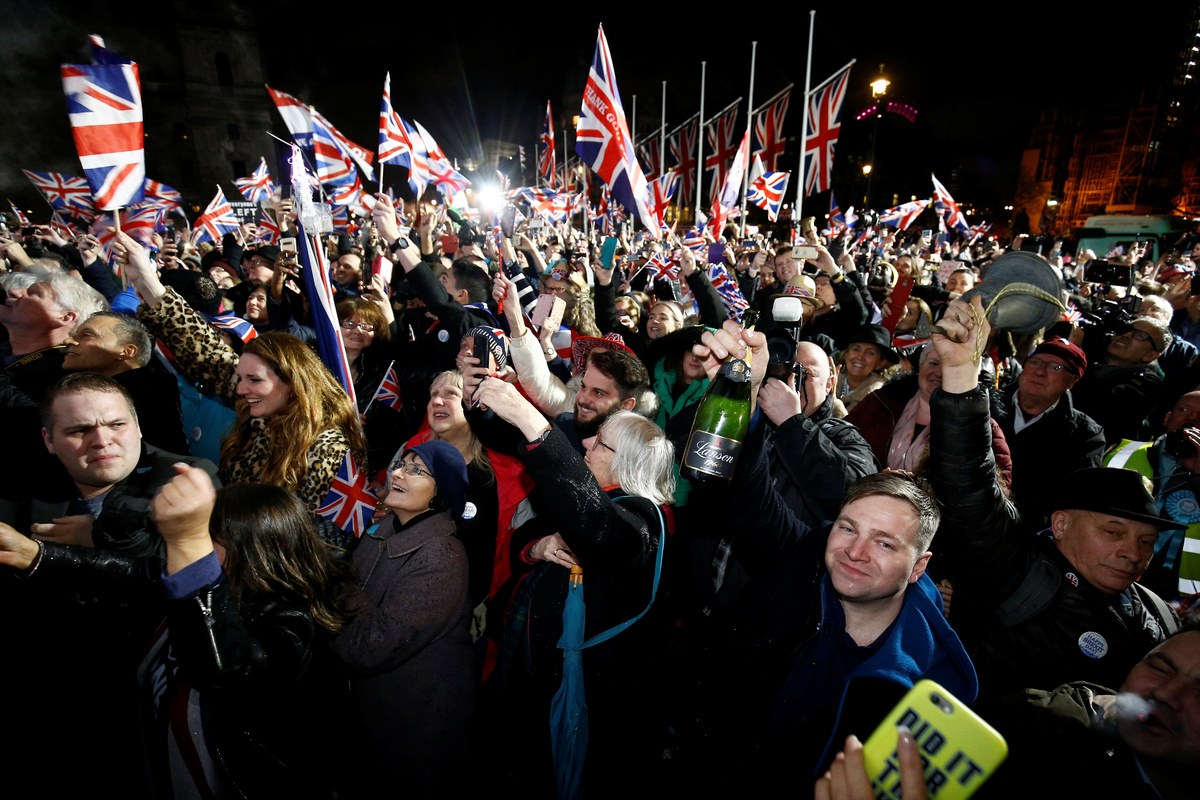
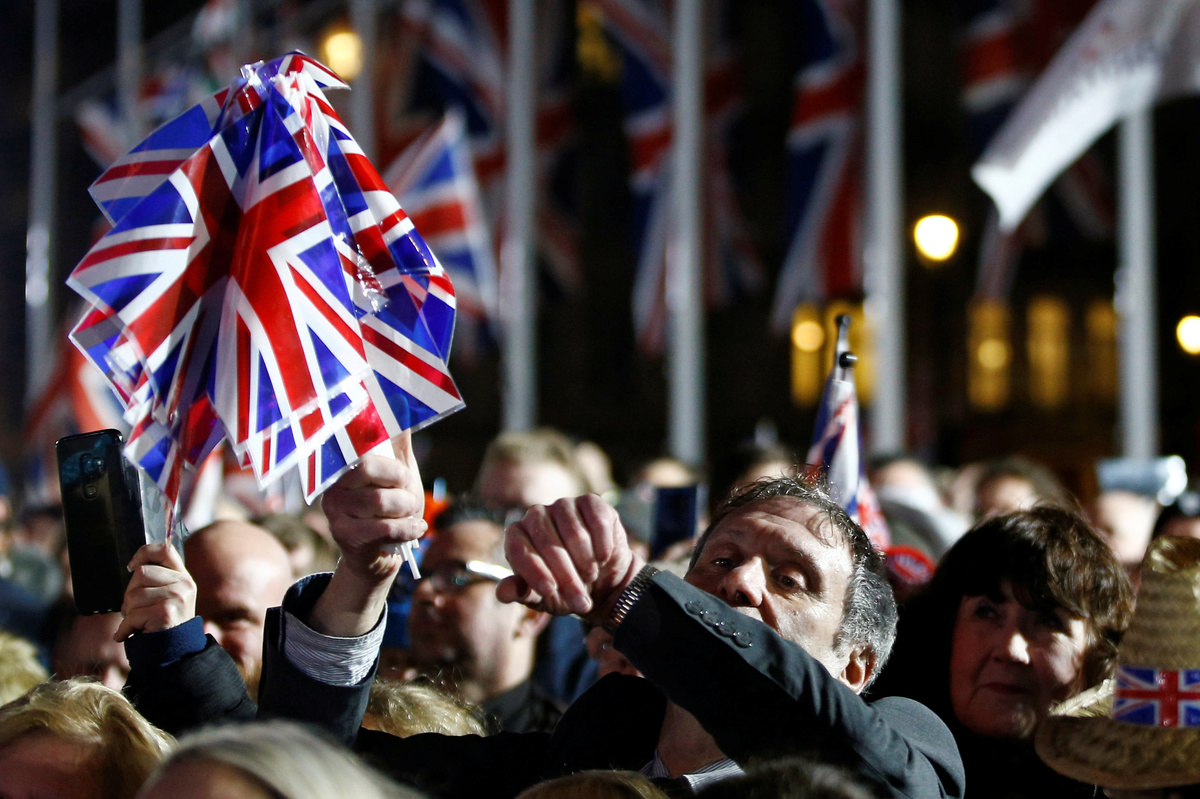
Beside the British parliament, flag-waving Brexit supporters cheered, revelling in a mix of nostalgia, patriotism and defiance. Some sang "God Save the Queen", while others hugged amid the smoke of fireworks.
"The war is over: we have won," Nigel Farage, a leading Leave campaigner, told the crowd. "This is the single most important moment in the modern history of our great nation."
On the white cliffs of Dover, the message: "The UK has left the EU" was projected between a British and an EU flag.
Once considered the unlikely dream of a motley crew of "eurosceptics" on the fringes of British politics, Brexit also weakens the EU, conceived as a way to bind together Europe's major powers in peace after centuries of conflict.
When the exit day finally came, after 3-1/2 years of wrangling since the 2016 referendum, it was an anticlimax of sorts: while Brexiteers waving flags toasted freedom in the rain, many Britons showed indifference or relief.
"For many people, this is an astonishing moment of hope, a moment they thought would never come," Prime Minister Boris Johnson, the New York-born leader of the official "Leave" campaign, said.
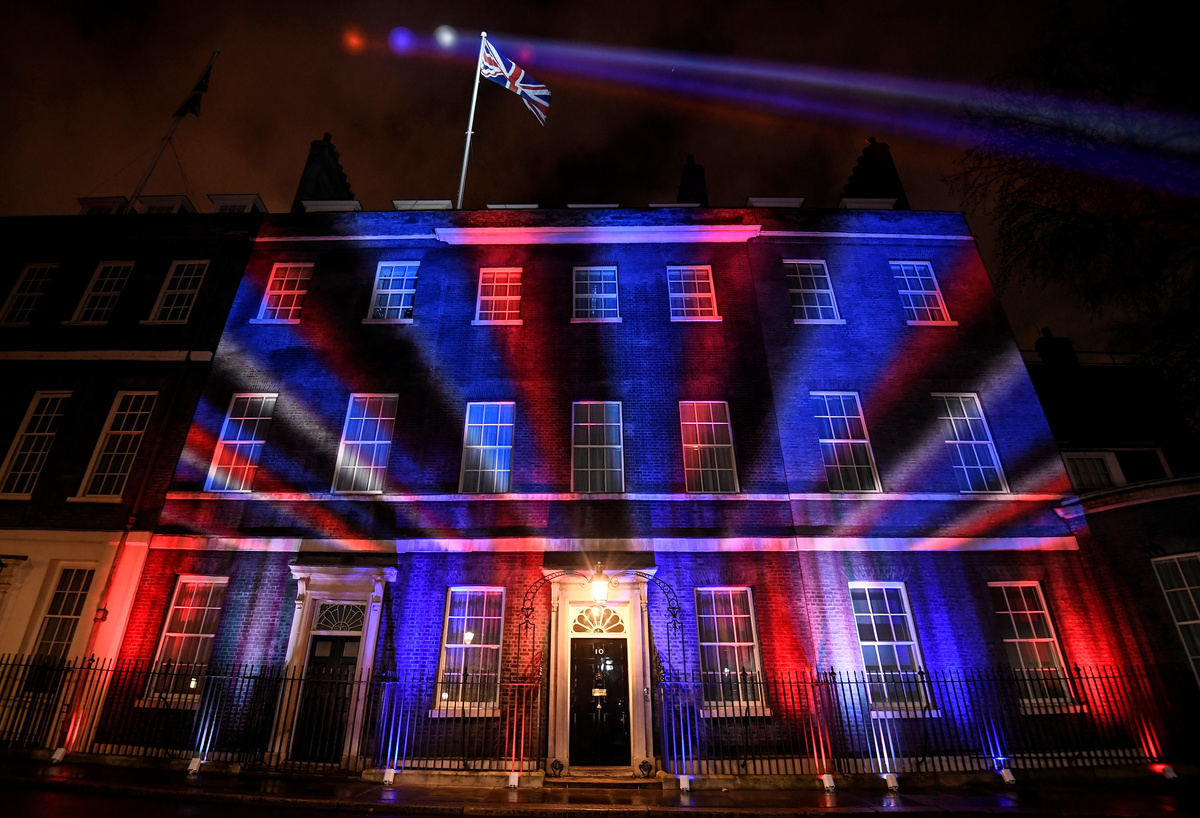
He celebrated in Downing Street with English sparkling wine and a distinctly British array of canapés including Shropshire blue cheese and Yorkshire puddings with beef and horseradish.
The EU's most powerful leaders, German Chancellor Angela Merkel and French President Emmanuel Macron, cast Brexit as a sad moment that was a turning point for Europe. The EU warned that leaving would be worse than staying.
U.S. President Donald Trump has long supported Brexit. His Secretary of State Mike Pompeo said Britons wanted to escape the "tyranny of Brussels".
At EU headquarters in Brussels, the British flag was lowered. Little will change immediately, however, as a transition period keeps the United Kingdom as a member in all but name until the end of 2020.
Supporters young and old packed into Parliament Square to hear Farage.
"I’m not jumping around celebrating, it’s just absolute satisfaction and relief and optimism," said Emma Sandercock, a 53-year-old secretary from Northamptonshire in central England.
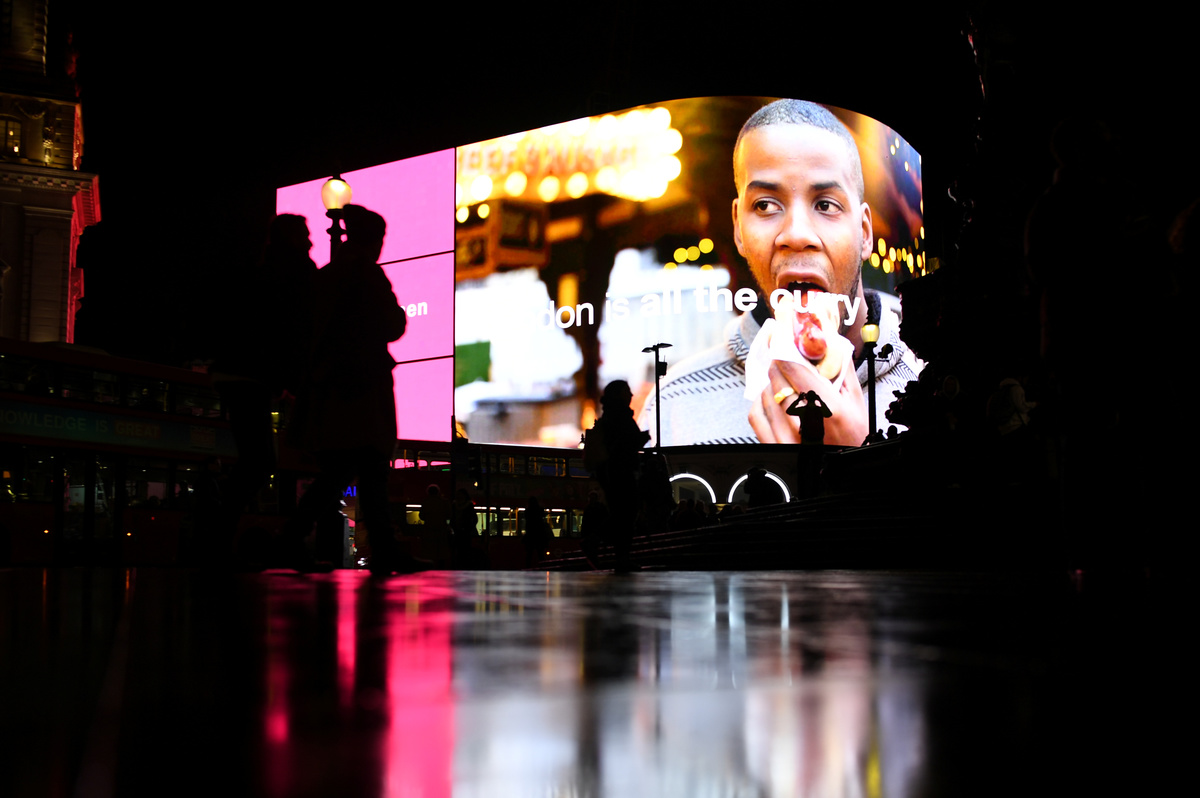
'INDEPENDENCE DAY'
Cast either as an epic opportunity or a grave mistake, Brexit has turned long-held views of Britain upside down just as the world grapples with the rise of China and the West's deepest divisions since the 1991 fall of the Soviet Union, whose liberated satellite states later joined the EU.
It also diminishes the EU. At the stroke of midnight in Brussels, the bloc lost 15% of its economy, its biggest military spender and the world's international financial capital, London.
Leaving was once a far-fetched idea: the UK joined in 1973 as "the sick man of Europe" and less than two decades ago British leaders were arguing about whether to join the euro.
But the turmoil of the euro zone crisis, fears about mass immigration and miscalculations by former Prime Minister David Cameron led to the 52% to 48% vote to leave in 2016.
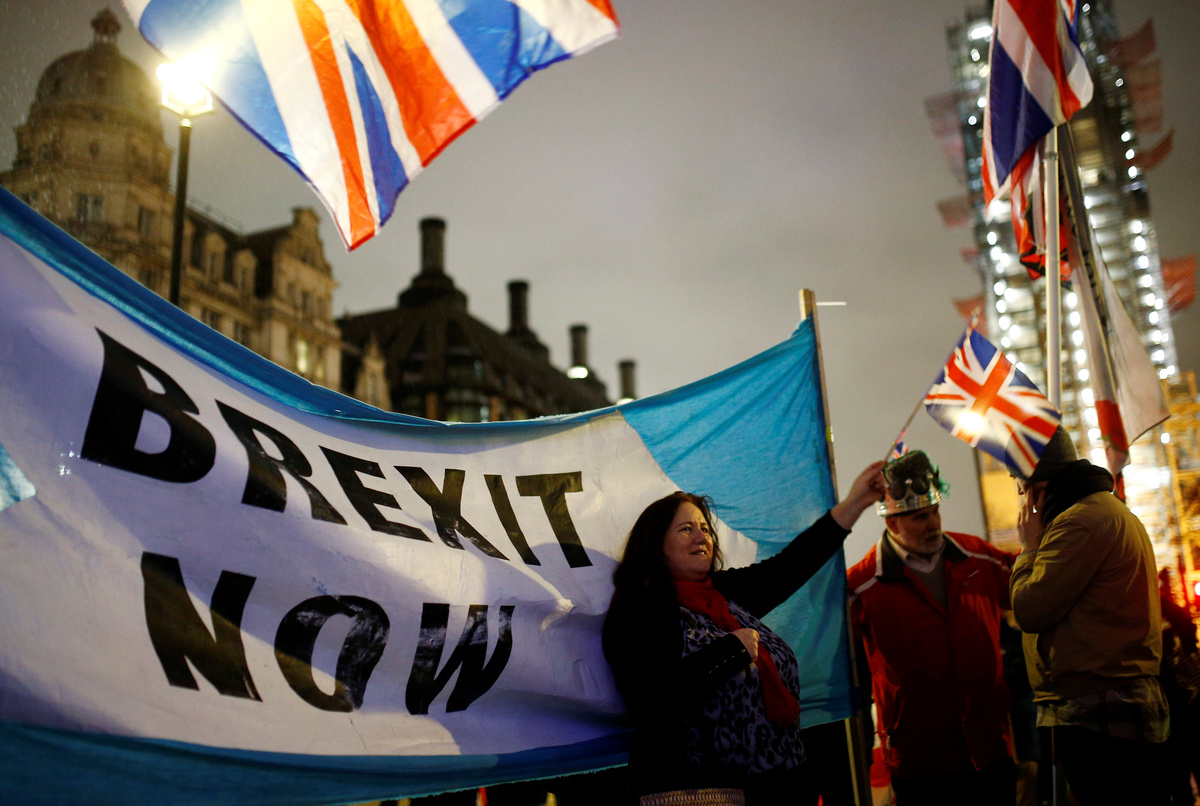
For proponents, Brexit is "independence day" -- an escape from what they cast as a German-dominated project with a doomed single currency that is failing its 500 million people.
They hope departure will herald reforms to reshape Britain and propel it ahead of its European rivals.
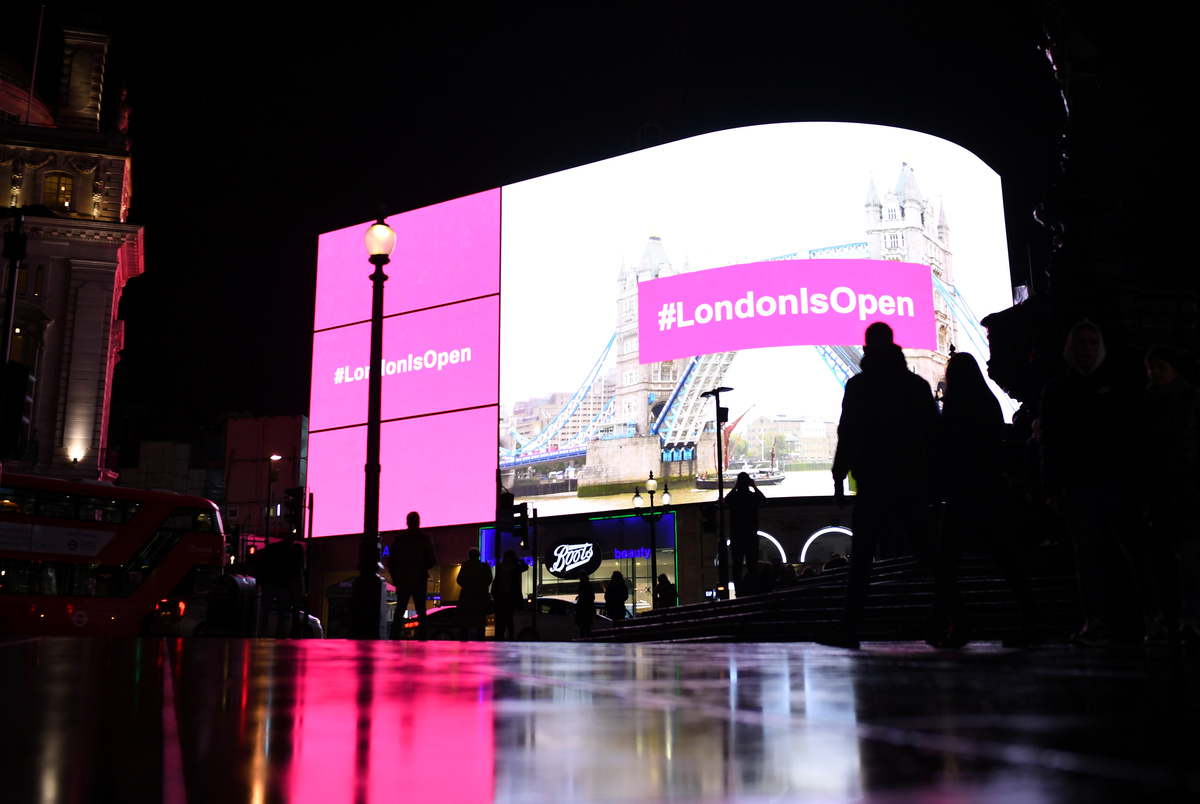
UNCERTAIN FUTURE
Opponents say Brexit is a folly that will weaken the West, torpedo what is left of Britain's global clout, undermine its economy and ultimately leave it a less cosmopolitan set of islands.
David Tucker, 75, said he had come to London from Wales to march in the hope that others would keep alive the prospect of one day rejoining the EU.
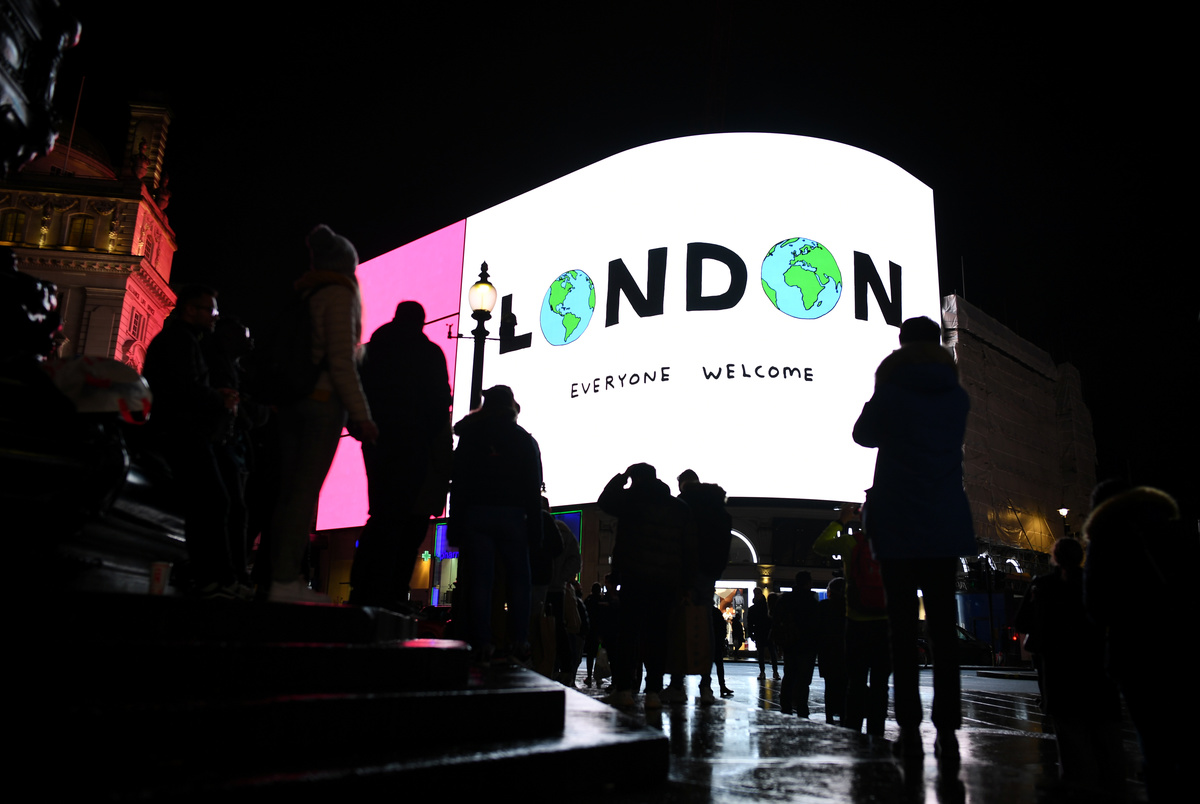
"It is a tragedy," he said. "We were once part of the world's most powerful economic bloc. Now we are just an inward-looking island that is going to get smaller."
Johnson has promised to strike a broad free trade agreement with the EU, the world's biggest trading bloc, though Merkel and Macron have warned that leaving will be harder than staying.
But Brexit was always about much more than Europe. The referendum exposed deep internal divisions and triggered soul-searching about everything from immigration to empire and modern Britishness.
It has tested the very fabric of what now looks a disunited kingdom: England and Wales voted to leave but Scotland and Northern Ireland wanted to stay. The strains could hasten another referendum on Scottish independence and even a push for a united Ireland.
"We've had enough of the European Union, we don't want it," said Adrian Langshaw, 42. "We want to be a sovereign nation and live as a British nation, make our decisions, make our rules and live how we want."
(Writing by Guy Faulconbridge; Additional reporting by Kylie MacLellan, Andy Bruce, Elizbeth Howcroft and William James in London; Andrew MacAskill in Paris; John Chalmers and Gabriela Baczynska in Brussels; Editing by Catherine Evans)